The Best Kept Secret of the Cold War
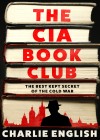
William Collins, 2025, 384 pp, (AUD) $34.99
Paperback ISBN: 9780008495138
AUTHOR: Charlie English
REVIEWED BY: John Nash
The Cold War provides rich fodder for all manner of stories about spies, espionage, and subversive activities. More than any military force, the organisations evoked by this period of time are often the Central Intelligence Agency (CIA), Komitet Gosudarstvennoi Bezopanosti (KGB), Secret Intelligence Service (MI6) and other intelligence agencies and famous—or infamous—spies such as Kim Philby, Aldrich Ames, or the ‘Cambridge Five’. In all cases, the currency of espionage activity was information. The CIA Book Club by Charlie English is also a tale about information, just not of the classified sort. It is an exploration of Western efforts, led by the CIA, to aid resistance groups in Eastern Europe, especially Poland. But rather than just getting information from behind the Iron Curtain, it aimed to also send information the other way in the form of ‘subversive literature’ and printable materials for underground groups to publish in non-state sanctioned pamphlets and newsletters. It is a fascinating tale of both a little-known non-violent CIA operation, and of the brave resistance movement in Poland that sought to promote the free exchange of ideas in the repressive information environment of the Soviet regime.
Writing about CIA operations can be a fraught endeavour given that all the pertinent information might not be available. This is the case here, where files for the operations are still classified. This classification extends to an official history of the operation written by an internal CIA historian.[1] Nevertheless, there is enough information for English to trace the origins and to provide an outline of the organisation. While he does discuss several other countries, the main focus of the book is ‘QRHELPFUL’, which was the operation in Poland.
As the ‘Iron Curtain’ descended upon Europe, many eastern European nations traded one oppressive regime for another—less violent than the Nazis perhaps, but no less repressive. Poland suffered greatly under the Nazis, with ‘liberation’ by the Soviets amounting to ‘anything but’, and instead imposing merely a different form of repression.[2] A key component of this was the control of information and mass censorship. This censorship extended to physical control: typewriters had to be registered, photocopier access was restricted and permission was required even to purchase a ream of paper.[3] Repression of identity was a key pillar of Soviet efforts to control the various ‘Republics’ they oversaw. The importance of history to the development of identity is central, and in the case of Poland there was decades of enmity between its people and the Russians. This animosity was fueled by the 1939 Molotov-Ribbentrop Pact which saw the country carved up by Nazi Germany and Russia. Notably, in 1940 over 20,000 Polish prisoners were massacred by the Soviet Secret Police in the Katyn Forest, an event which left a deep scar in Polish society. The Soviet authorities needed to repress this inconvenient history in order to control Poland. Thus, any printed material that contradicted the state line was considered, by its very nature, to be subversive.
Unsurprisingly, the work of George Orwell, Animal Farm and 1984 in particular, resonated within Eastern Europe. Efforts to control historical narratives is represented in 1984 by the ‘Ministry of Truth’. The manipulation of language behind the Iron Curtain in order to promote proper Marxist-Leninist-thought became a form of Orwell’s ‘Newspeak’. A Polish defector described Orwell’s work as difficult to obtain and dangerous to possess, and Eastern Europeans were amazed that (for someone who had never experienced life in Russia or behind the Iron Curtain) Orwell was eerily accurate, capturing the repressive means of control over information and even language that was prevalent under the USSR.[4] One of the CIA’s early programs—which involved using balloons to carry pamphlets and books into Czechoslovakia, Poland, Bulgaria, and Romania, in 1955—saw 260,000 copies of Animal Farm carried across. These and other books that were sent across into the Eastern Bloc were highly valued and proved far more effective a tool of influence than propaganda pamphlets.
The balloon program was superseded by a direct-mailing operation, where books were mailed from the west into the Easter Bloc. It proved successful and influential: one of the recipients in Poland was the future Pope John Paul II.[5] Nevertheless, as important and influential as these programs were, enabling Polish and other Easter European activists to publish and distribute their own material had the most impact on countering Soviet propaganda and information narratives. The bulk of The CIA Book Club deals with these underground movements and especially the solidarity organisation in Poland. As English notes, most political prisoners in Polish prisoners were there because of publishing and subversive literature ‘offenses’.[6]
Several important themes emerge in the book’s narrative. The first is the importance of personal connections and the potential power and pitfalls of strong personalities. Internal politics within the movement, especially those in exile in the West sourcing support, could have an outsized influence on events. This included influence with other countries as some (such as France and the Scandinavian) countries proved more helpful in efforts at cross-border smuggling of printing equipment.
The other key theme is the importance that technology plays in information dissemination and influencing narratives. The proliferation of VCRs in Poland allowed for an entirely new, and more visceral, means of distributing information behind the Iron Curtain.[7] This was followed by the rapid uptake of satellite TV in Poland, an altogether much harder medium for Soviet censors to block. It is hard to miss the irony of a technology, first pioneered by Soviet engineers through the launch of Sputnik, being used to undermine the Soviet Union.[8] In today’s age, it is an important reminder that information dissemination has never been easier —it is now possible to spread inaccurate information far faster than it can be countered. Coming to grips with this problem is not a new problem, but remains a salient one.
The CIA Book Club is a well-produced book. There are many photos throughout, although their value is somewhat diminished by the absence of captions that could have explicitly contextualised the images with the text they accompany.
Overall, The CIA Book Club is a fascinating read, examining a little known but incredibly important slice of Cold War history. It was a time of competing narratives between the West and the Soviet Union, with the countries of Eastern Europe the battleground. In an age of growing uncertainty, it is worth reflecting on a time when much of the world was divided into two competing ideological camps, and that in the end, the truth did (and does) in fact, matter.
Endnotes
[1] Charlie English, The CIA Book Club: The Best Kept Secret of the Cold War (William Collins, 2025) 162, 168.
[2] English, The CIA Book Club, 2025, 20.
[3] English, The CIA Book Club, 2025, 22.
[4] English, The CIA Book Club, 2025, 25.
[5] English, The CIA Book Club, 2025, 57.
[6] English, The CIA Book Club, 2025, p. 215.
[7] English, The CIA Book Club, 2025, pp. 211-213.
[8] English, The CIA Book Club, 2025, pp. 253-254.