Search
Using the filters to the left, click your selection, it will become bold and filter the results, click it again to remove that filter.
*This article was originally published inVolume 12 of the AAJ in May, 1950113 In time of peace no nation, with the possible exception of Russia, can afford to maintain at full strength the armed services required for the conduct of a war of the first magnitude. The most that can be done is to maintain an organization which does not impose an unsupportable strain on the national economy and which, at the same time can be expanded rapidly when war becomes imminent. So far as the Army is concerned the …
NB: This article originally appeared on The Forge on 29 January 2021. It is reprinted here with the author’s permission. Slowly and progressively over the last decade, the Australian Defence Force (ADF) has become less religious. Although religion, particularly Christianity, is a part of many military customs and traditions and was once a routine part of ship and barracks life, the connection that Defence members have to any faith has decreased to a level where the majority of officers, sailors, soldiers …
Introduction To take the King’s hard bargain is a ‘traditional description for the rendering of military service to the Crown, made inaccurate in modern times only by the gender of the current Sovereign’. 1 This bargain’s hardness is multifaceted. It denotes that military service involves a unilateral agreement—that the member gives everything and expects nothing. It further represents that one takes an oath to serve within the profession of arms, whose raison d’être of warfighting is best highlighted …
Abstract Australia is a middle power that must find ways to ‘deter without escalation’; however, we are not yet able to offer military options in pursuit of this objective. How does Army tie into the joint force and our regional geography, remaining grounded in formation tactics while becoming an integral part of a ‘joint federated targeting system’? More simply: how can we become as dangerous and survivable as possible? This article suggests a force design that offers a radically different set of …
Introduction The use of nuclear weapons during the Second World War heralded a new era in warfare. The battlefield of the future was envisaged by military planners to be one that included tactical nuclear weapons and thus required a new type of infantry structure. To accommodate these tactical changes, and the desire of the federal administration to reduce troop numbers, the US Army developed the five-sided pentomic divisional structure. The new structure, introduced in the early 1950s, was to have …
Abstract This article describes our approach to developing and employing concepts to guide innovation efforts and investment for future dismounted combat teams, including a discussion of two possible future concepts. Our approach is underpinned by the philosophy that innovation should be guided by clear, conceptual aiming points in order to achieve step change in combined arms capability. We suggest this requires concepts to provide sufficient detail for a tactical setting, link to strategic guidance, and …
Abstract The informal, part-time military formations of the Australian Militia between 1930 and 1945 are an understudied aspect of military history. Part of the Australian Military Forces (AMF) (the predecessor to the Australian Army), the Militia never achieved its key founding objective: to be a sufficient force for defending territorial Australia. Official and academic accounts of the organisation are largely critical, depicting it as a victim of poor government planning and cost-cutting. However, these …
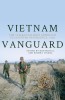
Vietnam Vanguard: The 5 th Battalion’s Approach to Counter-Insurgency, 1966 Edited by: Ron Boxall and Robert O’Neill Australian National University Press, 2020, ISBN 9781760463328, 430pp Reviewed by: Major Andrew Maher Vietnam Vanguard is an important work in the documentation of experience, lessons and perspectives from Australia’s experience in the Vietnam War. The book uses a collection of personal narratives, woven together by the editors to provide insight into life in an infantry battalion on …
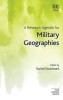
A Research Agenda for Military Geographies Edited by: Rachel Woodward Elgar, 2019, ISBN 9781786438867, 215pp Reviewed by: Major Cate Carter Military geography uses tools and techniques of the discipline of geography to solve military problems. In essence, it studies military operations through a geographic lens. As the editor of this volume, herself a leader in military geography, tells us, ‘military geographies invite study at scales from the global and international, through the national and regional, …
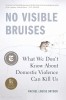
No Visible Bruises: What We Don’t Know About Domestic Violence Can Kill Us Written by: Rachel Louise Snyder Scribe, Melbourne, 2020, ISBN 9781925849820, viii+307pp Reviewed by: Chaplain Darren Cronshaw In the face of the reality and suffering of family and domestic violence (FDV), over the last decade Defence has increased support and referral services for those affected, and developed focused training for all members. As a chaplain, I am eager to understand the complex dynamics that trigger or allow FDV …