
Towards Total Defence
A Literature Review and Feasibility Assessment for Australia
Authors: Matthew L M Jones and Andrew Maher
Abstract
Australia’s strategic environment is increasingly defined by grey-zone threats, cyber disruption, and domestic vulnerabilities that transcend conventional military responses. Other nations have responded to such threats through a total defence (TD) framework that integrates military, civil, economic, psychological and digital resilience across society. This paper presents a literature-based analysis of established TD models in Finland, Sweden, Estonia, Latvia and Singapore, examining their strategic, organisational, societal and legal dimensions. Drawing on recent scholarship, policy documents and comparative case studies, the paper identifies common features, enabling conditions and contextual limitations of overseas approaches to TD. It highlights key lessons potentially relevant to Australia, such as civil-military integration, national mobilisation strategies, and inter-agency coordination, and analyses the systemic challenges faced, ranging from federal fragmentation to societal scepticism. The intent is not to prescribe a specific model for Australia but to highlight opportunities, challenges and knowledge gaps that warrant further investigation. By distilling international experience, this review aims to inform subsequent research into the feasibility and relevance of TD in Australia’s unique security, political and societal context.
1. Introduction
The strategic environment confronting Australia today is characterised by complexity and volatility. Traditional security paradigms anchored primarily in conventional military responses are becoming increasingly inadequate to address the multifaceted challenges posed by state and non-state actors. Rising geopolitical tensions, particularly within the Indo-Pacific region, reflect an evolving global order marked by strategic rivalry and uncertainty, exemplified by China's assertiveness, Russia’s invasion of Ukraine, and the resultant instability across global security frameworks. Concurrently, Australia's security landscape is increasingly influenced by hybrid warfare threats: combinations of conventional, irregular, cyber, informational and economic strategies that exploit societal vulnerabilities to undermine national cohesion and resilience.
In recent years, a bias towards an expeditionary or offshore, conventional mindset has dominated Department of Defence (Defence) discourse. Yet this approach reveals significant limitations when confronted by modern hybrid threats that intentionally blur distinctions between civilian and military targets, and exploit societal fissures and infrastructure vulnerabilities.[1] Such tactics, demonstrated starkly in recent international conflicts, indicate a paradigm shift towards operations aimed at destabilising societies from within. The inadequacies of conventional defence models are becoming increasingly apparent as they are typically designed to respond to clearly defined, overt military aggression, leaving nations vulnerable to subversion, cyber attacks, economic coercion, and pervasive disinformation campaigns.[2] Indeed, as recent scholarship has highlighted, conventional military capabilities alone cannot provide sufficient deterrence or adequate resilience against the multifaceted hybrid threats that characterise contemporary geopolitical contests.[3]
In response to this evolving threat landscape, several countries have embraced comprehensive national security models broadly termed ‘total defence’ (TD). Originating from lessons gained during the Second World War and refined during the Cold War era, these doctrines are designed to mobilise entire societies for national survival in times of existential threat. Contemporary TD integrates military, civilian, economic, societal, psychological, cyber and informational domains into a cohesive strategy aimed at deterring aggression, enhancing societal resilience, and preparing comprehensive national responses to crises.[4]
At its core, TD posits that national security is not solely the responsibility of professional military forces, but rather a collective societal endeavour involving government agencies, industry, communities and individuals. This concept fundamentally shifts traditional paradigms by acknowledging that modern threats target broader societal vulnerabilities and therefore necessitate a society-wide engagement in defence and resilience-building efforts. Effective implementation of TD demands rigorous inter-agency collaboration, clearly defined roles for private industry in critical infrastructure protection, and active civic participation, reinforced by extensive public education on resilience and defence responsibilities.[5] Indeed, the Scandinavian and Baltic models illustrate the effectiveness of such an integrated approach. Finland's comprehensive security of supply systems, Sweden's robust psychological defence campaigns and home guard integration, and Estonia's societal resilience programs all exemplify how comprehensive defence models bolster deterrence and national resilience amid hybrid threats.[6]
In this context, drawing lessons from those countries that have adopted a TD approach becomes particularly relevant and timely for Australia and the Australian Defence Force (ADF) in particular. The 2023 Defence Strategic Review has already indicated a need for a more integrated and whole-of-nation approach to national security, recognising that future crises is likely to require simultaneous responses across multiple domains, beyond the capabilities of any single agency or service.[7] The 2024 National Defence Strategy has further widened the scope of national defence, from that of border security to an approach that seeks to protect our way of life.[8] Significant gaps would inhibit Australia’s readiness to adopt an integrated defence model.[9] Critical questions persist regarding the alignment of federal and state responsibilities, private sector engagement in national resilience, societal willingness to engage actively in defence efforts, and the legal frameworks necessary to enable comprehensive mobilisation.
For the Australian Army specifically, exploring TD models is essential. Given its role in supporting civil authorities, disaster response and national resilience, the Army must critically evaluate its operational readiness, doctrine and structures in light of potential shifts towards broader societal mobilisation.[10] Furthermore, the Australian Army needs to understand the adoption of TD models if it is to support partners who have adopted them in part or comprehensively (such as Singapore). Such an evaluation must consider the integration of Army Reserve components, civil–military interoperability, and the Army’s contribution to psychological and informational resilience initiatives. Moreover, the Army’s historical status as a trusted national institution positions it uniquely to lead societal engagement in resilience-building efforts, enhancing deterrence by projecting unified national resolve in the face of hybrid threats.
This paper adopts a qualitative literature review methodology to consider the utility of TD concepts to Australia. International case studies—specifically those of Finland, Sweden, Estonia, Lithuania and Singapore—were selected based on their maturity, diversity and documented evolution of TD frameworks across strategic, organisational and societal dimensions. These cases were analysed thematically in relation to four recurring domains identified in the literature: strategic posture, organisational structures, societal engagement, and legal frameworks. Sources include peer-reviewed defence studies, government policy documents, and reputable think tank analyses, prioritising material published within the last decade to ensure contemporary relevance. The analysis is deliberately comparative, identifying transferable principles while recognising the need for localised adaptation. This structured approach supports the paper’s aim of distilling pragmatic lessons and highlighting gaps requiring further research before an Australian TD model could be developed or implemented.
2. Conceptual Foundations and Historical Evolution of Total Defence
The concept of TD originates in historical practices of national mobilisation in response to existential threats. Rooted in the experiences of ‘total war’—particularly from the profound societal mobilisation witnessed during the world wars—the contemporary interpretation of TD has evolved significantly to address modern, multidimensional security threats. Historical instances of ‘total war’ (characterised by complete societal involvement in warfare and blurred traditional distinctions between civilian and military roles) creates a foundation for contemporary frameworks that integrate societal and military capacities to face comprehensive security challenges.[11]
TD can be defined as ‘a whole-of-society approach to national security, intended to deter a potential enemy by raising the cost of aggression and lowering the chances of its success’, where ‘infrastructure and societal resilience jointly constitute national resilience, a cornerstone of TD’.[12] Historically, nations such as Sweden, Finland and Switzerland, as neutral countries, refined sophisticated TD doctrines during the Cold War period in response to heightened geopolitical tensions and the prospect of direct military confrontation. These strategies involved holistic national preparedness, encompassing mandatory conscription, robust civil defence measures, and strategic stockpiling to ensure sustained resistance and societal resilience in the event of prolonged conflict or occupation.[13] Today, the relevance of such comprehensive frameworks is being reconsidered in response to a rapidly evolving global threat landscape defined increasingly by unconventional and hybrid threats.
Modern security threats differ substantially from traditional state-based warfare, leveraging ambiguity and exploiting vulnerabilities across multiple societal domains. The advent and proliferation of hybrid warfare underscores the limitations of traditional military-centric defence postures. As these methods frequently target societal cohesion, critical infrastructure, economic stability and psychological resilience, a broader, integrated approach encompassing civilian and military components becomes imperative.
In this context, contemporary TD has emerged as a strategic doctrine emphasising deterrence by denial, resilience, and societal resistance. Deterrence by denial operates on the premise that a well-prepared, cohesive society significantly raises the cost of aggression, discouraging potential adversaries from initiating hostilities.[14] This framing aligns with Australia’s endorsed strategy of denial, as set out in the 2024 National Defence Strategy and foreshadowed in the Defence Strategic Review’s direction to ‘maximise the deterrence, denial and response options’ of an integrated force.[15] By ensuring that critical societal and infrastructural systems can withstand attacks and rapidly recover, TD strategies aim to deny adversaries the anticipated outcomes of their aggressive actions. The experience of countries such as Ukraine, Finland and Sweden, facing heightened threats arising from geopolitical developments, exemplifies the strategic necessity and effectiveness of this integrated deterrence model.[16]
Central to the successful implementation of TD strategies is the robust integration of military and civilian capacities. Military-civil integration ensures that civilian institutions and military organisations operate under a unified framework during crises, enabling seamless cooperation and coordination.[17] This integration encompasses comprehensive joint planning, shared communications infrastructure, and clearly delineated roles for both sectors. Recent Swedish experiences underscore the value of structured collaboration between the military, local governments, and civilian emergency services, enabling a coordinated response capability against hybrid threats.
Equally crucial is the concept of civilian agency and societal mobilisation. Civilian agency, which empowers individuals and communities to actively participate in national security efforts, enhances the effectiveness and legitimacy of TD frameworks. Societies with a high level of civilian engagement, through established mechanisms such as home guards or volunteer emergency units, significantly enhance their ability to withstand and rapidly recover from hostile actions.[18] Sweden’s Home Guard exemplifies this civilian agency, serving as a bridge between military objectives and societal participation. By promoting societal ownership of national defence efforts, countries can foster robust resilience and sustained readiness.
Infrastructure and economic resilience form another critical dimension of contemporary TD. Modern hybrid warfare often targets critical infrastructure, aiming to disrupt societal functionality and economic stability. Consequently, comprehensive resilience strategies require extensive planning for infrastructure protection, redundancy measures, and emergency resource stockpiling.[19] Finland’s comprehensive security of supply strategy, which mandates stockpiling essential commodities and maintaining infrastructure redundancy, illustrates the efficacy of proactive resilience measures. Similarly, Sweden’s infrastructure protection plans focus on ensuring continuity in energy supplies, telecommunications, and transportation systems even in the face of sustained disruptions, reinforcing the overall resilience of society.
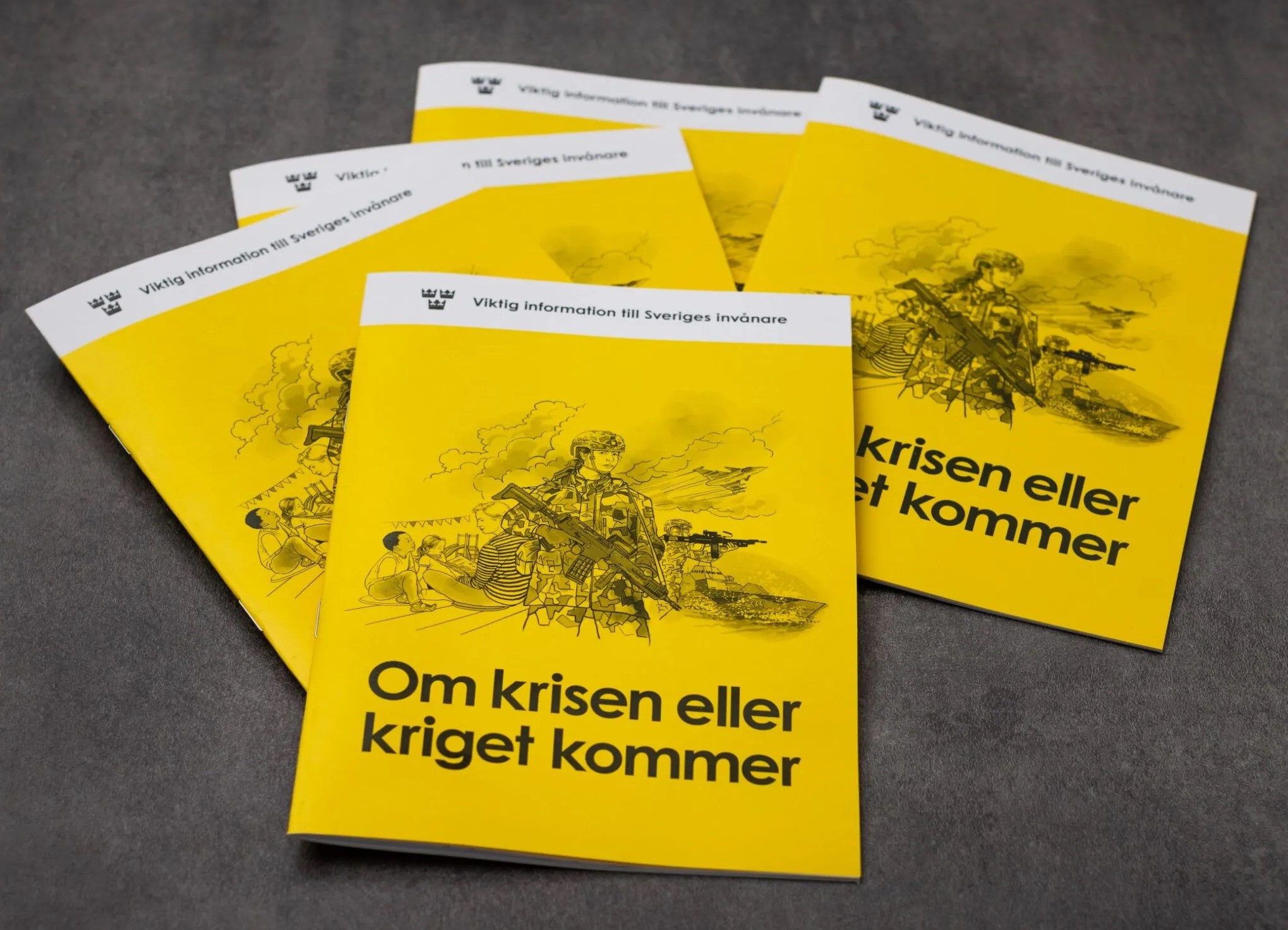
Lastly, psychological and informational defence strategies are integral to contemporary TD frameworks. Modern adversaries frequently employ misinformation and psychological operations to erode public confidence, create societal division and weaken collective resolve. Effective psychological and informational defence thus involves sustained public education campaigns, transparent and rapid communication from credible sources, and proactive measures to counter misinformation. The experience of Nordic states, particularly Sweden and Finland, demonstrates the importance of systematic psychological preparedness, where public education initiatives and continuous societal engagement foster resilience against hostile influence campaigns. Sweden’s active public communications strategy, exemplified by widely disseminated educational materials such as the ‘In Case of Crisis or War’ pamphlet, underscores the necessity of maintaining high levels of societal awareness and preparedness.[20]
In summary, the historical evolution of TD highlights a strategic shift from traditional warfare-centric approaches to multidimensional security frameworks addressing contemporary hybrid threats. By integrating military and civil capacities, fostering civilian agency, strengthening infrastructure and economic resilience, and prioritising psychological and informational defence strategies, modern TD frameworks offer comprehensive, cohesive responses capable of effectively mitigating contemporary security challenges. For Australia, examining and potentially adopting elements of these international TD models presents a timely and essential step towards enhancing national resilience and ensuring robust strategic deterrence in an increasingly complex security environment.
3. International Case Studies: Comparative Analysis of Total Defence Implementations
Any successful implementation of a TD strategy requires careful adaptation to local contexts, historical experience, and specific threats. A comparative analysis of international case studies provides essential insights into how various countries integrate military, civil, economic and societal components relevant to their own particular contexts into coherent national defence strategies.
3.1 Finland
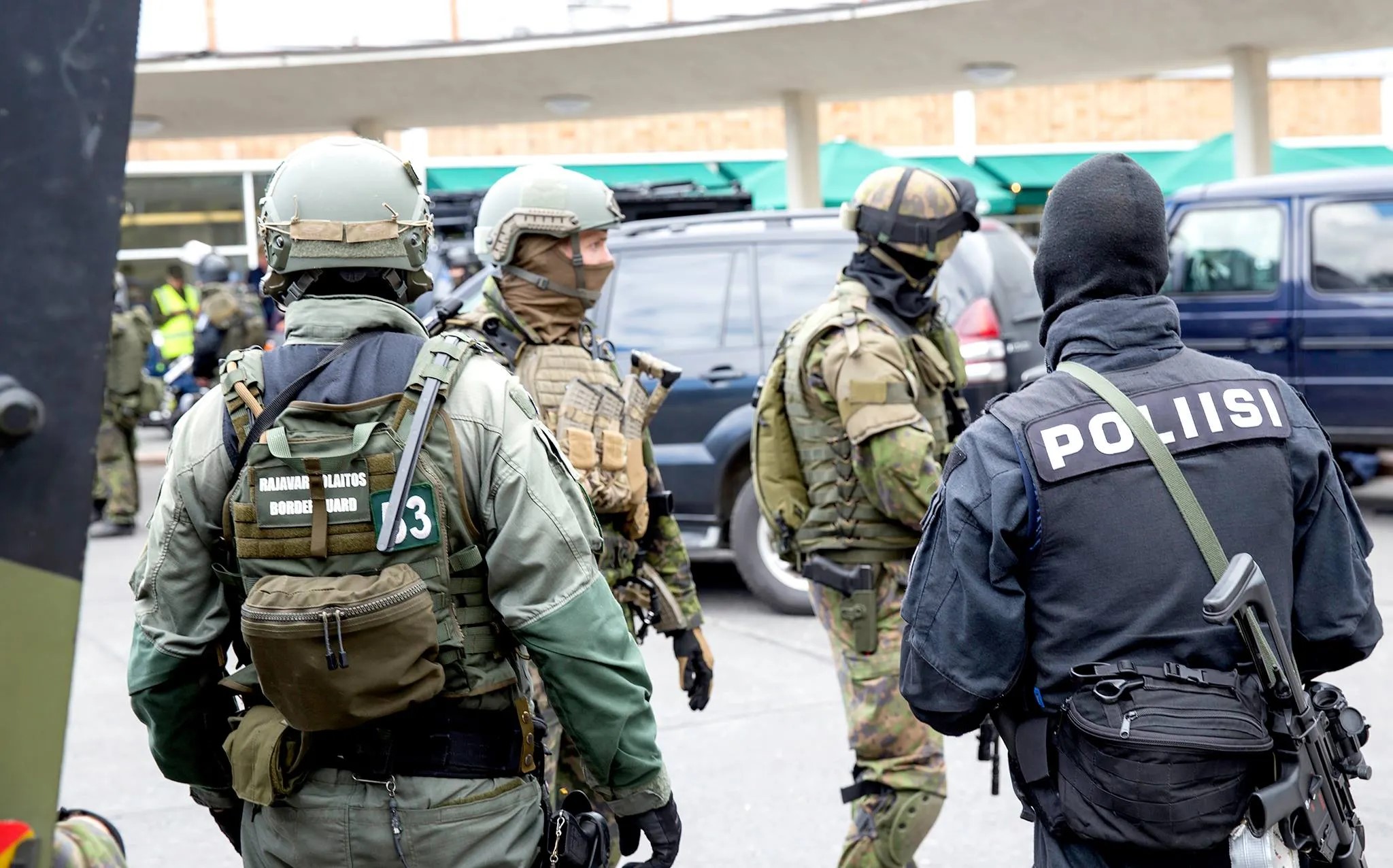
Strategic Implications and Posture
Finland’s approach to TD is deeply shaped by its geography and history. Sharing a 1,340 km border with Russia, Finland has long maintained a posture of heightened vigilance, treating national security as an existential imperative. Unlike many Western nations that downsized after the Cold War, Finland retained its comprehensive defence model, known as kokonaismaanpuolustus (‘total defence’), as a deterrent against potential aggression.[21] The strategic logic is shaped by a deterrence by denial posture–ensuring any aggressor would face a unified, prepared society and protracted resistance. This posture is evident in Finland’s continual investment in territorial defence and resilience, even during peacetime. For example, Finland has focused on security of supply, mandating critical sectors (energy, food, health, finance) to maintain contingency plans and stockpiles to sustain the nation during crisis.[22] These measures reflect Finland’s recognition that modern conflicts target civilian infrastructure and cohesion as much as military targets.
Finland’s strategic culture emphasises whole-of-nation defence. Every sector of society–government, private industry, civil organisations, and citizens–is assigned roles in national preparedness. Regular high-level exercises underscore this integrated posture: four times a year, Finnish political leaders, business executives and civil society heads convene for crisis simulation drills to practise coordinated responses.[23] This perpetual readiness mindset, born of Finland’s historical experiences (such as the Winter War of 1939–1940) and proximity to a ‘belligerent state', sends a clear signal of deterrence. Indeed, even as a newly acceded NATO member, Finland signals that it will never be a ‘soft target’–any aggression would meet nationwide resistance.[24] Strategically, this posture has broad implications: it not only hardens Finland against hybrid warfare and covert subversion but also strengthens its credibility and value as a security partner in Europe. The Finnish model demonstrates that comprehensive societal preparedness can bolster deterrence by raising the costs and uncertainties for potential aggressors.
Organisational Models and Coordination Mechanisms
Finland’s TD is underpinned by robust organisational frameworks that integrate military and civilian capabilities. At its core is the Finnish Defence Forces, a unified command structure under the president and government, responsible not only for military defence but also for coordinating with civilian authorities. A distinctive feature of Finland’s model is universal male conscription.[25] All medically fit men serve 6 to 12 months in the military, after which they remain reservists up to age 60 (women may volunteer and have increasingly done so). This system yields a large trained reserve–roughly one-third of Finland’s 5.5 million population can be mobilised on short notice. The military’s footprint extends across the country in a territorial defence structure: conscripts and reservists are organised into local units so that any region can rapidly raise forces to defend itself. This decentralised readiness, combined with Finland’s network of dispersed depots and border guard units, ensures no part of the nation is undefended in a crisis.
Equally important are Finland’s coordination mechanisms linking government ministries, businesses, and citizens. Every ministry in the government has explicit crisis-management duties aligned to the TD framework.[26] Finland’s Security Committee,[27] a permanent inter-agency body, oversees comprehensive security planning, ensuring that civilian agencies are prepared to support the military and maintain essential services under duress.[28] The private sector is also woven into planning: by law, companies in critical industries must prepare for emergencies (e.g., backup power for telecoms, rerouting of trade, substitute suppliers). Finland’s National Emergency Supply Agency works with industry to stockpile fuels, grains, medicines and other essentials, achieving resilience in supply chains unparalleled in Western Europe.[29] On the civilian side, local governments and communities conduct regular emergency drills, and an extensive network of civil defence shelters has been built nationwide. Public facilities–car parks, sports halls, metro stations–are engineered to double as bomb shelters; in Helsinki alone, underground shelter capacity exists for over 900,000 people.[30] Building codes mandate these shelters in large buildings, reflecting how civil defence is systematically embedded in infrastructure.
Integration across these spheres is maintained through joint training and information-sharing. Finland’s defence training courses, for instance, educate civil leaders (mayors, CEOs, NGO heads) about national defence and their expected roles, forging personal networks between military and civilian elites.[31] In crisis scenarios, this preparatory work means key actors can coordinate swiftly with predefined communication channels and trust. Overall, Finland’s organisational model is often cited as a gold standard of civil-military integration; it is a combination of all national and international military and civilian efforts to secure the conditions of homeland defence in all security situations.[32] By institutionalising cooperation (rather than relying on ad hoc arrangements), Finland ensures unity of effort.
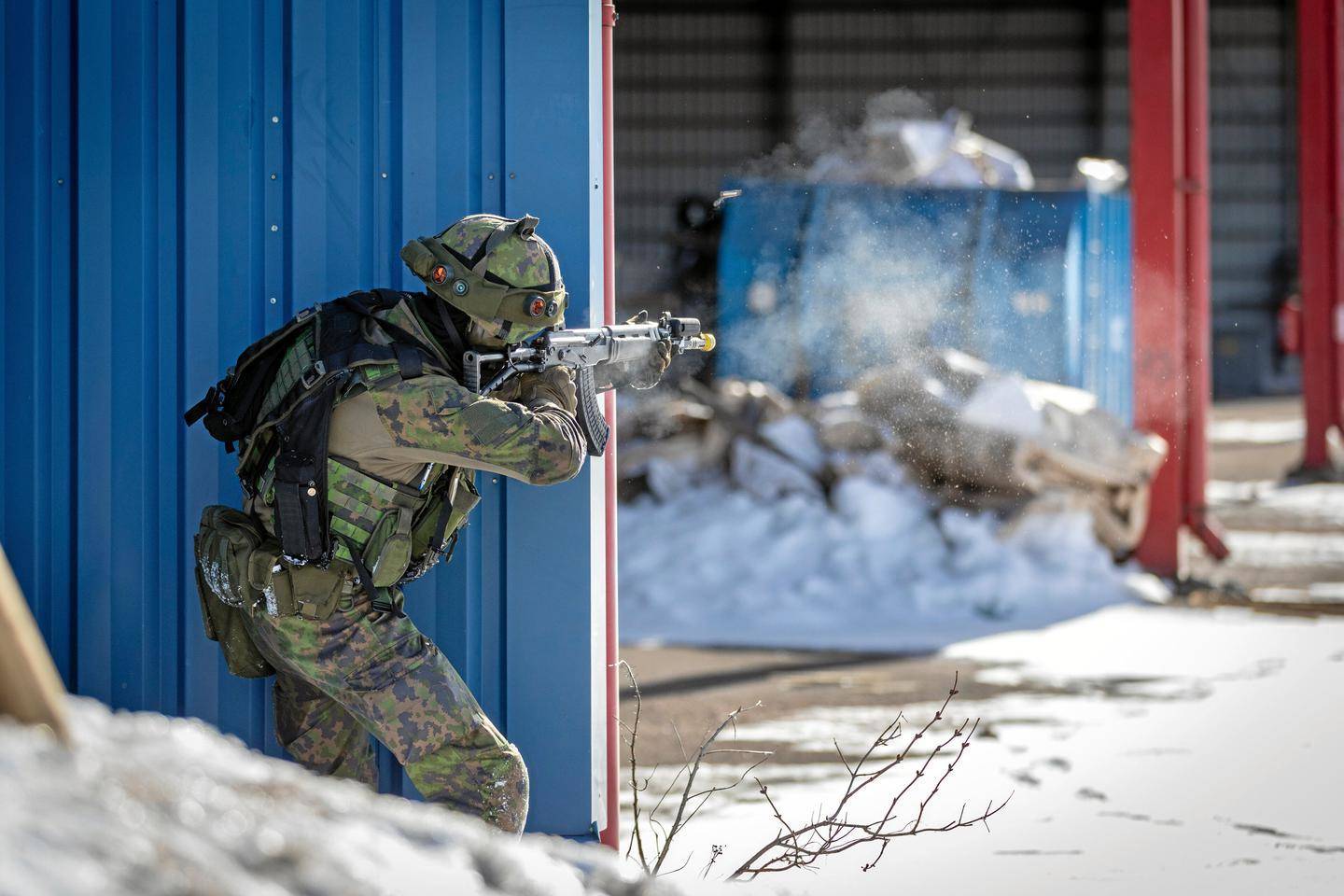
Societal Factors: Mobilisation, Education and Trust
Perhaps the most crucial element of Finland’s TD is the society itself–a populace educated, motivated and psychologically resilient to withstand crises. National service forms the bedrock of societal mobilisation. Because virtually every Finnish family has members who have served, there is a widespread public sense of duty and collective ownership of national defence.[33] Conscription not only provides military skills but also reinforces social cohesion: recruits from all regions and social classes train together, forging bonds that transcend peacetime divides. This has cultivated a culture where military service is respected and seen as a rite of citizenship, and preparedness is normalised rather than alarmist. Finland’s concept of sisu–a national ethos of grit and determination–further bolsters psychological resilience.[34] The Finnish public is mentally primed to endure hardships; government messaging emphasises calm resolve, not fear, regarding potential threats.[35] Public campaigns encourage individual readiness (e.g., maintaining 72-hour emergency supply kits) but also stress that every citizen has a role in defence beyond the battlefield.
Education and information are key tools Finland uses to immunise society against modern ‘soft’ threats. From an early age, Finns receive instruction in media literacy and critical thinking as part of the school curriculum–essentially training a citizenry with an immunity to malignant information. Government agencies, often in partnership with media, run robust psychological defence initiatives to expose and counter false narratives aimed at undermining national cohesion.[36] In fact, Finland (alongside Sweden) is at the forefront of building public capacity to detect and resist information warfare. This includes publishing fact checks, sponsoring community lectures on spotting fake news, and quickly rebutting disinformation in official communications. The effect is evident: despite being a target of frequent propaganda from its eastern neighbour, Finnish society has proven largely resilient–trust in domestic institutions remains high and social fractures are minimal.[37] Notably, public trust in government and the security sector is among the highest in Europe and has grown in recent years, a trend attributed to Finland’s inclusive approach to defence that provides citizens agency in assuring their mutual security. In surveys, Finns also record one of the world’s strongest wills to defend their country if attacked.[38] This unity of purpose is the ultimate strategic asset imparted by Finland’s TD model: a democratic society that is difficult to demoralise or divide.
Legal and Constitutional Underpinnings
Finland’s TD rests on a clear legal foundation that enshrines the responsibility of citizens and delineates emergency powers. The Constitution of Finland (section 127) explicitly states that ‘Every Finnish citizen is obligated to participate or assist in national defence, as provided by an Act’, making national defence a universal civic duty.[39] This constitutional mandate is operationalised through the Conscription Act, which imposes compulsory military service on male citizens and assigns civil defence duties to others in wartime.[40] Provisions exist for exempting or reallocating individuals in special cases, but the baseline expectation of service is firmly established in law. Complementing this, Finland’s Emergency Powers Act and related legislation empower authorities to mobilise resources across society during crises–for example, government can requisition facilities, direct labour, or enforce rationing in a declared emergency.[41] Private companies in defined critical sectors are legally obliged to cooperate with authorities and uphold continuity of operations under emergency regulations. These laws have created a framework where resistance and preparedness by the entire society is not just an idea but a codified legal obligation. Indeed, analysts note that Finland’s model ‘mandates legally required resistance from the entire society against adversaries and threats’, setting it apart as particularly comprehensive.[42]
The Finnish government has also produced strategic doctrines that guide TD implementation. The Security Strategy for Society (2017) outlines seven vital functions of society (including military defence, population welfare, and psychological resilience) and assigns lead agencies to each.[43] This strategy, endorsed by the cabinet, serves as a de facto national TD plan, ensuring all ministries align their sectoral legislation and plans with the overall defence concept. Furthermore, Finland’s Defence Administration Act and related regulations cement coordination mechanisms–for instance, municipalities have legal civil defence committees, and the National Emergency Supply Agency operates under statutory authority to manage stockpiles and agreements with industry.[44] Such legal structures not only clarify responsibilities before a crisis but also help avoid delays when swift action is needed. On the international front, Finland’s laws now reflect its NATO membership, but importantly Finnish law continues to emphasise self-reliant defence of the homeland.
In sum, Finland’s TD is backed by a comprehensive legal framework that empowers whole-of-nation mobilisation. This ensures that, in wartime or national emergencies, extraordinary measures (up to general mobilisation of all citizens) have a lawful basis and are supported by high levels of public acceptance. The clarity of these legal underpinnings has been critical to Finland’s success in sustaining a TD posture over decades.
3.2 Sweden
Strategic Implications and Posture
Sweden’s revival of TD (totalförsvaret) in recent years is a direct response to deteriorating security in Europe and the perceived threat from Russia. After decades of relative strategic laxity post-Cold War, Sweden has ‘reappraised’ its defence posture since Russia’s 2014 annexation of Crimea, signalling a return to territorial defence preparations.[45] Strategically, Sweden’s TD concept aims to deter aggression by raising the costs to an opponent of any attack, and by integrating military might with national resilience so that Sweden becomes a very challenging prospect for an aggressor.
The revival of TD marks a significant shift from the expeditionary, peacekeeping-focused orientation Sweden had in the early 2000s. Now, warfighting in defence of the homeland–including enduring and resisting even if partially occupied–is once again a central planning scenario.[46] In practical terms, Sweden’s strategic posture involves rebuilding capabilities that were previously mothballed: air defence systems, anti-invasion coastal missiles, mobilisation plans for its entire society, etc. The government openly acknowledges that the security environment demands a ‘whole-of-society’ approach to national defence, echoing the ethos of the Cold War era but updated for modern hybrid threats. As part of this shift, Sweden has sought closer security alliances, shedding two centuries of neutrality. In 2024, Sweden became the 32nd NATO member, reflecting a recognition that collective defence and partnerships will reinforce its TD planning. Importantly, however, Sweden’s TD strategy is not outsourced to NATO–rather, alliance support is meant to augment a robust national defence foundation.
The strategic implications for the region are significant. A Sweden committed to TD contributes to deterring aggression in the Nordic-Baltic area by complicating any hostile action against not only itself but also its neighbours. Swedish defence planning now includes scenarios of great-power conflict in the Baltic Sea region. By preparing society-wide resilience, Sweden is bolstering regional stability.[47] Part of its strategic posture is psychological: the Swedish public is being reconditioned to accept that a crisis or even war on its soil, while unlikely, is possible–and that readiness is therefore necessary. The government’s public issuance of the In Case of Crisis or War handbook to all households in 2018 epitomised this approach,[48] sending a deterrence message of its own (a populace mentally prepared to resist). Strategically, Sweden’s TD emphasises a dual focus, acknowledging that modern conflict could range from cyber attacks and influence operations to outright military invasion. Thus, Sweden is investing in everything from cyber security capacities to the remilitarisation of Gotland island.[49] The underlying posture is defensive but determined: Sweden aims to convince any adversary that attacking it would trigger not only Sweden’s armed forces but also an entire nation mobilised in defence, with support from international partners–a combination that presents a formidable hurdle.
Organisational Models and Coordination Mechanisms
Sweden’s TD is organised as a twin-pillar model: military defence (the armed forces and related components) and civil defence (all civilian activities that contribute to national defence). These two pillars are coordinated under a revived TD framework guided by the government. On the military side, Sweden has restructured its forces for national defence. Notably, it reintroduced conscription in 2017 (after abolishing it in 2010) to ensure a steady inflow of trained soldiers.[50] Unlike Finland’s universal model, Sweden’s conscription is selective–both men and women are liable from age 18, but only a fraction are enlisted based on aptitude and motivation, yielding about 4,000 recruits annually in recent years.[51] This provides the armed forces with necessary manpower while reflecting modern societal expectations (e.g. gender equality in service, albeit limited intake). In addition to active duty forces, Sweden fields a volunteer Home Guard (Hemvärnet) of around 20,000 part-time personnel spread across the country.[52] These units, often composed of ex-conscripts and local volunteers, can rapidly reinforce the regular force, guard infrastructure and assist civil authorities–a critical capacity for handling dispersed or sabotage threats.
On the civil side, Sweden has empowered a range of agencies and structures to regenerate capabilities that faded after the Cold War. The Swedish Civil Contingencies Agency (MSB) is central to civil defence coordination. The MSB is tasked with everything from advising municipalities on war-preparedness to managing emergency stockpiles, to leading public education campaigns on crisis readiness.[53] The government has directed all 21 regions (counties) and 290 municipalities to update their emergency plans to ensure continuity of essential services (like healthcare, water and power) in a conflict scenario. Private companies in critical sectors are required by law to enhance their resilience–for example, companies providing power, telecommunications, or logistics must plan for operations under duress and can be directed by government authorities in a national emergency.[54] This public–private integration is supervised through sector responsibility schemes and formal agreements. Furthermore, Sweden established a new Agency for Psychological Defence in 2022, recognising the need to coordinate efforts against misinformation and foreign influence.[55] This agency works closely with MSB and the intelligence services to detect influence campaigns and strengthen societal cohesion under stress.[56]
Organisationally, a hallmark of Sweden’s TD is the revival of Cold War-era coordination mechanisms, updated for today. The government reinstated the concept of ‘totalförsvaretsråd’ (TD councils) at national and regional levels, which bring together military commanders, civilian officials, and industry representatives to jointly plan and exercise.[57] In 2019, Sweden held its first national civil defence exercise in decades, testing inter-agency response to simulated hybrid attacks.[58] By 2023, Sweden was able to conduct Exercise AURORA 23, a full-scale TD exercise involving military manoeuvres combined with civilian mobilisation drills.[59] These exercises revealed and addressed gaps–for instance, clarifying how the armed forces will support civil authorities in disaster relief during conflict, and how communications will flow if public networks are disrupted. Despite challenges (including resource trade-offs between military and civilian needs), Sweden has made significant progress in rebuilding a coordinated TD structure. The emerging model is one in which every level of society has a defined role: government agencies have continuity instructions, local governments can activate wartime organisations, voluntary defence organisations support official efforts, and the military and civil sectors operate in lockstep under a unified national strategy.
Societal Factors: Mobilisation, Education and Trust
An important dimension of Sweden’s TD resurgence is the attempt to reforge the societal contract for national defence. During the Cold War, Swedes were accustomed to the idea of ‘total people’s defence,’ but after 1991 that ethos waned. In recent years, authorities have begun re-educating the public about threats and the necessity of preparedness. Already highlighted is the most high-profile example, the distribution of the Om krisen eller kriget kommer (In Case of Crisis or War’) booklet to every household in 2018, which gave practical advice on survival and underscored each citizen’s duty to contribute to defence. This marked the return of overt civil defence messaging. The government and MSB also run continual awareness campaigns–covering everything from storing emergency water to recognising false information–aiming to instil a culture of readiness without inducing panic. The concept of totalförsvarsplikt (TD duty) is actively communicated; in practice, TD duty could mean compulsory labour in vital industries or services during war, beyond just military conscription. While this broad duty has existed in law for decades, reminding the public of it has been part of strengthening psychological preparedness.
Furthermore, the transition back to TD has come with a transformation in military diversity. Specifically, there are fresh perceptions about who constitute the ‘right people’ to retain within the military, with added emphasis on the need for civilian–military integration with an associated focus on generating a military demographic that better reflects the breadth of civilian society.[60] This has meant a slow shift from selecting white, young, heterosexual men to broadening the military professional role to reflect the wider range of societal cultural traits.
Swedish society generally exhibits high levels of trust in government and public institutions, which is a double-edged factor. Sweden’s public trust in government has historically been above OECD averages; between 2013 and 2023 it remained high, albeit dipping slightly by approximately 6 percent.[61] On one hand, this trust has smoothed implementation of TD policies–for example, compliance with civil defence directives and willingness to serve if conscripted are bolstered by confidence in the state. On the other hand, the long period of peace and prosperity Sweden has historically enjoyed created a degree of societal complacency about defence–a ‘peacetime mentality’ that authorities have had to overcome.[62] The reactivation of conscription was one test: it signalled to youth that defence is again a civic obligation. Interestingly, the reintroduction was met without major outcry, indicating a latent understanding among Swedes of the changing security climate.[63] Nonetheless, because only a small portion of each cohort is drafted, many Swedish youths still do not directly participate in defence, which could limit the societal penetration of TD values as compared to Finland. To compensate, Sweden leverages its extensive network of voluntary defence organisations–such as the Women’s Voluntary Defence Organisation the Swedish Civil Defence League–to involve citizens in activities like emergency training, first aid and civil support roles.[64] These organisations have seen increased membership and state support since 2015, reflecting growing public eagerness to do their part.
Legal and Constitutional Underpinnings
The legal basis for Sweden’s TD concept is well established, though it is in the process of modernisation. As already discussed, Sweden’s Instrument of Government (constitutional law) mandates that the government must secure the realm and, to this end, allows for laws on compulsory service. Under the framework of totalförsvarsplikt, every Swedish citizen (and resident) aged 16 to 70 can be required to serve in some capacity for national defence. This comprehensive duty is delineated in the Swedish TD Service Act, which encompasses military service, civil service, general civic duty, and war service for those not otherwise mobilised. In peacetime, the most visible aspect of this is the conscription of youth into the armed forces, reactivated by a government decision in 2017 under existing law.
Another legal element is the Emergency Management and Heightened Alert Ordinances, which spell out how government functions transition in war. Sweden maintains a concept of höjd beredskap (heightened alert) that the government can declare, ranging from a sharp crisis to outright war.[65] During heightened alert, special laws activate: the government can issue binding directives to municipalities and companies, conscript personnel into civil defence roles, and assume control over resources. Many of these provisions stem from laws passed during the Cold War. In fact, one challenge identified is that legislation governing TD remains dated, not fully accounting for post-1990s societal changes.[66] To address this, Sweden’s parliament the Riksdag) has been updating statutes: for example, a new Civil Defence Act is in draft to replace old civil defence laws, clarifying responsibilities of today’s privatised services and modern supply chains. Similarly, Sweden’s cyber security and information influence laws are being tightened, including by the introduction of the Foreign Espionage Act in 2022, complementing the work of the Psychological Defence Agency.[67]
Institutionally, the roles are defined by law: the government and Prime Minister lead TD, but if war directly threatens Sweden, the War Delegation (a subset of the parliament) can assume legislative powers to ensure continuity of governance. The Supreme Commander of the Armed Forces gains certain autonomous authority to act in defence of the nation under wartime law.[68] There are also legal provisions for international assistance–recent amendments allow Sweden to both receive and give military aid even outside full NATO membership, reflecting collective defence aspirations.[69] On the civil side, each governmental agency has been given directives to develop continuity plans, which have quasi-legal force as they are tied to the agencies' regulatory instructions. Importantly, Sweden’s legal framework ensures that coordination between civil and military defence is mandatory. Government Bill 2020/21:30, Totalförsvaret 2021–2025, laid out a multi-year plan and explicitly linked funding and tasks for both military and civil defence; this was passed by the Riksdag, giving it legislative backing.
In summary, Sweden’s TD is anchored in law by the universal defence duty and a suite of emergency statutes. While some laws need updating, the fundamental authorities exist to mobilise the whole society. This legal clarity provides predictability–everyone from corporations to citizens is aware of what is expected if dark days come–and thus undergirds the credibility of Sweden’s TD system.
3.3 Estonia
Strategic Implications and Posture
Estonia’s adoption of a TD (terviklik riigikaitse) strategy is fundamentally driven by its acute security imperatives as a small state bordering Russia. Since regaining independence in 1991, and especially after Russia’s aggression in Ukraine (2014 onwards),[70] Estonia views a comprehensive defence posture as essential to deter and, if necessary, survive aggression from a much larger adversary. Strategically, Estonia’s TD concept is about mobilising the entire nation for defence and resistance. This entails preparing not only to defend against overt military invasion but also to counter hybrid warfare tactics–cyber attacks, information warfare, internal subversion–that Russia might employ short of open war.
The Estonian National Security Concept explicitly states that any hostile action targeting Estonia’s society or allied relationships (e.g., attempts to fracture NATO solidarity) is considered a threat to national security. Thus, Estonia’s posture is one of constant vigilance, integrating domestic resilience with its deterrence strategy. A notable aspect is Estonia’s emphasis on deterrence by denial: making the country an undesirable prospect for an occupier, a major shift from its more recent deterrence by punishment philosophy.[71] The experience of Soviet occupation and the 2007 state-sponsored cyber attacks on Estonia underscored that defence must be multi-layered. Consequently, Estonia invests heavily in cyber security and has made itself a world leader in that domain[72] (hosting NATO’s Cyber Defence Centre of Excellence in Tallinn). It also quietly plans for guerrilla resistance in worst-case scenarios, having studied models of insurgency[73] and leveraged the legacy of the ‘Forest Brothers’ (partisan fighters) from World War II.[74]
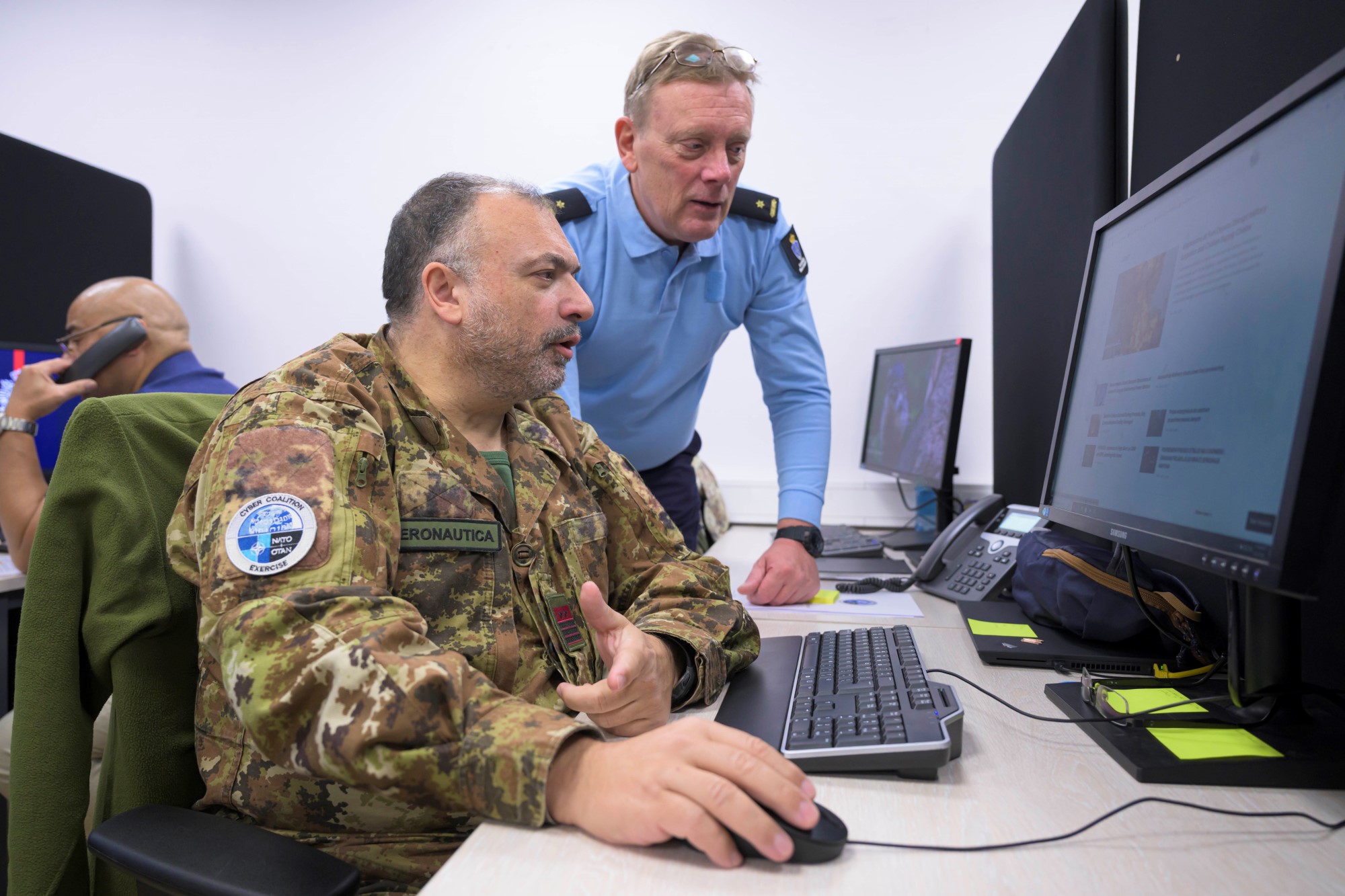
By embedding defence across society, Estonia aims to complicate any aggression by an opponent. Strategically, this posture complements Estonia’s reliance on NATO’s collective defence. While NATO’s presence (a multinational battlegroup is stationed in Estonia)[75] provides external deterrence, Estonia’s TD ensures that if NATO assistance is delayed or limited, Estonia can hold out. Indeed, Estonia does not rule out the threat of direct military attack and has decided that ‘any action that targets allied solidarity and the integrity of NATO threatens Estonia’s security’[76]–underscoring that it sees itself on the frontline of NATO. This has regional implications: Estonia’s robust stance signals to its Baltic neighbours and NATO that it will not be a weak link. It also serves as a form of deterrence messaging to Moscow, indicating that even non-military means of subversion will be met with an orchestrated national response.
Estonia fuses NATO-backed deterrence with hard-edged home-front capacity. It actively pursues international cooperation (EU, NATO, bilateral) as part of its defence, while simultaneously ensuring that its domestic capacity–from military reserves to critical infrastructure protection–is strong. This two-tiered approach (national resilience and allied support) is seen in exercises where Estonian Defence Forces and civilian agencies train alongside NATO troops for both conventional defence and societal resilience scenarios. In summary, Estonia’s TD posture is that of a ‘porcupine strategy’: a small nation with sharp quills, ready to defend itself on the ground, online, and in the information space, thereby bolstering overall deterrence in the Baltic region.[77]
Organisational Models and Coordination Mechanisms
Estonia’s TD is organised around the principle of comprehensive national defence, which unites military, civilian, economic and psychological components under one framework. The EDF form the military core–a relatively small active force (around 7,000 personnel) backed by a sizable reserve created through national conscription. All male citizens are subject to conscription, serving typically eight–11 months, which provides Estonia with a trained reserve of over 60,000–a substantial number for a nation of 1.3 million. These reservists practice rapid mobilisation via periodic musters initiated by the use of modern alert systems (SMS-based call-up in emergencies).[78] The EDF is structured for territorial defence: units are stationed and train in regions across Estonia, enabling localised rapid response similarly to the Finnish model. Alongside the regular military stands the Estonian Defence League (EDL), a voluntary paramilitary organisation with around 30,000 members. The EDL is a cornerstone of Estonia’s TD. It has units in every county, composed of armed volunteers who train on weekends and can provide immediate resistance or support to the regular forces during crises. Estonian law provides that EDL units can independently engage hostile forces until the EDF takes charge, essentially acting as a territorial militia empowered to resist in whatever way they choose based on their own circumstances.[79] This greatly expands Estonia’s defence capacity and embeds military preparedness in communities.
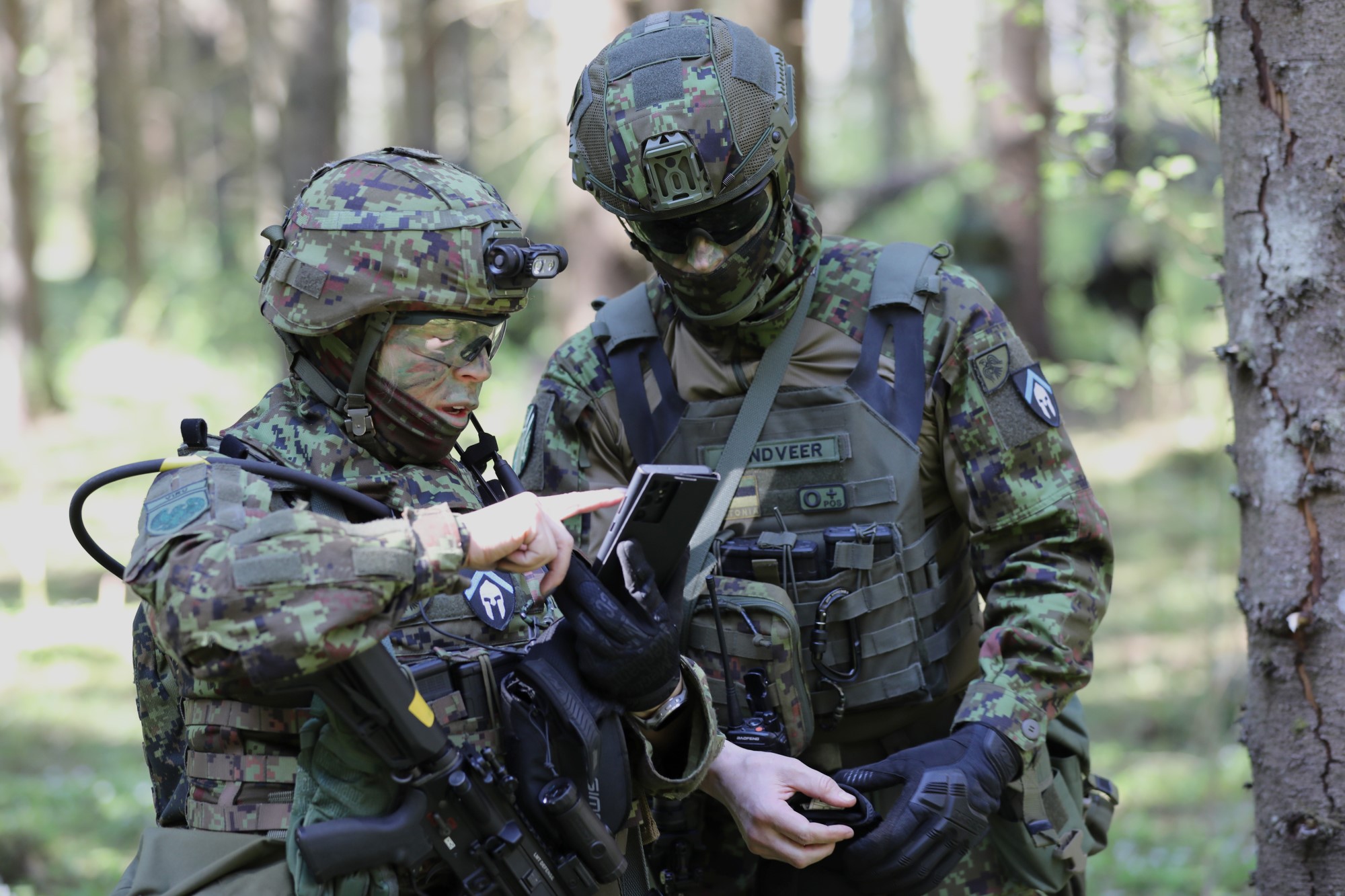
Coordination between the military and civilian sectors is achieved through formal planning and inter-agency bodies. The Comprehensive Defence Development Plan guides long-term integration of efforts across ministries–from interior (in charge of internal security and emergency services) to economic affairs (responsible for energy and transport resilience). Each ministry must develop crisis contingency plans that align with national defence scenarios. For example, the Ministry of Economic Affairs has plans to reroute supplies and maintain communications during conflict, supporting the EDF’s needs.[80] The government’s Security Committee (chaired by the Prime Minister) regularly reviews these plans. At the operational level, Estonia has melded internal security and defence more closely since 2016 by establishing joint coordination centres and information-sharing between the military, the police the border guard force, and rescue services.[81] This enables swift unified responses to hybrid threats.
Estonia also leverages technology and its e-government prowess to coordinate its TD efforts. All vital databases and services (citizens registry, banking, government networks) are part of the ‘digital defence’ of the nation–protected by an integrated cyber security framework that involves public agencies and trusted private partners. The concept of a ‘data embassy’ (Estonia stores backup data in servers abroad) is an innovative part of ensuring governance continuity even if domestic infrastructure is hit by cyber or kinetic strikes.[82] In terms of multi-level governance, Estonia’s small size allows a relatively flat hierarchy: local governments play a role in civil defence (like managing shelters and local volunteer efforts) but they are closely guided by national authorities’ instructions.[83] Additionally, Estonia integrates international coordination into its TD mechanisms–in-country NATO force integration units would liaise with Estonian HQ during operations, and Estonia hosts an annual Exercise SIIL (Hedgehog) that practices receiving allied reinforcements while its whole society transitions to a war footing.[84]
To sum up, Estonia’s organisational model is one of multi-layered defence: a blend of standing forces, reserves, volunteers, government agencies, and private sector allies, all coordinated through a doctrine that the entire nation must be ready to defend by all means. Given the scale of their TD implementation in Estonia, compared to its peers, commentators often note that Estonia’s approach is among the most fully realised examples of whole-of-society defence.
Societal Factors: Mobilisation, Education and Trust
Estonia places heavy emphasis on the societal dimension of TD, knowing that national will and cohesion are as critical as arms. Public mobilisation starts with national service: each year thousands of young Estonian men undergo military training, and upon discharge they carry not only skills but a sense of duty into civilian life. This helps sustain a culture where defence is seen as a universal responsibility. In addition to conscription, the EDL and its affiliated organisations (including a women’s corps (Naiskodukaitse) and youth groups) engage citizens in defence-related activities in peacetime, embracing tasks like pandemic response.[85] This allows them to practise support to civil community while protecting the EDF from being drawn away from its primary task. These voluntary networks deepen community resilience–members learn survival skills, first aid, marksmanship, and even cyber defence techniques, and they propagate a preparedness mindset among the wider populace. Grassroots involvement is further encouraged by government-supported events like Ole Valmis ('Be Ready') campaigns and nationwide crisis response drills that involve ordinary citizens.[86] Such activities reinforce that ‘every Estonian is a defender.’ Notably, the government promotes mental preparedness as much as physical. Officials emphasise calm and resolve, spreading the message that fear and panic are as dangerous as any weapon. The education system now incorporates lessons on security: high schools offer basic courses on state defence, and university programs in cyber security and defence studies have expanded, producing knowledgeable cadres in society.[87]
A particular focus for Estonia is fostering unity across ethnic lines. Ethnic Russians make up about a quarter of Estonia’s population, concentrated in certain regions. The Kremlin has historically tried to exploit this minority with propaganda about discrimination, hoping to undermine Estonian cohesion.[88] To counter this, Estonia’s approach to TD includes inclusive national messaging and trust-building with minority communities. Government communications and emergency instructions are provided in Russian as well as Estonian, to ensure no segment of society is left out of preparedness efforts. Nevertheless, challenges remain–surveys have found that while ethnic Estonians overwhelmingly express willingness to defend Estonia, Russian-Estonians have more ambivalent attitudes.[89] The Cohesive Estonia 2030 strategy explicitly aims to ‘strengthen the cohesion of civil society’,[90] as security is easier to ensure in a tolerant, caring and participatory society. This involves cultivating shared values and a common national narrative of resilience.
Trust in Estonian public institutions has been on an upward trajectory, bolstered by the government’s tech-forward transparency and the tangible investments in defence. Between 2013 and 2023, public trust in government increased by about 18 per cent,[91] reflecting perhaps that citizens feel more secure when they see their leaders taking security seriously. The COVID-19 pandemic and 2022 Ukraine war, though challenging, further galvanised public confidence in Estonia’s crisis management. That said, Estonia remains wary of internal vulnerabilities: officials acknowledge that societal resilience remains limited by certain factors, such as bureaucratic hurdles and reluctance within the military to integrate civilian roles into their planning and training. Studies have found that Estonia’s early TD efforts suffered from unclear military leadership in public engagement efforts–a gap that Estonia has worked to fix by clarifying chains of command and volunteer coordination in new defence plans.[92] Further, the armed forces have adapted training exercises to better integrate reservists and armed civilians during call-ups, addressing prior unpreparedness to absorb mass civilian participation.[93]
Overall, Estonian society today is arguably more cohesive and prepared for crisis than at any point in the post–Cold War era. The combination of high-tech savvy (for cyber defence), patriotic fervour among the youth (witness the popularity of defence-related events), and inclusive policies towards minorities form the backbone of Estonia’s social resilience. This societal strength is both a deterrent and the linchpin of Estonia’s ability to endure any conflict that might overwhelm its military in isolation.
Legal and Constitutional Underpinnings
Estonia’s TD concept is underwritten by robust legal obligations and frameworks that mobilise the entire society. The Constitution of the Republic of Estonia (Article 54) affirms the right and duty of citizens to defend the independence and constitutional order of the state. It foresees that all physically and mentally fit male citizens must serve in the EDF, establishing conscription and defence service as constitutional mandates.[94] The Military Service Act and National Defence Act flesh out these duties: they define the national defence obligation as ‘an obligation of an Estonian citizen to participate in national defence’ and lay down the procedures for conscription, reserve service, and mobilisation.[95] Under these laws, evasion of military service is an offence, and reservists are legally bound to attend periodic training. Beyond military conscription, Estonia’s laws impose a ‘work obligation’ during increased defence readiness–meaning citizens (and even permanent residents) with critical skills can be required to continue working in support of national defence (e.g., doctors, utility workers and transport drivers can be mandated to serve in their professional capacity). The government maintains a registry of such personnel for use in crises.[96] These measures ensure that essential civilian services are maintained and contribute to defence efforts during wartime.
Moreover, the National Defence Act provides the government sweeping powers in an emergency or war. During a declared state of war, the Government of Estonia can, with the President’s approval, mobilise the EDF and the EDL, evacuate populations, requisition property, and enforce curfews or movement restrictions. All of this is regulated by law to balance necessity with rights. Notably, any declaration of war or emergency must be promptly submitted to parliament for oversight, preserving Estonia’s democratic accountability even under martial law. The law also outlines the roles of local authorities–they must coordinate with EDL units and military commandants to ensure local support (e.g., providing facilities for troop billeting, sharing local resources). The Estonian Defence League Act gives the EDL legal status as a component of national defence, authorised to carry out military tasks independently until regular forces arrive and to assist civil authorities in emergencies. This Act also protects the rights of the EDL's volunteer members (e.g., their employers must by law release them for certain training or emergency duties).
On the civil defence side, Estonia historically lacked a strong shelter infrastructure compared to Finland or Sweden–a Soviet legacy was neglected. However, recognising this gap, the government in 2022 tasked the Interior Ministry with drafting a new civil protection plan, including identifying basements and other robust structures that can serve as improvised shelters. Legislation is expected to follow that will mandate improvements in this area (e.g., new public buildings might be required to have shelter space). Additionally, Estonia has legal statutes addressing cyber security and information space as part of its defence. The Cybersecurity Act mandates critical service providers to uphold stringent cyber defences and report incidents, effectively integrating them into national defence. Laws against incitement and hostile propaganda (amended in 2018) allow authorities to act against individuals or outlets actively aiding an aggressor’s information campaign. While walking a fine line on free expression, these laws are seen as part of Estonia’s defensive toolkit in the legal domain. Finally, there are international aspects: since Estonia relies on NATO, it has legal agreements in place (status of forces agreements) to host allied troops and even a provision in its Defence Act that allows for armed resistance as part of collective defence operations on its soil.
In essence, Estonia’s legal framework creates a state of readiness: in peacetime a broad segment of society is trained and obligated to engage in defence, and in wartime the laws enable rapid transition to a fully mobilised society. This comprehensive legal preparedness reinforces the credibility of Estonia’s TD–adversaries know that Estonia is legally and organisationally primed to fight with its entire national capacity.
3.4 Lithuania
Strategic Implications and Posture
As with all the states discussed so far, Lithuania’s implementation of TD (visiškas gynybos konceptas) emerges from its stark awareness of the Russian threat and the lessons of recent history. Strategically positioned at NATO’s eastern flank–including the vulnerable Suwałki corridor bordering Belarus–Lithuania views comprehensive national defence as vital for deterring Russian aggression and ensuring survival until allied reinforcements arrive.[97] After Russia’s incursions into Ukraine in 2014, Lithuania underwent a strategic awakening, reversing earlier defence drawdowns.[98] In 2016 it formally updated its military strategy to base national capabilities on a ‘TD approach', explicitly integrating military and civilian efforts and emphasising that defence is ‘the duty of the whole nation’. A cornerstone of Lithuania’s posture was to re-establish the importance of territorial defence and societal resistance. This meant reintroducing conscription in 2015 (after having suspended it in 2008 when threats seemed remote) and rebuilding reserve forces. It also meant planning for unconventional resistance: Lithuania has openly discussed preparing citizens to engage in guerrilla tactics if the country is occupied, as a message to Moscow that any invasion will meet enduring popular resistance (a concept echoed in its 2021 National Security Strategy).[99] In essence, Lithuania’s deterrence strategy comes by signalling that not only its military but its entire population and state apparatus will continue to fight and function under attack.[100]
On the world stage, Lithuania’s TD posture is tightly coupled with its Euro-Atlantic orientation. It sees its national defence as representing the forward edge of NATO’s collective defence strategy (an attack on Lithuania triggers NATO’s Article 5). Thus, Lithuania aims to maximise its attractiveness as an ally by investing in its own defence (on which it consistently spends over 2 per cent of GDP, heading towards 3 per cent) and by being a staunch supporter of comprehensive defence strategies among NATO states. However, Lithuanian leaders also recognise that NATO membership alone is not a panacea; Russia’s local superiority and geographical proximity mean Lithuania must be prepared to hold out. This thinking led to the creation of the ‘three layers’ approach to defence often cited by officials: first, national armed defence; second, TD by society (including unconventional warfare); and third, allied support.[101] The strategic implication is a commitment to never capitulate–even if the country were partially occupied, resistance would continue. In peacetime, this translates to an assertive posture: Lithuania has been vocal in information warfare against Russia (e.g., banning Russian propaganda channels, publicly accusing Russia of aggressive intent) and has enhanced its internal security (like creating a rapid reaction force to counter ‘little green men’, or infiltrators).[102]
In summary, Lithuania’s TD is both a practical strategy and a political signal–it conveys to both the Lithuanian public and international partners that Lithuania considers itself under constant hybrid threat and is acting comprehensively to address it, from military reform to societal mobilisation. This posture helps deter covert aggression (like inciting unrest or cyber attacks) by demonstrating national unity and preparedness, and it dovetails with the strategies of Lithuania's Baltic neighbours, contributing to a regional front of resilient, defiant small states.
Organisational Models and Coordination Mechanisms
Lithuania has pursued organisational reforms to operationalise TD, though its journey has encountered hurdles. The Lithuanian Armed Forces form the central pillar–a force significantly expanded and modernised since 2014. Compulsory military service for 19- to 26-year-old men was reinstated on a ‘temporary’ basis in 2015 and has been repeatedly extended by parliamentary votes.[103] Each year approximately 3,000 to 4,000 conscripts are trained, reinforcing the reserves with young soldiers. The active force, though relatively small (around 20,000), is backed by a reserve of around 100,000 planned by 2024. The army has reorganised brigades and is raising new units (with a particular focus on mechanised infantry and territorial units) to improve national defence readiness. Alongside the formal military, Lithuania leans on its National Defence Volunteer Forces (NDVF)–a formation of reservists and volunteers akin to a part-time territorial army. The NDVF, originally formed in the 1990s during Lithuania’s struggle for independence, has been revitalised to provide local defence and support conventional forces.[104] Another societal-military interface is the Lithuanian Riflemen’s Union, a historic paramilitary organisation reborn in modern times, boasting thousands of members including many youth. While not formally part of the armed forces, the Riflemen's Union works closely with the military, training civilians in basic combat and survival skills and serving as a pool of patriotically motivated manpower that could assist in guerrilla operations or support roles. This complex of conscripts, reserves, volunteers and paramilitary groups embodies Lithuania’s multi-layer defensive capability.
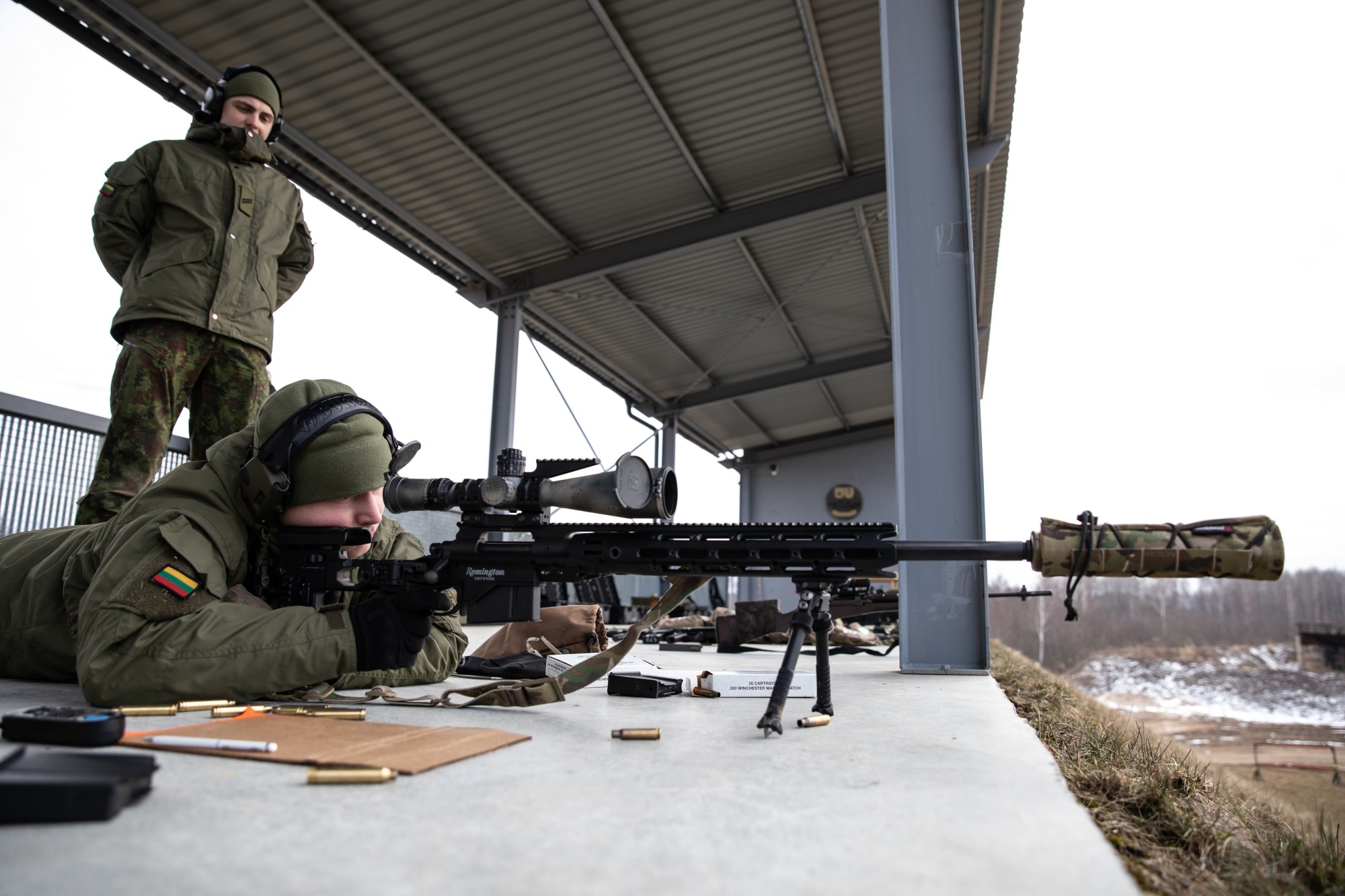
Coordination mechanisms in Lithuania’s TD are still evolving. The National Security and Defence Council (NSDC), chaired by the President, is the top body that deliberates on security issues and that would be central to government decision making-during crises. Under the NSDC’s guidance, Lithuania has developed a series of plans and inter-agency agreements. Every ministry has a role: for instance, the Ministry of Interior handles civil emergency preparedness (including a new focus on civil resistance training for civilians), and the Ministry of Energy works on energy security and rapid repair capabilities for infrastructure. A whole-of-government plan called the Comprehensive Defence Action Plan was reportedly drafted to coordinate these efforts. However, the respective responsibilities of the military and civilian agencies were not immediately well defined.[105] Recognising this, Lithuania in 2019 established a Civil Resistance Department within its Defence Ministry, aiming to centralise and drive programs for public resilience and unconventional warfare. This department coordinates with the Interior Ministry’s Fire and Rescue Department (which traditionally handles peacetime civil protection) to bridge the gap between peacetime emergency response and wartime civil defence.
Lithuania also works closely with NATO allies in organisational defence matters–the presence of a German-led NATO battlegroup in Lithuania means that Lithuanian officers routinely coordinate operations and logistics with allied forces. Moreover, since TD includes psychological defence, Lithuania’s strategic communications units coordinate across government to rebut disinformation. There is an inter-agency strategic communications team that convenes when major propaganda events occur (for instance, to counter false narratives during military exercises or border incidents).[106] On the community level, municipalities have been encouraged to form local defence councils, bringing together local officials, police and Riflemen’s Union representatives to plan local responses under the guidance of regional military commands. While progress is uneven across locales, some municipalities have started stockpiling food and fuel and identifying buildings that could serve as shelters or command centres in emergencies.
In essence, Lithuania’s organisational journey for TD can be described as work in progress: the structures exist–conscript military, volunteer forces, inter-ministerial coordination–but making them function seamlessly has required that legacy issues (e.g., a bureaucratic culture unused to whole-of-nation defence) be overcome. Still, meaningful improvements have been seen, like the first national comprehensive defence exercise, ŽAIBO KIRTIS in 2019 and enhanced cooperation between soldiers and civil authorities in disaster relief.[107] These steps indicate that Lithuania’s institutions are gradually aligning with the TD paradigm declared in policy.
Societal Factors: Mobilisation, Education and Trust
Lithuania has strived to rally its society behind TD, recognising that public buy-in is crucial for the concept to work. There is a clear emphasis in Lithuanian discourse on ‘patriotic education’ and nurturing the will to defend.[108] The government, along with non-government organisations like the Riflemen’s Union, conducts programs in schools and communities to raise awareness of security issues. Youth summer camps and cadet classes have grown in popularity, offering teenagers a taste of military discipline and survival skills, thus creating a pipeline of motivated youth who might later join the forces or at least form a resilient citizenry. Annual events like the Day of Partisans commemorate Lithuania’s World War II guerrilla fighters and tie historical resistance to modern civic duty, reinforcing a narrative that defending the nation is a shared responsibility across generations.[109]
Despite these efforts, studies have observed that the involvement of society in national defence remains limited in practice. One issue was that early government rhetoric about TD outpaced the opportunities offered for citizens to substantively engage.[110] Many Lithuanians heard leaders calling for ‘patriotic duty’ but found no clear mechanism to participate beyond existing structures like the Riflemen's Union. Initially, the armed forces were not fully prepared to integrate a surge of civilian volunteers. Nonetheless, public opinion data indicates a growing willingness to participate if invasion were to loom. Lithuania regularly polls its citizens on their will to resist: the number of those indicating readiness to defend with a weapon or other means has climbed post-2014 (though it still lags behind Finland’s very high levels).[111] In 2022, amid the Ukraine war, the sense of urgency among Lithuanians spiked–rifle club member numbers rose and stores reported increased sales of emergency supplies.[112] This suggests that while formal structures lagged, the societal spirit for TD is being kindled by external events.
Trust is another crucial factor. After the politically turbulent 1990s, trust in Lithuania’s government and institutions was not particularly high, but it has improved in the last decade, especially as the government has begun to take national security more seriously. Trust in government rose about 15.7 per cent in 2013–2023, which can be partly attributed to competent handling of security matters and alignment with public sentiment about the Russian threat.[113] The President and other key leaders frequently communicate about defence in a non-partisan manner, which has helped build a political consensus–all major parties agree on the need for TD and higher defence spending, insulating the issue from polarised politics. This unity probably reassures the public. Social cohesion in Lithuania is also bolstered by the fact that it has relatively few internal ethnic fractures compared to neighbours (approximately 84 per cent of citizens are ethnic Lithuanian). There is a Polish minority (around 6 per cent) and Russian minority (around 5 per cent), but outreach to these communities–especially the Polish community–has been largely successful in keeping them aligned with the state.
In summary, Lithuania’s society is increasingly aware and informed about and cautiously more engaged in national defence, though the transition from awareness to active participation is ongoing. The lesson from Lithuania’s case is that building a ‘TD society’ is a gradual process requiring genuine leadership commitment–genuine commitment and leadership are essential for breakthroughs in societal involvement. Where Lithuania has provided that leadership (e.g., reintroducing conscription, raising defence budgets, publicly naming the threat), society has largely responded with support.
Legal and Constitutional Underpinnings
Lithuania’s commitment to TD is grounded in its constitution and a suite of laws that collectively enable nationwide defence measures. The Constitution of Lithuania (Article 139) proclaims: ‘The defence of the State of Lithuania against a foreign armed attack shall be the right and duty of every citizen’. This establishes an individual duty to defend the nation, providing a constitutional backbone for conscription and other obligations. Correspondingly, the constitutional framework allows that, in case of aggression, ‘the Nation and each citizen’ have the right to resist by all means not prohibited by international law.[114] This strong language effectively justifies armed and unarmed resistance by civilians, aligning with the TD ethos of all-of-nation resistance.
On a statutory level, the Law on National Defence and the Armed Forces and the Military Conscription Law lay out the mechanisms for compulsory service and mobilisation. After the reinstatement of conscription in 2015, these laws were amended to detail how the yearly draft is conducted (by random lottery of eligible males, with provisions for deferment or alternative service in limited cases). There is also a legal basis for expanding the call-up if needed–the President, with parliamentary assent, can declare general mobilisation, at which point essentially all citizens fit for service could be called into either military units or assigned to civil defence tasks. Lithuania’s legal code provides for the declaration of a state of war and state of emergency. Under a state of war, the military takes lead authority; military commanders can issue binding orders to civilians and local governments as necessary for defence. The laws allow for requisition of property, evacuation of civilians, censorship of sensitive information, and curfews, as wartime measures. Notably, in 2022 Lithuania passed amendments to improve readiness: one change streamlined the process for mobilisation and obligated municipalities to maintain lists of resources (vehicles, machinery, facilities) that could be commandeered by the military if war were to break out.
Additionally, Lithuania has bolstered the legal status of volunteer formations. The Riflemen’s Union operates under a specific law that defines it as providing support to national defence–its members, when mobilised, have legal protections and are subject to military law. This ensures that if riflemen engage in armed resistance, they are lawful combatants under Lithuanian law (and ideally international law). Lithuania’s laws also emphasise international defence cooperation: for example, there are provisions that allow foreign troops to operate on Lithuanian territory and for Lithuanian institutions to cooperate with NATO structures, reflecting that collective defence is built into national defence planning. Another interesting legal development is the focus on ‘civil resistance’ in strategic documents–while not a law per se, the concept has been endorsed at the national level, and the government has issued guidelines (soft law) on forms of civilian resistance (non-violent protest, cyber activism against occupiers, etc.).
In essence, Lithuania’s legal preparedness for TD creates a regulatory lattice that can support rapid, society-wide mobilisation and enduring resistance. The laws affirm that defence is universal, they empower the state to harness national resources in dire times, and they legitimise both military and civilian participation in defence efforts. This comprehensive legal foundation is vital for giving credibility to the TD strategy in Lithuania–it is not just political rhetoric but something for which the legal instruments are (largely) in place and continue to be refined.
3.5 Singapore
Strategic Implications and Posture
Singapore’s TD strategy is a pioneering example of a small state adopting a broad-based security framework to ensure its survival and success. Strategically, Singapore recognised that traditional military strength alone was insufficient for a nation with its vulnerabilities–limited land, lack of strategic depth, a multi-ethnic population and a history of being caught in great power tussles. Thus, Singapore’s TD is predicated on an expanded interpretation of national security, entwining defence with economic development and social stability.[115] This posture has several implications. First, it positions every sector of Singapore–military, civil, economic, social, psychological–as mutually supportive in deterring threats. The idea is to present any adversary with a ‘blend of soft and hard elements’ of national power. Second, Singapore’s strategic posture is one of permanent preparedness despite not facing an immediate, singular enemy. Its leadership often cites the country’s lack of natural resources and small size as factors requiring constant vigilance. This has led the government to build significant strategic reserves (like stockpiles of food, water and fuel) and to ensure the resilience of critical infrastructure–measures aimed at deterring coercion by making Singapore less susceptible to siege or blockade.
Moreover, Singapore’s TD is tightly linked to nation-building. Strategically, by involving civilians in defence (through national service and various societal initiatives), Singapore fosters a sense of national identity and collective purpose from within a diverse population.[116] This has implications for internal stability: it deters internal unrest and communal strife because defence and security are framed as shared responsibilities cutting across ethnic and religious lines. Externally, Singapore’s model has allowed it to punch above its weight. Its formidable armed forces (the best funded in Southeast Asia) coupled with an innovative defence technology base act as a conventional deterrent, while its social and economic strength provide resilience against non-military pressures.[117] Another strategic element is flexibility: because TD covers crises short of war too, Singapore has been able to use the framework for things like counterterrorism and pandemic response without having to invoke martial law or extraordinary measures–the structures and public compliance were already there under the TD ethos.
In essence, Singapore’s posture is one of comprehensive deterrence: to convince any aggressor that Singapore’s society will endure hardships and fight back at all levels, and simultaneously to ensure Singapore’s survival if deterrence fails. This mindset has underpinned Singapore’s stability in a turbulent region and transformed it into a ‘hard target’ despite its small size.
Organisational Models and Coordination Mechanisms
Singapore operationalises TD through a ‘six pillars’ model, ensuring that every facet of society is organised to contribute to national security. The six pillars are military defence, civil defence, economic defence, social defence, psychological defence, and digital defence (with a possible seventh ‘climate defence’ pillar being added in the future[118]). Each pillar has lead agencies and programs attached.
Military Defence: The Singapore Armed Forces (SAF) are the centrepiece. Through mandatory national service, every male citizen and permanent resident serves two years in the military, police or civil defence force, typically at age 18.[120] This conscription system, in place since 1967, provides Singapore with a large active-duty military for its size (around 72,000 active, plus over 300,000 reservists) and embeds the military pillar firmly into society. The SAF is a technologically advanced, well-integrated tri-service force with a structure that allows rapid mobilisation of reservists; recall exercises are conducted regularly and ingrained into the organisational and national psyche. Crucially, the concept of national service maintains public support through the application of universality and equity principles (very few exemptions). The organisational result is that the SAF can draw on roughly a third of the population for defence needs in an emergency. Military defence also extends to Singapore’s defence industry (part of the ‘economic defence’ pillar): a government-linked conglomerate, ST Engineering, ensures local capacity for maintenance and production of certain arms, reducing reliance on foreign supply.[121]
Civil Defence: This pillar is led by the Singapore Civil Defence Force (SCDF), which handles emergency services (fire, rescue, medical) and has a wartime role of protecting civilians from attacks.[122] The SCDF, which also includes national service conscripts, is organised to respond to both peacetime disasters and wartime damage. Civil defence plans ensure every neighbourhood has shelters (many public housing blocks have hardened basement shelters) and conducts regular drills (the annual Exercise Northstar simulates terror or disaster incidents for multi-agency response[123]). The government has built an extensive network of public shelters and a siren warning system, and citizens are educated on emergency procedures during Total Defence Day commemorations.[124] The coordination mechanism here involves community volunteers–for instance, each residential block has designated fire wardens and first aiders trained by the SCDF, extending civil defence into the populace.
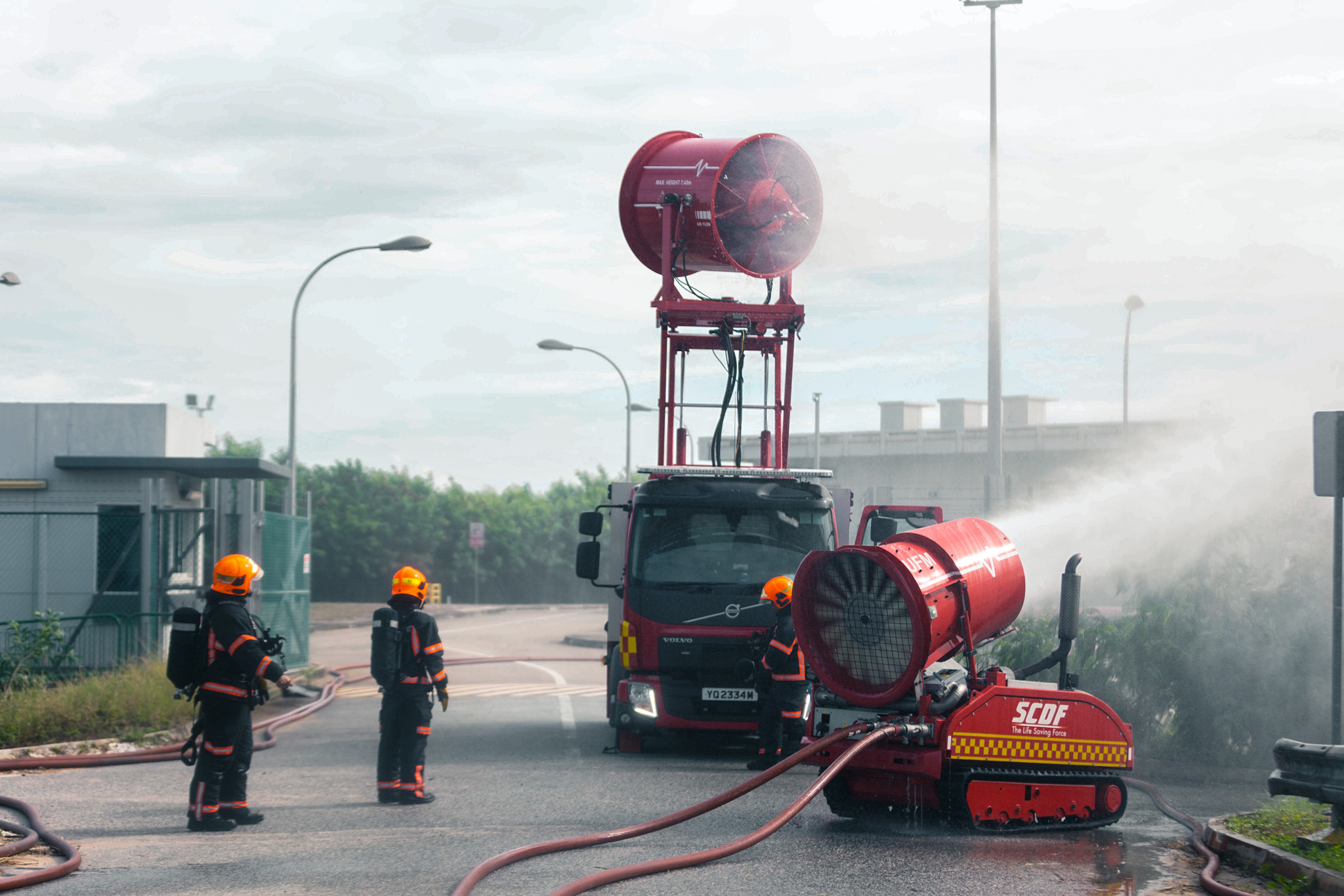
Economic Defence: Singapore treats economic vitality as fundamental to security. The Ministry of Trade and Industry (and related bodies) orchestrates this pillar by ensuring supply chain resilience and economic continuity plans. This includes diversification of import sources, stockpiling essentials (the country maintains reserves of food and fuel sufficient for months) and safeguarding critical infrastructure like ports, power stations and financial systems. A statutory body, the National Emergency Authority (under the Minister for Defence), works with private companies to develop business continuity plans for crises. Singapore also invests heavily in research and development as well as local capability–its ‘defence ecosystem’ encompasses universities, research institutes, and companies working on technology that can boost both economic competitiveness and defence.[125] This civil-military synergy within industry is achieved by design; Singapore’s Economic Development Board historically targeted strategic industries (like aerospace and precision engineering) that serve both commercial and defence needs. Organisationally, economic defence plans are coordinated through the National Security Coordination Secretariat (in the Prime Minister’s Office), which aligns economic security initiatives across ministries.
Social Defence: This pillar focuses on maintaining multiracial and interfaith harmony and strengthening social cohesion. The rationale is that a socially fragmented society is vulnerable to subversion or unrest. The Ministry of Culture, Community and Youth, alongside grassroots organisations, lead programs promoting understanding and trust among different ethnic groups (Chinese, Malay, Indian, others). This approach is supported by policies such as ethnic integration in public housing (racial quotas per block) and bilingual education programs.[126] Organisationally, the People’s Association (a government statutory board) oversees a nationwide network of community centres and committees that conduct social defence activities–from cultural exchanges to joint celebrations of festivals.[127] There are also emergency preparedness groups at the community level that bring neighbours together for training. National education in schools inculcates values of unity and resilience by teaching Singapore’s tumultuous history (like racial riots and wartime occupation) to emphasise the importance of social cohesion for survival. All these efforts are coordinated through a Social Defence Committee under the purview of the Homefront Crisis Executive Group, ensuring integration with other pillars in a crisis scenario.[128]
Psychological Defence: This pillar is about the will of the people–ensuring citizens have the mental fortitude and commitment to defend the country and are not easily swayed by enemy propaganda. This pillar is not directed by a single agency. Instead, it is more a mindset cultivated across various institutions. For example, the Ministry of Communications and Information has a role in countering misinformation (with tools like the Protection from Online Falsehoods and Manipulation Act).[129] The government’s psychological defence strategy involves regular messaging about threats (leaders frequently remind the populace of potential dangers and the need for resilience) and organising TD campaigns annually with themes and activities that reinforce collective resolve. Singapore also uses public polling (including Exercise SG Ready surveys) to track sentiment and perceived readiness, and to target resilience shortfalls. Importantly, national service and social defence contribute to psychological defence: having gone through shared rigorous experiences and civic activities, Singaporeans develop pride in and attachment to the nation, which forms the psychological bulwark.
Digital Defence: The newest pillar (added in 2019) formalises what was already emerging–the protection of Singapore’s cyberspace and the harnessing of technology for defence. The Cyber Security Agency and Defence Cyber Organisation drive measures relating to this pillar.[130] These include public education on cyber hygiene (e.g., campaigns on using strong passwords and spotting phishing) as well as technical measures like improving cyber incident response and critical infrastructure cyber protection. TD exercises now incorporate digital defence scenarios (like a simulated cyber attack on power grids). The digital pillar supports all others–for instance, ensuring military networks are secure (military defence) or stopping fake news on social media (psychological defence).
Overall, Singapore’s organisational approach to TD is highly centralised but also comprehensively networked through society. A plethora of interlocking committees–from the national cabinet-level Homefront Crisis Management System to local constituency emergency groups–ensure that in a crisis, all pillars work in concert. A testament to this model was Singapore’s COVID-19 response: Singapore officials explicitly invoked TD concepts (like social discipline and whole-of-government coordination) to tackle the pandemic, thereby validating the flexibility of the country’s TD framework in its application to non-military crises.
Societal Factors: Mobilisation, Education and Trust
Singapore’s approach to TD heavily emphasises shaping societal attitudes and harnessing the population’s commitment. Mobilisation in Singapore’s context is as much psychological and social as it is physical. In this respect, the institution of national service has been perhaps the single most influential societal tool.[131] By conscripting virtually all young men and involving their families in the process (through enlistment ceremonies, open houses etc.), Singapore has normalised the idea that defending the nation is everyone’s duty. The impact on society is multifold: national service serves as an ‘integration mixer’ by putting men of different races and classes through the same paces, building a sense of equality and camaraderie.[132] It also inculcates discipline and the habit of preparedness–a common saying is that national service and annual reservist training keep Singaporean men ‘operationally ready’ and attuned to national needs. This shared experience underpins societal trust: citizens generally trust the military and the government, since virtually every household has a member who served and understands the seriousness with which defence is taken. The government buttresses this trust by applying national service obligations fairly (there are hefty penalties for draft evasion and almost no exemptions, so no group is seen as shirking). Women are not conscripted but they are increasingly participating as volunteers or career soldiers, and the concept of TD rhetorically includes them as well, calling on all Singaporeans to play their part.
Public education is central to sustaining TD across generations. From primary school onwards, students are taught the national pledge, values of multiracial harmony, and historical episodes like the Japanese occupation to stress vigilance. Total Defence Day is observed every 15 February (the anniversary of Singapore’s fall in 1942)–schools conduct emergency drills, play wartime-era sirens, and have learning activities about self-reliance in crisis. This annual ritual reinforces memory and resolve.
Societal trust in Singapore is generally high: the public trusts the government’s competence and motives, which is crucial because the TD concept asks citizens to heed government directives in crises. Part of why this trust is high (76 per cent trust in government[133]) is the government’s track record of stability and delivery, and its continuous engagement with citizens on security matters. However, Singapore’s model is not without societal strain.[134] Some emerging fault lines relate to modern challenges: a new generation that has only known peace and prosperity might be less receptive to the spartan message of vigilance. Increasing diversity (with large numbers of foreign workers and immigrants) tests social cohesion in new ways. The government has warned against complacency–ironically a result of success, as Singaporeans rank among the world’s most optimistic and least worried populations, which can dilute the sense of urgency in defence.
The interplay of state and society in Singapore’s model is unique: through a combination of persuasive messaging, institutionalised practices and some legal enforcement, the society is mobilised in a soft but pervasive manner. People may go about daily life normally, but underlying that is an awareness–from national service and from annual campaigns–that security is fragile and collective. This awareness is Singapore’s psychological and social bulwark. The result is a citizenry that, while perhaps not as hardened as Finland’s or Israel’s, is relatively unified, is obedient in crises, and shares an instinct to preserve the nation’s hard-won sovereignty. It is often observed that during national crises (like economic recessions or the SARS outbreak) Singaporeans have rallied in a manner consistent with TD ethos–showing resilience and unity. That social reserve of strength is precisely what TD seeks to cultivate, and in Singapore’s case it has largely succeeded, though the government remains alert to any slippage in social discipline or trust.
Legal and Constitutional Underpinnings
Singapore’s TD strategy is supported by a legal framework that, while not explicitly labelled ‘TD', provides the state with the necessary powers and structures to mobilise resources and people for national security. At the constitutional level, Singapore’s constitution does not contain a specific article mandating national service or TD (unlike Finland or Lithuania). However, the Enlistment Act (Chapter 93), first enacted in 1967, gives the government authority to require male citizens and permanent residents to serve in uniform. This Act is the backbone of military and civil defence pillars: it stipulates that all liable males at 18 years must report for service, and it governs their obligations as reservists up to about age 40 (50 for officers). The Act also contains provisions for emergency mobilisation–the President can, by proclamation, require all or selected national servicemen (reservists) to report for duty, which essentially is the mechanism for full mobilisation.
Another key set of laws falls under civil defence and emergency powers. The Civil Defence Act establishes the SCDF and gives it authority in civil emergencies (including wartime scenarios, when SCDF personnel may enforce evacuation or take other protective measures). Additionally, the Miscellaneous Offences (Civil Defence) Act makes it a crime to, for example, fail to shelter when ordered, or to spread false rumours during emergencies, thereby legally buttressing psychological defence by deterring harmful behaviour. Singapore also has the Internal Security Act (ISA)–a powerful law that permits detention without trial for threats to national security (historically used against communists, terrorists or communal instigators). While not a ‘defence’ law per se, the ISA acts as a preventive tool, ensuring social and psychological defence by removing subversive elements that could undermine cohesion or morale. The government justifies such measures as necessary in a TD context–maintaining internal stability is as important as deterring external threats.
Singapore’s Monetary Authority has contingency regulations to stabilise the financial system under duress, consistent with the purpose of economic defence. To support digital defence and to counter misinformation, a recent legal innovation is the Protection from Online Falsehoods and Manipulation Act 2019, which provides ministers the power to issue corrections or take-down orders against false statements of fact that could affect public interest (including security and public tranquillity).[135] This law has been used to swiftly counter rumours (e.g., during COVID or racial incidents) and can be seen as a tool of psychological and digital defence–to maintain societal calm and trust in an era of viral falsehoods.
In sum, Singapore’s legal infrastructure, while not wrapped in one omnibus ‘TD Act', is a mosaic that covers all aspects: from compelling individual service to protecting critical infrastructure, controlling information, and securing supplies. It is notable that Singapore’s laws often favour the security imperative–individual rights such as free speech or assembly can be lawfully constrained for security or harmony reasons. This reflects the social contract in Singapore: citizens accept stricter laws in exchange for stability and security, which the government argues is integral to TD.
3.6 Summary of International Case Studies
Taken together, these case studies show that TD works when it is treated as a national operating system, not a bolt-on: strategy sets the tone (deterrence by denial), organisations make it real (clear authorities, routinised inter-agency planning, industry ties), society supplies depth (mobilisation pathways, civic education, psychological resilience), and law provides the scaffolding (explicit duties, emergency powers, continuity arrangements).
Finland demonstrates the premium on continuity of planning, stockpiles and universal obligations. Sweden shows how to regenerate civil–military coordination and societal preparedness at scale. Estonia illustrates how digital resilience, volunteers and territorial defence can offset mass. Lithuania underscores the value—and friction—of legalised mobilisation and civil resistance. Singapore proves the utility of centrally orchestrated, multi-pillar TD for a small, exposed state.
Common threads are unambiguous roles, habitual exercising, private-sector integration, a narrative that normalises preparedness, and an overarching national security strategy (or similar), enabled by legislation. Limits are equally clear: resource trade-offs, societal consent for obligations, and the risk of rhetoric outpacing executable mechanisms. This synthesis sets up Chapter 4: assessing which strategic, organisational, societal and legal elements may be transferable to Australia, which require adaptation to our federal system and political culture, and where genuine capability, policy and research gaps remain.
4. Challenges and Considerations for Australia
While international examples demonstrate the potential of TD frameworks to build resilience and deterrence, Australia’s circumstances differ markedly from Nordic and Baltic cases.[136] Australia is a maritime trading state with no land border threat, unusually large strategic depth, and long, vulnerable sea lines of communication (SLOCs) that an adversary could coerce well below the threshold of declared war. That mix pushes an Australian version of TD away from territorial defence against invasion and toward a layered, whole-of-nation resilience posture that can ride out coercion, absorb shocks, and keep the nation functioning while allies mobilise. In short, Australia’s geography buys time and room to manoeuvre; TD helps use both to strategic effect. This chapter examines these issues, drawing on comparative insights to identify barriers and possible avenues should Australia seek to adopt or engage with TD models.
4.1 Strategic Setting: Depth without Sanctuary, Distance without Immunity
Unlike Finland or the Baltics, Australia’s ‘front line’ is extra-territorial—sea lanes, cables, satellites, ports, fuel chains, financial rails and data platforms. Contemporary competition already targets those systems, and warning time is compressed by cyber, space and long-range strike. A layered national-resilience model therefore fits this problem set better than does continental mobilisation for land combat: protect the base (people, power, data, food, water, health), keep SLOCs and information flows viable enough to sustain the economy and ADF, and signal the ability to reconstitute under pressure.
Strategic depth is a genuine Australian advantage:[137] critical functions and industry can be relocated inland, dispersed or dual-sited; logistics can be rerouted domestically; and the Army can anchor regional civil–military networks away from more accessible strike locations. But this depth is no longer a sanctuary: much of the continent’s population and industry can now be reached by long-range ballistic and cruise missiles and by subsurface strike.[138] Furthermore, this depth cuts both ways: Australia’s population, industry and logistics are concentrated in coastal cities; long internal distances complicate surge movement; and national cohesion can fray under protracted coercion. Australia could learn from other TD models to turn depth into resilience—pre-planned dispersal, redundant nodes and trained communities—and do so before crisis.
4.2 Strategic and Operational Implications
Maritime and SLOC Resilience
For Australia, its centre of gravity is arguably the continuity of trade and information: ports, fuel, coastal shipping, air cargo hubs, subsea cables, landing stations, space links and the private networks that run them. Thus, Australia should treat these as vital functions and harden them to hybrid disruption (cyber, sabotage, sanctions, lawfare, grey-zone harassment) while planning national workarounds if they fail (alternative ports, rail heads, coastal convoys, reserve fuel distribution, priority shipping). Chapter 3’s international case studies show the value of codified security-of-supply arrangements that bind government and industry before crisis, with the Baltic states' energy transition experience offering concrete lessons on de-risking single-point dependencies without shocking consumers .[139]
Alliance Leverage and ‘Time Buying’
Small and middle powers shape great-power choices most effectively when they are resilient, politically coherent and militarily useful—able to hold out, to host and to help.[140] Australia’s credibility with allies rises if we can keep society functioning under pressure, secure critical bases and corridors, and present an opponent with a denial problem rather than an access opportunity. Efforts to increase national stamina therefore complements conventional deterrence and strengthens alliance bargaining power during crisis decision cycles.
4.3 Structural and Economic Considerations
Ownership, Regulation and Compellable Capacity
Australia’s economic and infrastructural landscape can likewise be informed by other nations’ approaches to TD frameworks. Critical infrastructure—including telecommunications, energy grids, and transport networks—is highly privatised and often subject to significant foreign ownership.[141] Nordic and Baltic models assume compellable civilian capacity and stockpiles; Australia’s regulatory settings and contract architectures are thinner.
This lack of control has tangible implications in crisis settings. Critical infrastructure may not be readily available for coordinated national responses, and strategic decision-making might be impeded by unclear lines of authority or corporate disincentives. While Defence retains sovereign control over its assets, TD requires alignment with civilian and industrial capabilities—which are largely decentralised in Australia. Without mechanisms for coordination and compulsion, national logistics and utilities may not be sufficiently responsive in a protracted or multidimensional crisis.
Enhanced economic resilience therefore turns on two enablers: (1) durable legal/contractual mechanisms that translate national priorities into binding industrial outputs during emergencies; and (2) a standing national mechanism to convene owner-operators and periodically test continuity plans under realistic scenarios. A layered defence framework would provide a ready arrangement for those tests and investments.
Technically, the energy system is already trending towards decentralised resilience, with growing penetration of distributed energy resources,[142] while rule changes now permit distributor-led standalone power systems and microgrids—useful where long feeders are vulnerable to fire, flood or malicious interference. The cyber threat picture reinforces this approach: the Australian Signals Directorate reports a sustained rise in the number of incidents affecting critical infrastructure,[143] and government (with industry) has stood up the Australian Energy Sector Cyber Security Framework (now extended to liquid fuels) to harden electricity, gas and fuel supply chains.
However, these efforts lack a single mobilising framework. Australia does not yet have a statutory, whole-of-government security-of-supply mechanism that binds the Commonwealth, states, market bodies, network operators, fuel importers/refiners, Defence and the Department of Home Affairs to common priorities, authorities and rehearsed compacts. As part of a ‘National Security Strategy’ a dedicated ‘National Security of Supply and Resilience Council’ could set reserve and reconstitution targets (fuel, black-start, spares); standardise islandable (standalone) microgrids and critical-load protection requirements; compel information-sharing and protected exercises; and pre-agree industry call-out procedures, compensation and liability arrangements. In TD terms, this is the difference between good projects and assured continuity under coercion.
Sovereign Industrial Baselines and Distributed Critical Utilities
Australia’s endowments and geography create a vastly different calculus to those of Northern Europe: it is food- and energy-rich, sea-line dependent, and spread across vast distances. On the upside, Australia produces substantially more food than it consumes, and exports a large share of output, indicating the existence of leeway to prioritise domestic needs under stress.[144] On fuels, the Commonwealth’s 2021 Fuel Security Package kept the two remaining refineries operating (Viva Geelong and Ampol Lytton) and introduced a minimum stockholding obligation and refinery production payments—an example of preserving sovereign capacity without outright ownership.[145] Because around 99 per cent of Australia’s trade by volume moves by sea,[146] reducing single-point dependencies in energy and food distribution, and designing for stand-alone continuity of essential services, directly lowers coercion risk if shipping lanes are disrupted.
Furthermore, the vulnerabilities of globalised supply chains became starkly apparent during the COVID-19 pandemic.[147] Australia’s ‘just-in-time’ logistics model, while efficient under normal conditions, proved fragile when international trade was disrupted. Strategic reserves of essential goods such as fuel, medical supplies and food are limited, leaving the country susceptible to coercion or disruption in times of geopolitical tension.[148] Addressing these vulnerabilities would require significant investment in domestic manufacturing capacity and stockpiling systems, potentially drawing on lessons from Singapore’s economic defence pillar.
Australia could also explore risk-based resilience mapping across key sectors, adopting a model similar to Estonia's ‘vital service’ doctrine. This involves auditing supply chains for energy, health, communications and transport to identify critical nodes, ownership vulnerabilities, and mobilisation gaps—then integrating these findings into national defence planning.[149]
Fuel security is the obvious chokepoint in any protracted disruption of SLOCs. The Baltic experience—decoupling from coercive suppliers through phased infrastructure bets (LNG, interconnectors, terminals) and managing the politics of price—underscores that resilience is a strategy, not a single project. Drawing upon that lesson, Australian resilience planning should treat refined fuels, grid stability (including gas peaking) and repair capacity as ‘first-week’ issues, and plan visible, staged measures that build buffers without triggering public backlash.
4.4 Societal and Informational Dimensions
Mobilisation without Mass Compulsion
Cultural attitudes towards civic obligation present a very different context in Australia to those of the countries examined in this paper. Unlike Finland or Singapore, where compulsory service enjoys broad societal acceptance, Australian society has no recent history of universal national service and demonstrates resistance to such measures. Efforts to reintroduce mandatory service or conscription would probably face political opposition and public scepticism. Indeed, historical polling suggests that compulsory national programs are among the least popular public policy options in liberal democracies unless framed around extreme emergency.[150]
Moreover, societal trust in institutions has eroded in recent years, exacerbated by political polarisation and contentious pandemic management responses.[151] Declining public confidence may undermine efforts to mobilise communities for national defence initiatives, particularly those requiring voluntary participation or extensive public education campaigns. Addressing this deficit will require deliberate efforts to rebuild trust and foster a sense of shared responsibility, possibly through grassroots engagement and community-based resilience programs inspired by Sweden’s Home Guard model.[152]
Australia’s comparative advantage is the scale and legitimacy of existing volunteer systems (e.g., state emergency services, rural fire services, the St John Ambulance organisation, surf lifesaving clubs), plus an Army Reserve and ADF Cadet ecosystem with national reach. Australia thus benefits from pre-existing volunteer networks that could be harnessed and expanded akin to the Singaporean model into defined civil defence roles (community logistics, communications, damage control, first response) and add a volunteer cyber reserve / cyber corps for prevention and surge response[153]—models already trialled by allies facing workforce gaps. This manner of pathway is capable of mobilising at scale without mandating universal service.
Psychological Defence in a Multicultural Democracy
Australia’s starting point differs materially from the Nordic and Baltic cases: it is a large, highly multicultural democracy with sizeable diasporas, many home languages, and varied levels of institutional trust across communities. Those characteristics create more surfaces for adversaries to exploit through tailored influence and misinformation than in relatively homogeneous societies.[154] An Australian TD approach therefore has to treat inclusion, multilingual communication and community partnership as core capabilities—not outreach—so that preparedness messages and counter-disinformation reach people where they are, through voices they trust. Against that backdrop, psychological defence becomes the enabler that binds the rest of TD together.
Australia's handling of its multicultural composition—while a strength in many ways—could learn from Singapore’s TD model, which has long emphasised social cohesion as a cornerstone of national security, recognising that a fragmented society is less resilient to both military and hybrid threats. Australia may need to invest in inclusive national narratives, localised civic education, and culturally informed communications strategies to avoid polarisation or perceived marginalisation in a crisis mobilisation setting. Practical deliverables such as household preparedness guides, school-level civics and media literacy, are as important for trust as they are for readiness. The evidence base on non-violent civil resistance also reminds us that broad participation beats intensity:[155] Societal resilience benefits from millions helping a little, consistently, rather than asking thousands to do everything.
Human Capital and Public Education Deficit
Unlike the Nordic cases, Australia delivers most civil defence adjacent services through state and territory systems (police, fire, ambulance, education, public health) with the Commonwealth providing strategy, funding levers and national coordination. This middle tier shapes what is practicable for TD: scalable public education, volunteer mobilisation and continuity planning would need nationally coherent standards but state-led execution, resourced through intergovernmental agreements and exercised routinely across borders. In practice, the unit of delivery for TD is the state/territory, while the unit of strategy is the Commonwealth; any Australian model must therefore prioritise federation-wide interoperability (doctrine, communications, logistics, legal triggers) and embed TD tasks into state curricula, emergency services training pipelines, and local government resilience programs.
Australia also faces a deficit in public engagement and education regarding national resilience. Unlike Sweden, which has invested in public awareness campaigns and distributed preparedness guides to households, Australia lacks widespread educational initiatives relating to resilience. Indeed, the absence of ADF research concerning overseas TD models is evidence of the limitations that currently exist within the Australia’s professional military education system. Such gaps hamper societal readiness for hybrid and unconventional threats. Citizens are less likely to recognise disinformation, understand mobilisation protocols or respond confidently to national crises.
Potential solutions may involve expanding voluntary service options or incentivising participation in community resilience programs. Drawing on Estonia’s EDL and Sweden’s Home Guard, Australia could develop community-based defence initiatives that cultivate civic responsibility without resorting to compulsory measures, and without such measures being amendments to the Australian Constitution. Options could include cyber defence volunteers, community wardens, and reserve logistics and communications teams embedded in local government structures.
Education in national resilience could also be introduced into school curricula and civic campaigns, teaching Australians basic principles of crisis response, critical thinking in digital environments, and their role in broader national security. Without such investment, Australia risks lacking the societal ‘immune system’ necessary to repel the coercive strategies increasingly employed by state and non-state actors.
4.5 Legal, Constitutional and Governance Enablers
Australia’s legal framework lacks comprehensive provisions for national mobilisation akin to those found in Finland or the Baltic States. There is no modern legislative instrument empowering whole-of-society defence measures and existing emergency powers are fragmented across federal and state jurisdictions. Arguably, we have never needed such comprehensive measures due to the territorial defence benefits of our geography. However, today’s information environment necessitates reconsideration of whether there is a need to amend legislation to enable defence concepts to be expanded. For example, while the Defence Act 1903 and the Emergency Management Act 2005 (Commonwealth) provide discrete authorities, neither envisages a comparable level of societal integration to that of the TD models explored in this paper, including mobilisation, national service, and industrial prioritisation in crisis scenarios.
Federal-state divisions further complicate crisis management. While the Commonwealth retains responsibility for defence and foreign affairs, states oversee emergency services and critical infrastructure management. This bifurcation can hinder rapid, coordinated responses to hybrid or multidimensional threats, as seen during large-scale bushfire responses where overlapping jurisdictions created operational friction.[156]
Considerations of civil liberties also loom large. The implementation of expansive TD measures—such as mandatory participation in civil defence activities, or centralised control over private sector assets—would necessitate careful balancing of individual rights with collective security needs. Public debates on these issues are likely to be contentious, underscoring the importance of transparent, inclusive policymaking and bipartisan support.
Australia may need to commission a legal review akin to Sweden’s 2021 examination of civil obligations and emergency mobilisation laws,[157] to identify where legal gaps exist and explore proportional, rights-compatible frameworks for future crises.
4.6 Summary
Australia could gain clear strategic benefits from learning about and adopting, where appropriate, elements of TD as employed by other nations. Such adaptation would particularly respond to hybrid and grey zone threats, but implementation of TD concepts would inevitably face structural, cultural, legal and organisational challenges. Comparative models highlight the importance of early public education, sustained political leadership, clear legal mandates, and cross-sectoral cooperation.
Australia does not need a Nordic clone; it needs a strategic-depth-centric, alliance-complementary, society-wide resilience system that converts its physical and social landscape into endurance and bargaining power. The literature and allied practice examined in this paper suggest that the most feasible path is incremental and testable: codify roles; bind industry through standing arrangements; mobilise volunteers (including in cyber areas) at scale; and exercise the layered-resilience model until it becomes muscle memory. That outcome is both within reach and well aligned with current ADF thinking on mobilisation and national resilience.
5. Implications for the ADF and Australian Army
Efforts to improve Australian resilience against hybrid and grey zone threats carry profound implications for the ADF and, more specifically, the Australian Army. As a key pillar of national security, the Army would be integral to operationalising whole-of-society resilience efforts and in responding to contemporary multidimensional threats. This section examines the potential roles, doctrinal shifts and organisational adaptations required of the Army to support the Australian Government to enhance national resilience, and to support regional partners who may have elements of TD ingrained in their national defence strategies. It also considers how international models inform these developments and identifies challenges unique to the Australian context.
5.1 Expanding the Army’s Role in National Resilience and Homeland Defence
The models examined herein posit that Army should consider responsibilities beyond conventional warfighting to include civil support operations, community engagement, and psychological resilience building. The 2nd (Australian) Division (2 (AS) DIV) is responsible for ‘domestic security and response with a focus on protection of the northern bases network’ and is particularly well placed to serve as a hub for integrating Army capabilities with state and territory emergency services, police, and other agencies.
Internationally, models such as Sweden’s Home Guard and Estonia’s EDL demonstrate how military organisations can foster community-based resilience and provide surge capacity during crises. Adapting such structures in Australia could see 2 (AS) DIV forces expanded and reoriented to perform both traditional defence tasks and domestic resilience functions. Familiar roles (including logistics support and critical infrastructure protection) may be expanded to include cyber defence augmentation and more integrated public health and disaster response operations—tasks already familiar to ADF personnel from Operation Bushfire Assist and Operation COVID-19 Assist.
5.2 Doctrinal and Training Considerations
Army doctrine should consider how Australia-relevant TD models could support the objectives of the 2023 Defence Strategic Review and 2024 National Defence Strategy. However, TD requires doctrine that also accounts for integrated civil-military responses to hybrid threats, including cyber attacks, disinformation campaigns, and supply chain disruptions. Furthermore, training would need to further incorporate joint exercises with civilian agencies, emergency services and private sector partners. In this respect, lessons can be drawn from Finland’s periodic national defence exercises, which involve participants from across government, industry and community organisations. These exercises strengthen inter-agency coordination and foster familiarity with multi-stakeholder crisis management—an area where Australia currently lacks institutional experience.
Moreover, cyber and information operations must be embedded more deeply into Army training curricula. As hybrid warfare increasingly targets societal resilience, Army leaders and soldiers alike require the skills to recognise, counter and support civilian efforts against disinformation and psychological operations.
5.3 Civil-Military Integration and Community Engagement
Army could draw upon the Nordic model to enhance its involvement in community engagement and education initiatives to build public understanding of national resilience. Sweden’s use of widely distributed pamphlets such as In Case of Crisis or War and Singapore’s Total Defence Day provide examples of how military institutions can support public preparedness without encroaching on civil governance.
In Australia, the Army’s respected status could enable it to act as a trusted interlocutor between government and communities. This would be particularly important in countering disinformation campaigns designed to sow distrust in institutions during crises. The Army’s role might involve contributing subject matter experts to public forums, supporting school and university resilience education programs, and participating in local preparedness drills alongside civil agencies.
5.4 Lessons from International Experience
The Finnish and Swedish models underscore the importance of Army involvement in multi-agency national defence structures. Their experiences show that military organisations can successfully support civilian authorities without militarising society—a critical balance in liberal democracies. Similarly, Singapore’s integration of its armed forces within civil education and community preparedness programs illustrates how military credibility can reinforce rather than erode civil authority. For Australia, these examples suggest that the Army should enable and support societal resilience rather than assume primacy in civil domains.
Drawing on international models, the Army has an opportunity to position itself as both a deterrent force and a key enabler of whole-of-society resilience. Failure to seize this opportunity risks leaving Australia ill prepared for the challenges of 21st century conflict, where societal cohesion and resilience may prove as decisive as conventional military strength.
6. Conclusion
In an era defined by hybrid threats, geopolitical volatility and complex societal vulnerabilities, the traditional military-centric models of national defence are insufficient. Instead, the contemporary strategic landscape demands a comprehensive, whole-of-society approach—one that integrates military, civilian, economic, psychological and digital domains to effectively deter adversaries and maintain national resilience in the face of crises. Australia's unique geographic position, resource dependencies and socio-political structure accentuate the urgency of examining TD concepts to secure its national interests and sovereignty in an increasingly contested Indo-Pacific region.
International case studies reviewed in this paper offer valuable lessons for Australia's consideration. Nations such as Finland and Sweden demonstrate pragmatic application of a TD strategy through robust societal mobilisation, strategic resource stockpiling, and integrated civil-military coordination. Their experiences underscore that effective deterrence today involves more than conventional military capabilities—it requires credible resilience across infrastructure, supply chains and societal cohesion. Baltic experiences, particularly Estonia's advanced cyber resilience and Lithuania’s robust international cooperation frameworks, further illustrate the nuanced application of TD tailored to national contexts. Similarly, Singapore’s longstanding TD strategy provides Australia with insights on societal integration, psychological resilience and the advantages of centralised strategic planning.
Yet the examples presented in this literature review also caution against simplistic emulation. Australia’s distinctive problem set—maritime trade exposure, federated governance, privatised critical infrastructure and deep geography—suggests that TD principles are most useful where they harden the nation against coercion short of war and keep society functioning under pressure. Within those bounds, this paper is deliberately a literature review: it maps concepts and international practice and identifies transferability and limits, but does not prescribe policy or design an Australian model. The immediate implications it surfaces are pragmatic—protect SLOCs and key ports; buffer fuel and power through stockholding and distributed/standalone systems; and establish pre-crisis security-of-supply compacts with industry that can be exercised and audited in peacetime. Governance must be clarified through Commonwealth–state mechanisms that assign lead authorities, decision thresholds and information-sharing obligations for hybrid contingencies. Societal mobilisation should privilege scalable volunteer pathways (emergency services, logistics, cyber auxiliaries) and public resilience literacy over universal compulsion. Legal work should map proportionate, time-bound triggers for directing private capacity and mobilising civil support, with transparent safeguards. Funding choices—what resides in Defence versus a broader national resilience envelope—require explicit trade-offs and staged pilots.
A follow-on piece of work from the co-authors will therefore develop and test options: outlining sequenced policy pathways, cost/risk trade-offs, legal instruments and governance arrangements, and evaluation measures suited to Australia’s setting. The goal is to translate international lessons into a measured, evidence-based program of Australian choices—not a Nordic template, but an Australian operating system for national resilience.
Glossary
2 (AS) DIV - 2nd (Australian) Division
CEO – chief executive officer
DSR – Defence Strategic Review
EDF - Estonian Defence Forces
EDL - Estonian Defence League, in Estonian: Kaitseliit.
EU – European Union
FDF - Finnish Defence Forces
GDP – gross domestic product
ISA - Internal Security Act (Singapore)
LNG – liquefied natural gas
MSB – Myndigheten för samhällsskydd och beredskap—Swedish Civil Contingencies Agency
NATO – North Atlantic Treaty Organisation
NDVF - National Defence Volunteer Forces (Lithuania)
NGO – Non-Governmental Organisation
NSDC - National Security and Defence Council (Lithuania)
OECD – Organisation for Economic Co-operation and Development
SAF - Singapore Armed Forces
SCDF - Singapore Civil Defence Force
SLOC - sea lines of communication
TD - total defence
Endnotes
[1] Arjen Boin, "The Transboundary Crisis: Why We Are Unprepared and the Road Ahead," Journal of Contingencies and Crisis Management 27, no. 1 (2019), https://doi.org/10.1111/1468-5973.12241, https://onlinelibrary.wiley.com/doi/abs/10.1111/1468-5973.12241.
[2] NM Bjørge and M Høiby, ‘Contemporary Research on Hybrid Threats: Status and Future Avenues’, in OJ Borch and T Heier (eds), Preparing for Hybrid Threats to Security: Collaborative Preparedness and Response (Routledge, 2024).
[3] Joakim Berndtsson, "Total Defence for the 21st Century?," Australian Institute of International Affairs 5 April 2024), at: https://www.internationalaffairs.org.au/australianoutlook/total-defence-for-the-21st-century/.
[4] Lotta Victor Tillberg, Joakim Berndtsson, and Peter Tillberg, "Navigating Collaboration : Understanding Civil-Military Interactions in Swedish Total Defence From a Security Network Perspective," article, Scandinavian Journal of Military Studies 8, no. 1 (2025 2025), https://doi.org/10.31374/sjms.288, https://doi.org/10.31374/sjms.288 http://urn.kb.se/resolve?urn=urn:nbn:se:sh:diva-56997.
[5] George Spencer Terry, "Responsibilising Total Defence: Interrogating Resistance, Resilience, and Agency in Finland, Sweden, and Lithuania," Journal on Baltic Security 10, no. 2 (12/30 2024), https://doi.org/10.57767/jobs_2024_012.
[6] James J Wirtz, "Total defence forces in the twenty-first century," International Affairs 100, no. 3 (2024), https://doi.org/10.1093/ia/iiae107, https://doi.org/10.1093/ia/iiae107.
[7] Australian Government, National Defence: Defence Strategic Review, (2023).
[8] "Australian Army Contribution to the National Defence Strategy 2024," 2024, https://www.army.gov.au/our-work/strategy/australian-army-contribution-….
[9] Grant Wyeth, "Does Finland’s “total defence” doctrine hold lessons for Australia?," The Interpreter - Lowy Institute (2024), https://www.lowyinstitute.org/the-interpreter/does-finland-s-total-defe….
[10] Marc Ablong, "National resilience for Australia—learning the lessons," The Strategist (2024), https://www.aspistrategist.org.au/national-resilience-for-australia-lea….
[11] Jan Willem Honig, "The Idea of Total War : From Clausewitz to Ludendorff" (The Pacific War as total war, The 10th Forum (FY 2011), September 14, 2011. Toshi Center Hotel, Tokyo., Tokyo, National Institute for Defence Studies, 2012 2012).
[12] James Kenneth Wither, "Back to the future? Nordic total defence concepts," Defence Studies 20, no. 1 (2020/01/02 2020), https://doi.org/10.1080/14702436.2020.1718498, https://doi.org/10.1080/14702436.2020.1718498.
[13] Jan Angstrom and Kristin Ljungkvist, "Unpacking the varying strategic logics of total defence," Journal of Strategic Studies 47, no. 4 (2024/06/06 2024), https://doi.org/10.1080/01402390.2023.2260958, https://doi.org/10.1080/01402390.2023.2260958.
[14] Karl Sörenson & Jan Ångström Jörgen Axelsson, "Deterrence and the Added Value of Strategic Theory in Understanding Swedish Security and Defence Policies," Statsvetenskaplig tidskrift (2016), https://journals.lub.lu.se/st/article/view/16437.
[15] Army, "Australian Army Contribution to the National Defence Strategy 2024."
[16] Sverre Lodgaard, "NATO, Deterrence, and the Ukrainian Conflict," Toda Peace Institute (2024), https://toda.org/global-outlook/2024/nato-deterrence-and-the-ukrainian-….
[17] Victor Tillberg, Berndtsson, and Tillberg, "Navigating Collaboration : Understanding Civil-Military Interactions in Swedish Total Defence From a Security Network Perspective."
[18] Jenny Malmström and Joakim Berndtsson, "Constructing “Society’s Soldiers”: Identity Work, (Total) Defence Willingness and the Swedish Home Guard," Scandinavian Journal of Military Studies (2025), https://doi.org/10.31374/sjms.290.
[19] Rory Medcalf and Christian Fjäder, "North star: why Australia should look to Finland on resilience and preparedness," ANU National Security College (2025), https://nsc.anu.edu.au/content-centre/research/north-star-why-australia….
[20] Swedish Civil Contingencies Agency (MSB), In case of crisis or war, (2024), https://rib.msb.se/filer/pdf/30874.pdf.
[21] "Total Defense – a brief introduction on the concepts in Finland, Norway and Sweden and possible adaptation for Germany," The “Forum Vernetzte Sicherheit” (FVS), 2025, accessed 17/08/2025, https://vernetztesicherheit.de/total-defense-a-brief-introduction-on-th….
[22] Lucia Stein and Annabelle Quince, "Could Australia learn about preparedness from Finland, the prepper nation of the Nordics?," ANU National Security College (2025), https://nsc.anu.edu.au/content-centre/article/interview/could-australia….
[23] Helmi Räisänen, Jussi T. Eronen, and Janne I. Hukkinen, "Imagining the next pandemic: Finnish preparedness for chronic transboundary crises before and during COVID-19," Risk, Hazards & Crisis in Public Policy 14, no. 3 (2023), https://doi.org/https://doi.org/10.1002/rhc3.12271, https://onlinelibrary.wiley.com/doi/abs/10.1002/rhc3.12271.
[24] Stefan Forss, "How Finland Abandoned Neutrality and Turned Toward NATO," interview by Andrew Fink, Krigsvetenskapsakademien, 2022, https://kkrva.se/how-finland-abandoned-neutrality-and-turned-toward-nat….
[25] Julian McBride, "Lessons in Finland’s Conscription Model," Small Wars Journal (2025), https://smallwarsjournal.com/2025/07/10/lessons-in-finlands-conscription-model/.
[26] Jyri Raitasalo, "Finnish Defense "Left of Bang"," PRISM National Defense University Press 10, no. 2 (2023), https://ndupress.ndu.edu/Media/News/News-Article-View/Article/3323915/f….
[27] Finland’s Security Committee (Turvallisuuskomitea) is a standing, cross-government body chaired by the MoD’s Permanent Secretary and brings together senior representatives from every ministry, the Office of the President, the Finnish Defence Forces, Border Guard, Police/Rescue Services, SUPO (Security Intelligence Service), Traficom (transport & communications regulator), and the National Emergency Supply Agency, along with other critical-infrastructure authorities—making it the hub that ties civil preparedness to military defence.
[28] Finnish Government and ministries, Decree of the Finnish Government on the Security Committee (77/2013). (2013).
[29] "The NESA’s strategic tasks," 2025, https://www.huoltovarmuuskeskus.fi/en/organisation/the-national-emergen….
[30] Nazrin Sadigova, "Why Europe looks at Finland's colossal underground civil defence network for inspiration," Calibre (2025), https://caliber.az/en/post/why-europe-looks-at-finland-s-colossal-under….
[31] "National defence courses," Ministry of Defence, 2025, https://turvallisuuskomitea.fi/en/cooperation/national-defence-courses/.
[32] Rasmus Rannikko Teija Sederholm, Mikael Salo, "Total defence model at the heart of Finland's national defence and resilience," in European Total Defence, ed. 1st (Routledge, 2025).
[33] Linda Hart, "Willing, Caring and Capable: Gendered Ideals of Vernacular Preparedness in Finland," Social Politics: International Studies in Gender, State & Society 29, no. 2 (2021), https://doi.org/10.1093/sp/jxab012, https://doi.org/10.1093/sp/jxab012.
[34] "The sisu within you: The Finnish key to life, love and success," This is Finland, 2018, https://finland.fi/arts-culture/sisu-within-finnish-key-life-love-succe….
[35] Antti Ruokonen, "The Mentality That Finland’s Mandatory Military Service Brings to NATO," Lawfare (2023), https://www.lawfaremedia.org/article/the-mentality-that-finland-s-manda….
[36] Eliza Mackintosh, "Finland is winning the war on fake news. What it’s learned may be crucial to Western democracy," CNN (2019), https://edition.cnn.com/interactive/2019/05/europe/finland-fake-news-in….
[37] OECD, "Drivers of Trust in Public Institutions in Finland," Building Trust in Public Institutions OECD Publishing (2021), https://doi.org/https://doi.org/10.1787/52600c9e-en., https://www.oecd.org/en/publications/drivers-of-trust-in-public-institu….
[38] Pasi Lindroos, "Poll: Citizens' willingness to defend Finland, support for Nato hit all time high," YLE News (2022), https://yle.fi/a/74-20006876.
[39] The Finish Defence Forces, "Conscription - a Finnish choice," Puolustusvoimat (2025), https://puolustusvoimat.fi/en/finnish-conscription-system#:~:text=Accor….
[40] Jarkko Kosonen and Juha Mälkki, "456The Finnish Model of Conscription: A Successful Policy to Organize National Defence," in Successful Public Policy in the Nordic Countries: Cases, Lessons, Challenges, ed. Caroline de la Porte et al. (Oxford University Press, 2022).
[41] Tuukka Brunila, "Legislation, emergencies and the need for swift action Tensions between the executive branch and emergency legislation during the COVID-19 pandemic in Finland," The Theory and Practice of Legislation 13, no. 1 (2025/01/02 2025), https://doi.org/10.1080/20508840.2024.2407225, https://doi.org/10.1080/20508840.2024.2407225.
[42] John Collison Robert Burrell, "Do Total Defense Strategies Increase State Resiliency?," Irregular Warfare (2025), https://irregularwarfare.org/articles/total-defense-strategy-national-r….
[43] The Security Comittee, "Security Strategy for Society," Turvallisuuskomitea (2025), https://turvallisuuskomitea.fi/en/security-strategy-for-society/.
[44] Maarit Pimiä, "Finland’s legal preparedness for international disaster response – Host Nation Support Guidelines," Implementation of the EU Host Nation Support Guidelines Finnish Red Cross (2014), https://disasterlaw.ifrc.org/sites/default/files/media/disaster_law/202….
[45] Wither, "Back to the future? Nordic total defence concepts."
[46] Berndtsson, "Total Defence for the 21st Century?."
[47] Charlotta Friedner Parrat, "Swedish Coastal Defence Over Four Centuries: War as a Changing Institution of International Society," Scandinavian Journal of Military Studies (2022), https://doi.org/10.31374/sjms.156.
[48] (MSB), In case of crisis or war.
[49] Marcel Burger, "Sweden buys German air-defence systems to protect strategic island of Gotland," The Nordic Reporter (2025), https://nordicreporter.com/2025/06/sweden-buys-german-air-defence-syste….
[50] Shqiponja Rama, "Conscription in Sweden and the Total Defence Obligation," Sweden Herald (2024), https://swedenherald.com/article/conscription-in-sweden-and-the-total-d….
[51] Piotr Szymański, "Universal, selective, and lottery-based: conscription in the Nordic and Baltic states," OSW Commentary (2024), https://www.osw.waw.pl/en/publikacje/osw-commentary/2024-09-23/universa….
[52] Malmström and Berndtsson, "Constructing “Society’s Soldiers”: Identity Work, (Total) Defence Willingness and the Swedish Home Guard."
[53] "Heightened state of alert," 2025, https://www.msb.se/en/advice-for-individuals/swedish-defence/heightened….
[54] Selena Herbold and Tilde Staff, "Business-Military Collaboration in Sweden: Enhancing Critical Infrastructure Resilience " (UNIVERSITY WEST, 2024), https://www.diva-portal.org/smash/get/diva2:1875081/FULLTEXT01.pdf.
[55] "About us," 2025, https://mpf.se/psychological-defence-agency/about-us.
[56] Mikael Tofvesson, "Defence Against the Dark Arts: Sweden’s Psychological Defence Agency," Governance Matters Magazine (2025), https://www.chandlerinstitute.org/governancematters/defence-against-the….
[57] Victor Tillberg, Berndtsson, and Tillberg, "Navigating Collaboration : Understanding Civil-Military Interactions in Swedish Total Defence From a Security Network Perspective."
[58] John Fee, "The Northern Flank: The Restoration of Sweden’s Total Defence Doctrine," Encyclopedia Geopolitica (2020), https://encyclopediageopolitica.com/2020/04/06/the-northern-flank-the-r….
[59] SHAPE Public Affairs Office, "Swedish Armed Forces and Partners conclude Exercise Aurora 23," SHAPE (2023), https://shape.nato.int/partnerships/latest-news/2023/swedish-armed-forc….
[60] Louise Olsson and Chiara Ruffa, "Tensions in Retention during Military Transformation: Illustrations from Re-establishing a Total Defence in Sweden," in Total Defence Forces in the Twenty-First Century, ed. Joakim Berndtsson, Irina Goldenberg, and Stefanie von Hlatky (McGill-Queen’s University Press, 2023).
[61] OECD, "OECD Survey on Drivers of Trust in Public Institutions 2024 Results - Country Notes: Sweden," OECD (2024), https://www.oecd.org/en/publications/oecd-survey-on-drivers-of-trust-in….
[62] Mathias Ericson, Maja Svenbro, and Misse Wester, "Total defense as a happy object: gendering mobilization of civil defense in Sweden," Critical Military Studies 9, no. 4 (2023/10/02 2023), https://doi.org/10.1080/23337486.2022.2156837, https://doi.org/10.1080/23337486.2022.2156837.
[63] Charlie Duxbury, "Europe eyes Sweden’s conscription model to solve troop shortage," Politico (2024), https://www.politico.eu/article/europe-eyes-sweden-conscription-model-t….
[64] TT. English edition by Sweden Herald, "The Women's Voluntary Defence Organization - a lively centenarian on the march," Sweden Herald (2024), https://swedenherald.com/article/the-womens-voluntary-defence-organizat….
[65] (MSB), "Heightened state of alert."
[66] Elin Montelius and Linda Kvarnlöf, "A challenged society: constructions of vulnerable and resilient subjects in Swedish total defence policies," Critical Studies on Security, https://doi.org/10.1080/21624887.2025.2509037, https://doi.org/10.1080/21624887.2025.2509037.
[67] riksdag, "Foreign espionage to be criminalised and introduced as an offence against the freedom of the press and the freedom of expression," Swedish Parliament (2022), https://www.riksdagen.se/en/news/articles/2022/nov/16/foreign-espionage….
[68] Douglas Brommesson et al., "59The Evolution of Sweden’s Grand Strategy: Autonomy, Activism, and Europeanization," in Sweden's Grand Strategy: Predicaments of a Small Liberal State in a Hostile World (Oxford University Press, 2025).
[69] Giacomo Cuscunà, "From New Humanitarianism to Total Defence: Conceptualising a New Dimension of Aid Organisations in Ukraine’s War Effort," Central European Journal of International and Security Studies 19, no. 1 (2025).
[70] Utku YAPICI, "IS NARVA THE NEXT? THE INTRA-REGIONAL LIMITS OF RUSSIAN DIFFUSION IN ESTONIA," The Journal of International Social Research 10, no. 54 (2017), https://www.sosyalarastirmalar.com/articles/is-narva-the-next-the-intra….
[71] Illimar Ploom, Zdzisław Śliwa, and Michelle Haas, "Lessons Identified from Ukraine: The Bid for the Estonian Total Defence Concept," Journal on Baltic Security 11, no. 1 (06/30 2025), https://doi.org/10.57767/jobs_2025_004.
[72] Logan Carmichael, "Lessons from small and highly-digitalised Estonia: Decision-making in the aftermath of cybersecurity crises," Internet Policy Review 4, no. 3 (2025), https://policyreview.info/articles/analysis/estonia-decision-making-aft….
[73] Sten Hankewitz, "Study: the Baltics could stop Russia with a guerrilla army," Estonian World (2019), https://estonianworld.com/security/study-the-baltics-could-stop-russia-….
[74] Kevin Blachford and Ronald Ti, "For Baltic Defense, Forget the ‘Forest Brothers’," War on the Rocks (2020), https://warontherocks.com/2020/10/for-baltic-defense-forget-the-forest-….
[75] "NATO’s military presence in the east of the Alliance," 2025, https://www.nato.int/cps/en/natohq/topics_136388.htm.
[76] Józef Witold Jordan, "Evolution of the concept of total defence in the Baltic States," journal article, Rozprawy Społeczne/Social Dissertations 18, no. 1 (2024), https://doi.org/10.29316/rs/188761, https://doi.org/10.29316/rs/188761.
[77] Bill Greenwalt and Charles Rahr, "Revitalize laws to turn Eastern and Northern Europe into ‘porcupines’," DefenseNews (2023), https://www.defensenews.com/opinion/commentary/2023/06/28/revitalize-la….
[78] John Hill, "Estonia prepares 10,000 personnel for largest reserve exercise in its history," Army Technology (2023), https://www.army-technology.com/news/estonia-prepares-10000-personnel-f….
[79] Benjamin Cooper, "CHANGES IN ESTONIAN DEFENSE POLICY FOLLOWING EPISODES OF RUSSIAN AGGRESSION," The Cornell International Afairs Review 12 (2018).
[80] Colonel Ronald Ti, "The strategic vulnerability of NATO blood supply logistics: a case study of Estonian national defence," Defense & Security Analysis 38, no. 4 (2022/10/02 2022), https://doi.org/10.1080/14751798.2022.2076343, https://doi.org/10.1080/14751798.2022.2076343.
[81] Viljar Veebel and Illimar Ploom, "Estonia’s comprehensive approach to national defence: origins and dilemmas," Journal on Baltic Security (2018), https://sciendo.com/article/10.2478/jobs-2018-0007.
[82] "Data Embassy," 2025, https://e-estonia.com/solutions/e-governance/data-embassy/.
[83] Ploom, Śliwa, and Haas, "Lessons Identified from Ukraine: The Bid for the Estonian Total Defence Concept."
[84] "https://mil.ee/en/exercise-hedgehog-2025/," 2025, https://mil.ee/en/exercise-hedgehog-2025/.
[85] Sigita Struberga, "Breaking ranks or building resilience? The role of women in the Latvian and Estonian armed forces," Heinrich-Böll-Stiftung (2025), https://pl.boell.org/en/2025/07/24/breaking-ranks-or-building-resilienc….
[86] Helen Wright, "https://news.err.ee/1609637290/be-prepared-download-the-ole-valmis-cris…," ERR News (2025), https://news.err.ee/1609637290/be-prepared-download-the-ole-valmis-cris….
[87] "IT students have an opportunity to pass military service in the Cyber Command," 2021, https://www.educationestonia.org/education-cybersecurity-military-servi….
[88] Jan Rovny and Jan Rovny, "211Major Minority: The Estonian Russians," in Ethnic Minorities, Political Competition, and Democracy: Circumstantial Liberals (Oxford University Press, 2024).
[89] Viljar Veebel, "Estonia: The comeback of total defence in the light of Russia's aggression in Ukraine," in European Total Defence (Routledge, 2025).
[90] "Social Agreement of the New Era – Cohesive Estonia 2030," 2021, https://www.kul.ee/en/news/social-agreement-new-era-cohesive-estonia-20….
[91] OECD, "OECD Survey on Drivers of Trust in Public Institutions 2024 Results - Country Notes: Estonia," OECD Drivers of Trust in Public Institutions (2024), https://www.oecd.org/en/publications/oecd-survey-on-drivers-of-trust-in….
[92] Veebel and Ploom, "Estonia’s comprehensive approach to national defence: origins and dilemmas."
[93] Illimar Ploom, Zdzislaw Sliwa, and Viljar Veebel, "The NATO “Defender 2020” exercise in the Baltic States: Will measured escalation lead to credible deterrence or provoke an escalation?," Comparative Strategy 39, no. 4 (2020/07/03 2020), https://doi.org/10.1080/01495933.2020.1772626, https://doi.org/10.1080/01495933.2020.1772626.
[94] "Conscript service," 2025, https://mil.ee/en/compulsory-military-service/#:~:text=The%20Constituti….
[95] "Military Service Act," 2021, https://www.riigiteataja.ee/en/eli/519092014003/consolide.
[96] Andrew Whyte, "Ministry: National defense obligation register to be made more flexible," ERR News (2022), https://news.err.ee/1608698605/ministry-national-defense-obligation-reg….
[97] Jordan, "Evolution of the concept of total defence in the Baltic States."
[98] Dovydas Rogulis, "From Rhetoric to Reality: Lithuania’s Total Defence Response to Russian Threats," Baltic Journal of Law & Politics 16, no. 2 (2024), https://doi.org/10.2478/bjlp-2023-0019, https://doi.org/10.2478/bjlp-2023-0019.
[99] Dovydas Rogulis, "Understanding Lithuania's total defence approach in the face of Russian threat through principal–agent theory," journal article, Security and Defence Quarterly 49, no. 1 (2025), https://doi.org/10.35467/sdq/195805, https://doi.org/10.35467/sdq/195805.
[100] Dalia Bankauskaite et al., "Baltics Left of Bang: Comprehensive Defense in the Baltic States," In Strategic Forum 307 (2020).
[101] Nerijus Maliukevičius, "Fortifying Democracies: Lithuania’s Comprehensive Approach to Counter Disinformation and Propaganda," Geopolitics and Security Studies Center (2025), https://www.gssc.lt/wp-content/uploads/2024/04/v02_Maliukevicius_Fortif….
[102] "Lithuania puts Rapid Reaction Force on high alert in response to mobilisation in Russia," 2022, https://www.lrt.lt/en/news-in-english/19/1784265/lithuania-puts-rapid-r….
[103] Rogulis, "From Rhetoric to Reality: Lithuania’s Total Defence Response to Russian Threats."
[104] "Lithuania sets up wartime civilian force – explainer," 2024, https://www.lrt.lt/en/news-in-english/19/2264481/lithuania-sets-up-wart….
[105] Dalia Bankauskaite and Deividas Šlekys, "Lithuania’s Total Defense Review," PRISM 10, no. 2 (2024), https://ndupress.ndu.edu/Portals/68/Documents/prism/prism_10-2/prism_10….
[106] Maliukevičius, "Fortifying Democracies: Lithuania’s Comprehensive Approach to Counter Disinformation and Propaganda."
[107] Agence France-Presse, "Lithuania has built a fake town so it can practice fighting off a Russian invasion," The World News (2016), https://theworld.org/stories/2016/08/30/lithuania-has-built-fake-town-s….
[108] Davoliūtė, Violeta. “The Baltic Model of Civic-Patriotic History.” In Patriotic History and the (Re) Nationalization of Memory, pp. 109-120. Routledge, 2023
[109] Audrone Petrauskaite, "Nonviolent civil resistance against military force: The experience of Lithuania in 1991," journal article, Security and Defence Quarterly 34, no. 2 (2021), https://doi.org/10.35467/sdq/136317, https://doi.org/10.35467/sdq/136317.
[110] Rogulis, "Understanding Lithuania's total defence approach in the face of Russian threat through principal–agent theory."
[111] Māris Andžāns and Andris Sprūds, "Willingness to defend one's own country and to resist in the Baltic states," journal article, Security and Defence Quarterly 30, no. 3 (2020), https://doi.org/10.35467/sdq/124712, https://doi.org/10.35467/sdq/124712.
[112] Aistė Valiauskaitė, "Gun sales soar in Lithuania amid war in Ukraine," LRT News (2022), https://www.lrt.lt/en/news-in-english/19/1637042/gun-sales-soar-in-lith….
[113] Robert Burrell, "Do Total Defense Strategies Increase State Resiliency?."
[114] THE LITHUANIAN NATION, "Constitution," (1992). https://www.constituteproject.org/constitution/Lithuania_2006#:~:text=T….
[115] Ron Matthews and Fitriani Bintang Timur, "Singapore’s ’Total Defence’ Strategy," Defence and Peace Economics 35, no. 5 (2024/07/03 2024), https://doi.org/10.1080/10242694.2023.2187924, https://doi.org/10.1080/10242694.2023.2187924.
[116] Isaac Neo, "The Management of Threats in Singapore: Civil-Military Integration," Singapore Policy Journal (2020), https://studentreview.hks.harvard.edu/the-management-of-threats-in-sing….
[117] Matthews and Bintang Timur, "Singapore’s ’Total Defence’ Strategy."
[118] "Singapore Green Plan 2030," 2021, https://www.greenplan.gov.sg/.
[119] deleted
[120] Bernard Fook Weng Loo, "Goh Keng Swee and the Policy of Conscription," in National Service in Singapore (World Scientific, 2019).
[121] Bilveer Singh, Singapore's defence industries (Canberra: Strategic and Defence Studies Centre, Research School of Pacific …, 1990).
[122] Ron Matthews and Nellie Zhang Yan, "Small country ‘total defence’: a case study of Singapore," Defence Studies 7, no. 3 (2007).
[123] Gavin Chua Hearn Yuit, "Singapore’s approach to counterterrorism," Ethnicity 9, no. 1 (2008).
[124] Lily Kong and Brenda SA Yeoh, "The construction of national identity through the production of ritual and spectacle: An analysis of National Day parades in Singapore," in Singapore (Routledge, 2017).
[125] Ron Matthews and Collin Koh, "Singapore’s defence-industrial ecosystem," in The Economics of the Global Defence Industry (Routledge, 2019).
[126] Shin Bin Tan, "Do ethnic integration policies also improve socio-economic integration? A study of residential segregation in Singapore," Urban Studies 60, no. 4 (2023).
[127] Yee-Kuang Heng, "Total Defence: Civil Society in Singapore and the Struggle Against Global Terrorism," in Globalization and Civil Society in East Asian Space (Routledge, 2022).
[128] James Low, "Singapore’s Approach to Crisis Management: From Whole-of-Government to Whole-of-Nation."
[129] Shashi Jayakumar, Benjamin Ang, and Nur Diyanah Anwar, "Fake news and disinformation: Singapore perspectives," in Disinformation and fake news (Springer, 2020).
[130] Cung Vu and S Rajaratnam, Cyber security in Singapore (S. Rajaratnam School of International Studies., 2022).
[131] Shu Huang Ho and Graham Gerard Ong-webb, National service in Singapore (World Scientific Publishing, 2018).
[132] John Lowe, "Masculinizing national service: The cultural reproduction of masculinities and militarization of male citizenship in Singapore," Journal of Gender Studies 28, no. 6 (2019).
[133]"The government remains Singapore’s most trusted institution," 2023, https://www.consultancy.asia/news/5179/the-government-remains-singapore….
[134] Michael Raska, "The contours of Singapore's defence planning: Rethinking deterrence, defence diplomacy, and resilience," in Defence Planning for Small and Middle Powers (Routledge, 2024).
[135] Tan Zhi Han, "Protection from Online Falsehoods and Manipulation Act (POFMA): Regulating Fake News to Maintain Public Trust in Singapore," National University of Singapore 3 (2020).
[136] David Kilcullen, "Mobilisation and Australia’s National Resilience," Australian Army Journal 20, no. 3 (2024), https://doi.org/https://doi.org/10.61451/2675155.
[137] Sally Williamson, "Enduring Characteristics of Australia’s National Strategic Landscape," The Forge (2024), https://theforge.defence.gov.au/article/enduring-characteristics-austra….
[138] William Leben, "Escalation risks in the Indo-Pacific: A review for practitioners," ASPI Special Report (February 2024 2024), https://ad-aspi.s3.ap-southeast-2.amazonaws.com/2024-02/SR201%20Escalat….
[139] Ewa Lazarczyk and Chloé Le Coq, "Baltic states cut energy ties with Russia, but new risks emerge," Stockholm School of Economics (2025), https://www.hhs.se/en/about-us/news/site-publications/2025/baltic-state….
[140] David Cave, "How Small Nations Influence Great Powers in War," Australian Army Journal 21, no. 1 (2025), https://doi.org/10.61451/1235801.
[141] Geoff Petersen, Morelle Bull, and Catherine Dermody, "Evolution and Revolution in Infrastructure Access Regimes: Australia's Sector-Specific Regulation and Its Challenges," in Competition Law and Economics in Australia, Volume I (Routledge, 2025).
[142] AEMO, 2024 Integrated System Plan - For the National Electricity Market, AEMO (2024), https://www.aemo.com.au/-/media/files/major-publications/isp/2024/2024-….
[143] Australian Signals Directorate, ASD Cyber Threat Report 2022-2023 (14/11/2023 2023), https://www.cyber.gov.au/about-us/view-all-content/reports-and-statisti….
[144] James Fell et al., "Emissions, agricultural support and food security," ABARES Insights, no. 6 (2022), https://daff.ent.sirsidynix.net.au/client/en_AU/search/asset/1034061/0.
[145] "Fuel Security Bill 2021," Parliament of Australia, 2021, accessed 30/08/2025, 2025, https://www.aph.gov.au/About_Parliament/Parliamentary_departments/Parli….
[146] "Maritime," 2022, https://www.infrastructure.gov.au/infrastructure-transport-vehicles/mar….
[147] Steven Brakman, Harry Garretsen, and Arjen van Witteloostuijn, "The turn from just-in-time to just-in-case globalization in and after times of COVID-19: An essay on the risk re-appraisal of borders and buffers," Social Sciences & Humanities Open 2, no. 1 (2020).
[148] Joanne Nicholson and Peter Dortmans, "Australia needs to build total defence in the face of national crisis," The Strategist (2021).
[149] Monica Buchtmann et al., "Reforming Australia's approach to hazards and disaster risk: national leadership, systems thinking, and inclusive conversations about vulnerability," Disaster Prevention and Management: An International Journal 32, no. 1 (2023).
[150] Bardosh Kevin et al., "The unintended consequences of COVID-19 vaccine policy: why mandates, passports and restrictions may cause more harm than good," BMJ Global Health 7, no. 5 (2022), https://doi.org/10.1136/bmjgh-2022-008684, https://doi.org/10.1136/bmjgh-2022-008684.
[151] Michael Kumove, "Political crisis and social trust: the case of Australia," Australian Journal of Political Science 59, no. 2 (2024).
[152] Malmström and Berndtsson, "Constructing “Society’s Soldiers”: Identity Work, (Total) Defence Willingness and the Swedish Home Guard."
[153] Samuli Haataja and Dan Svantesson, "Australia needs a civilian cyber reserve. State emergency services are the model," The Strategist (2025), https://www.aspistrategist.org.au/australia-needs-a-civilian-cyber-rese….
[154] Judit Szakacs and Eva Bognar, "The impact of disinformation campaigns about migrants and minority groups in the EU," Policy Department for External Relations Directorate General for External Policies of the Union. https://www. europarl. europa. eu/meetdocs/2014_2019/plmrep/COMMITTEES/INGE/DV/2021/07-12/IDADisinformation_migrant_minorities_EN. pdf (2021).
[155] Andrew Maher, "A Plan B: An Australian Support to Resistance Operating Concept," Australian Army Journal 20, no. 2 (2024), https://doi.org/doi.org/10.61451/2675091.
[156] Mark Binskin, Annabelle Bennett, and Andrew Macintosh, "Royal Commission into National Natural Disaster Arrangements," Report (28/10/2020 2020), https://www.royalcommission.gov.au/system/files/2020-12/Royal%20Commiss….
[157] Bengt Sundelius and Jan Eldeblad, "Societal Security and Total Defense: The Swedish Way," PRISM 10, no. 2 (2023), https://ndupress.ndu.edu/Media/News/News-Article-View/Article/3323928/s….