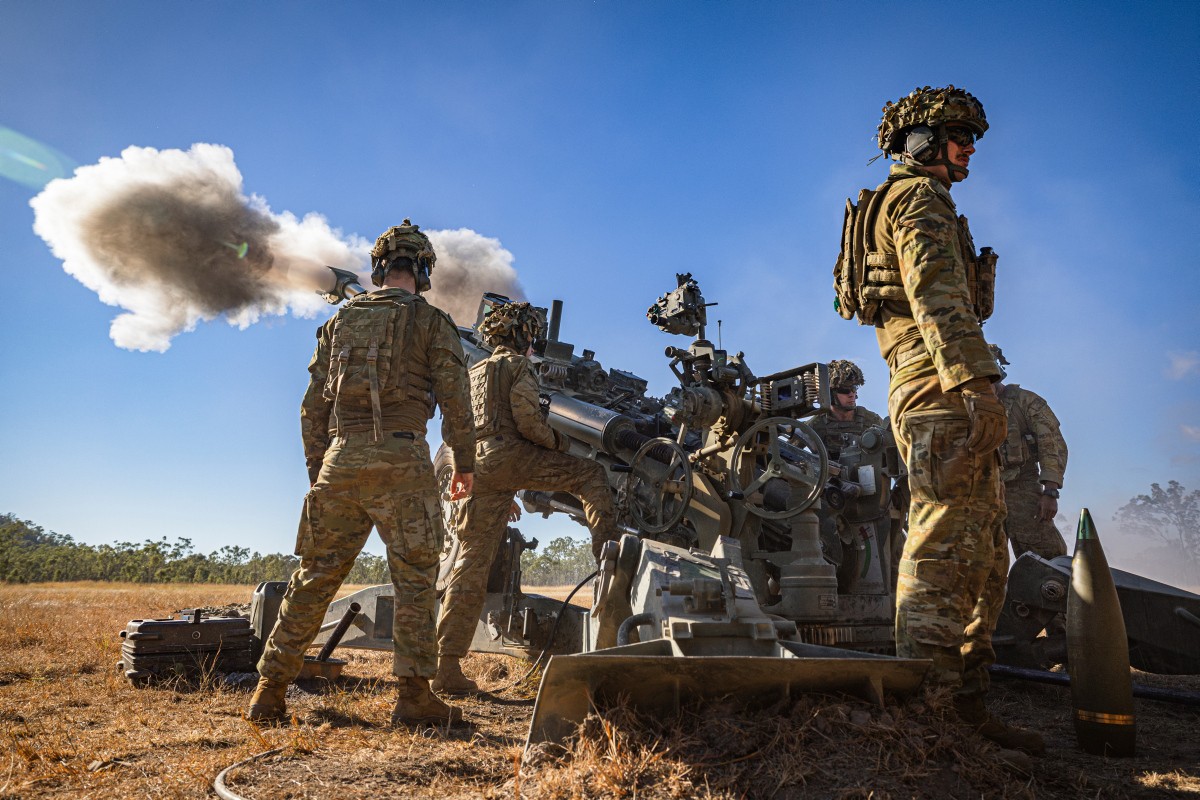
Australia's national power grid is predominantly operated by centralised private service providers. While this model has historically supported the country’s energy demands, its centralised nature leaves it vulnerable to faults, cyber intrusions and geopolitical conflicts. These vulnerabilities pose significant risks to the Australian Defence Force (ADF), where a continuous and secure power supply is essential for maintaining operational readiness, executing defence missions and protecting critical infrastructure. Disruptions, whether caused by natural disasters, technical failures or malicious attacks, threaten national security. Although the ADF has undertaken efforts to incorporate renewable energy and improve energy security, significant challenges remain. In particular, the resilience of supply chains, adequacy of backup systems and the ability to operate independently of the national grid continue to require attention. Addressing these aspects is essential to ensure operational continuity and long-term resilience.
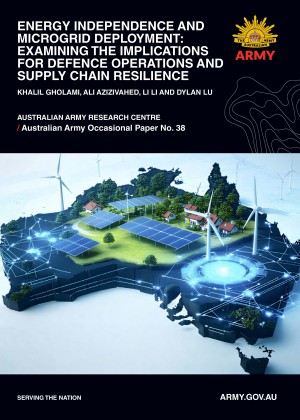
This research conducted for Occasional Paper 38 examined strategies for reducing the ADF’s reliance on conventional, centralised power systems and achieving greater energy independence. The study analysed international defence energy systems and assessed their vulnerabilities in both operational and crisis scenarios. It evaluated alternative and renewable energy sources and assessed how these could be integrated into military infrastructure to support autonomy, security and sustainability. A primary focus of the study was microgrid technology. Microgrids are decentralised systems designed to supply localised energy using a combination of power generation and storage systems. These systems can operate either in conjunction with or independently from the main grid. From a defence perspective, microgrids can provide operational flexibility, improve energy reliability and reduce exposure to risks in remote or high-threat environments. Their components typically include local generation sources, energy storage units and intelligent control mechanisms that help ensure an uninterrupted power supply during disruptions. The study also explored key risks associated with these technologies, including cyber threats, physical security vulnerabilities and dependence on fragile global supply chains. Many microgrid components, such as batteries and renewable energy systems, are sourced from international suppliers. This dependence presents a strategic challenge. The research highlighted the importance of building domestic capability in both manufacturing and supply chain resilience. It also examined the potential of artificial intelligence (AI) and automation to improve energy efficiency and responsiveness, while stressing the need for robust safeguards and reliability testing.
Key findings from the research included the following:
- Centralised grids are found to be highly vulnerable to disruption caused by natural disasters such as bushfires, floods and earthquakes, as well as cyberattacks and technical failures. These weaknesses pose serious risks to defence operations and mission continuity.
- Microgrids offer a practical and resilient alternative to traditional utility grids. Their capacity for independent operation enables defence sites to continue functioning even when the main grid is compromised.
- The most effective microgrids in military settings use a hybrid energy model. This involves combining renewable sources, battery storage and conventional fuel-based generators, which ensures a reliable and adaptable power supply in various conditions.
- Security is identified as a critical design and operational requirement. Military microgrids need to be constructed and maintained in accordance with rigorous cyber and physical security standards, tailored to specific mission and geographical needs. Regular updates and system monitoring are necessary to respond to evolving threats.
- Australia’s reliance on overseas suppliers for key microgrid technologies exposes defence energy systems to supply chain risks. Investment in local manufacturing and research is considered essential to achieve energy self-sufficiency.
- Hydrogen energy is likely to emerge as a promising option for use in land and air defence applications. However, successful integration would require upgrades to the current infrastructure and training of personnel in the handling and application of hydrogen-based systems.
- AI technologies show the potential to enhance the operation of military microgrids by enabling intelligent decision-making, predictive maintenance and autonomous control. Despite these benefits, the need for further research into the reliability and security of AI in defence contexts remains evident.
Based on these findings, the research recommended the following actions:
- Implementation of pilot microgrid projects at selected military bases to evaluate system performance and gather operational data.
- Development of domestic manufacturing and supply chains to reduce reliance on imported technologies.
- A detailed techno-economic assessment of microgrid systems, considering both capital and operational costs, lifecycle value and potential long-term savings through improved resilience.
- Deployment of AI-driven control systems, supported by rigorous cybersecurity protocols and regular stress testing.
- Strategic investment in hydrogen energy infrastructure and its integration into defence logistics and platforms.
- Promotion of collaboration between government, industry and research institutions to accelerate innovation and strengthen Australia’s defence energy posture.
In conclusion, this Occasional Paper offers the ADF a comprehensive framework for enhancing energy security through the adoption of decentralised, intelligent and resilient energy systems. Microgrids, supported by a hybrid energy model and advanced technologies, represent a reliable solution to the vulnerabilities inherent in centralised grids. By strengthening supply chain resilience, incorporating emerging technologies and prioritising secure and sustainable power delivery, the ADF is positioned to maintain operational capability and protect national interests in an increasingly complex energy landscape.