Search
Using the filters to the left, click your selection, it will become bold and filter the results, click it again to remove that filter.
Peter J Munson is a Marine officer, KC-130 pilot, and Middle East Foreign Area Officer currently assigned to U.S. Marine Corps Forces Central Command. He is the author of two books, Iraq in Transition: The Legacy of Dictatorship and the Prospects for Democracy (Potomac, 2009) and War, Welfare, and Democracy: Rethinking America’s Quest for the End of History (Potomac, forthcoming in fall 2012). A frequent contributor to multiple journals and blogs, including his own ( http://peterjmunson.blogspot.com ), he …
Army After Afghanistan Speech to the Sydney Institute by the Chief of the Australian Army Lieutenant General David Morrison, February 2012 It is an honour to address the Sydney Institute. Over more than two decades Gerard and Anne have cemented the reputation of the Sydney Institute as the premier forum in this city for the serious discussion of public policy as well as the arts and culture. Theirs is a considerable achievement, and I am grateful for the opportunity to deliver my first address to an …
Major David Caligari is an infantry officer who has served in the 1st, 2nd and 3rd Battalions, The Royal Australian Regiment. He has commanded at platoon and company level, including as commander Ready Combat Team and commander Ground Combat Element for the Australian Amphibious Force. He served as the 2019 aide-de-camp to the 1st Division Commander, planned the 2020 NATO response to COVID-19 in Afghanistan as the acting Director of Current Operations, and was the operations officer of the Ready Battle …
Colonel John Pearse , CSM is a SERCAT 5 Officer who has served most of his career in the armoured corps. He has a passion for force integration across the Total Workforce System and is currently the Director of Total Workforce Training at HQ FORCOMD. He has Master degrees in Military and Defence Studies from the Australian National University and in National Security and Strategy from Deakin University. John is a Fellow of the Defence Strategic Studies Centre. … John …
Major General Chris Field, @ChrisFieldAus , serves as an Australian Army Officer in Headquarters Australian Defence Force. … Chris Field …
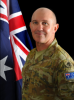
In an era of increasing focus upon concepts such as hybrid warfare, insurgency and ‘low intensity conflict', asymmetry is often seen as a means employed by conventionally weak actors against traditional military powers. This presumption is challenged by the author in this paper. Unfortunately, most of the ADF's future operating concepts inadvertently give ground to Australia's enemies by—almost exclusively—addressing asymmetric warfare as a style of fighting in the unique realm of people who will do harm …
In this paper, Brigadier Field examines the role of the 9th Australian Division in Operation Cartwheel which involved the capture of the Japanese Base at Lae. He uses this division’s expeditionary operations and amphibious manoeuvre as the basis for analysis of the seven tenets of manoeuvre described in current Land Warfare Doctrine. The result highlights the challenges inherent to expeditionary operations and amphibious manoeuvre in Australia’s primary operating environment. Brigadier Field also offers …
On 8 August 2018, the Chief of Army, Lieutenant General Rick Burr, released the Army’s Futures Statement for an Army in Motion - Accelerated Warfare. [1] This paper articulates four imperatives for change, based on four alternate views, enabling Army’s consideration and implementation of Accelerated Warfare. These alternate views are examples of the diversity of ideas available to Army as we consider Accelerated Warfare’s place in our dynamic futures. The four imperatives for change and four alternate …

For contemporary, Western military organisations doctrine serves as the basis of their members' intellectual unity and underpins their ability to identify and incorporate change. Doctrine is held in such high regard by military professionals that one senior officer termed it 'the heart of the army.' While widely accepted now, doctrine did not appear until the mid-nineteenth century. Its origins lie in the Prussian Army, whose brilliant theorist Field Marshal Helmuth von Moltke employed it with devastating …
With the release of Force 2030, the 2009 Defence White Paper, the Australian Government has clearly set the ADF onto the path of a maritime strategy. With this development, Australia has joined many great states—from the Athenians to the Americans—who have pursued maritime strategies to their benefit. While the ADF does have a history of pursuing maritime strategy that arguably dates back to the landings at Gallipoli, most of its recent strategic thought has dealt with the requirements of Continental …