Each month, members of the Australian Army Research Centre’s Academic Team curate a selection of recommended readings or presentations, including academic articles, podcasts, conference presentations, books, blogs, and commentary. These selections are drawn from their ongoing research and are chosen for their relevance to the challenges and opportunities facing the Australian Army today.
While many recommendations may align with the AARC’s research priorities, the series also ranges more broadly across topics such as military theory, contemporary operations, military history, regional dynamics, institutional and campaign studies, and strategic affairs.
These resources are intended to support both individual professional development and unit-level study, complementing the AARC’s own publications. Inclusion in this series does not imply endorsement of the views expressed in the original works.
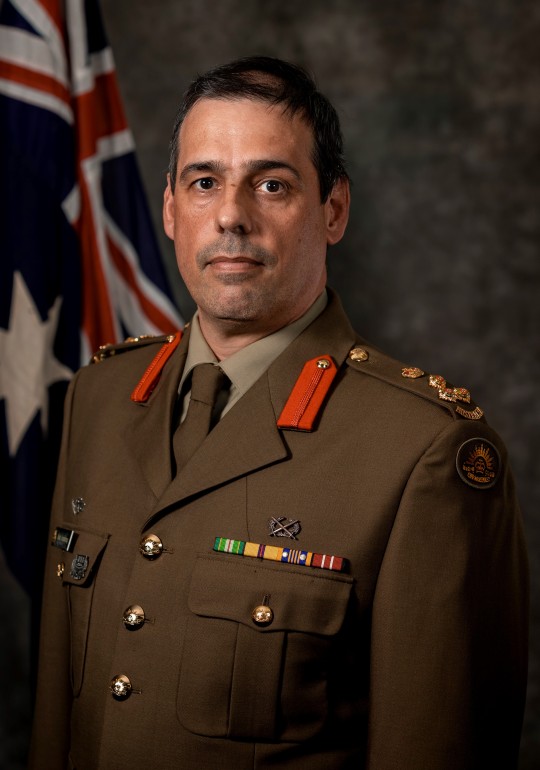
Additionally, the AARC welcomes recommendations from Army’s Senior Leadership. For the month of November, Brigadier Mark Armstrong CSC has provided us with a website recommendation.
Please note: Items indicated as being available through the Defence Library Service are only accessible by Australian Defence Organisation (ADO) personnel.
Books
Manson, Katrina. Project Maven: A Marine Colonel, His Team, and the Dawn of AI Warfare (W.W. Norton & Company, 2026)
Available as an ebook through the Defence Library Service
Released in June 2026, this book explores behind-the-scenes of a now-famous US defence program – Project Maven – and the Pentagon's decades-long efforts to integrate AI into its surveillance and targeting systems. Launched in 2017 and initially led by a driven US Marine Corps Colonel, Drew Cukor, Project Maven aimed at providing enhanced situational awareness for US commanders on the battlefield by integrating cutting-edge AI technologies developed by Silicon Valley. Over the program's development it expanded AI’s supporting functions into new areas, including targeting. An at-times confronting book, this is an essential read for anyone seeking to understand how and why AI systems have come to exercise such a prominent place in contemporary and future warfare. A fuller review of this book, by Dr Carl Rhodes, will be published on the AARC's Land Power Library on 1 December 2026.
Articles
Borton, Nick and Ferenc Kajári. 'The Last Mile of Rearmament: Turning New Equipment into Fighting Power.' Royal United Services Institute for Defence and Security Studies, 17 November 2026.
Available at: https://www.rusi.org/explore-our-research/publications/commentary/last-mile-rearmament-turning-new-equipment-fighting-power
In this RUSI Commentary, Nick Borton and Ferenc Kajári argue that defence modernisation succeeds not when equipment is purchased, but when formations can fight effectively with it. Using Hungary’s effort to rebuild a heavy mechanised capability, they show that doctrine, training, logistics, infrastructure, personnel and realistic validation are more difficult than procurement itself. Honest readiness reporting, investment in soldiers and leaders, and continual adaptation to evolving threats such as drones and electronic warfare are essential to generating credible combat power and sustaining regeneration in war.
Matisek, Jahara and William Reno. 'The Changing Character of Security Force Assistance: From Irregular Warfare to Conventional Conflict'. Journal of Strategic Studies, 2026, 1-29.
Available at: https://www.tandfonline.com/doi/full/10.1080/01402390.2026.2758414
In this article, Jahara Matisek and William Reno examine how the purpose and conduct of Security Force Assistance (SFA) is being reshaped by great power competition. Released just this month, the authors draw on over 900 interviews and fieldwork conducted between 2017 and 2026 to argue SFA has a more strategic role in preparing partners for conflict. This contrasts with SFA's traditional role of partner capacity building and counterinsurgency. Utilising Operation Interflex as a case study, the UK-led multinational training program for the Armed Forces of Ukraine (AFU), the authors demonstrate the importance of recipient-driven approaches, institutional development, and adapting training to operational realities. This is a valuable read offering a timely framework for understanding the evolving role of SFA and its implications for how militaries develop their train, advise, and assist missions.
Matsuda, Takuya and S. Ji, Elliot. 'Don’t judge islands by their sizes: The role of remote Japanese islands in the regional military balance'. Journal of Strategic Studies, 2026, Vol. 49, No 5, 779–813.
Available at: https://www.tandfonline.com/doi/full/10.1080/01402390.2025.2572640#abstract
This article examines the potential for Japan's Sakishima Islands, located to the southwest of Okinawa and not far from the east Coast of Taiwan, to be used as important features in an active denial strategy against any potential Chinese aggression in the area. The authors argue that the location of the islands just over 100 km from Taiwan means that anti-ship and anti-air missiles placed on the islands would be essential in any future conflict over the island. The article explores what systems and infrastructure could contribute to this role, and how any PLA targeting of the islands might be countered. This article stimulates thinking about similar opportunities for sea denial in Australia’s region.
Reports
Martinson, Ryan D. 'Precluding the Powerful Enemy: A New PLA Concept for a Taiwan Conflict.' China Maritime Studies Institute, U.S. Naval War College. 14 October 2026.
Available at: https://digital-commons.usnwc.edu/cmsi-notes/25/
In this CMSI Note, Ryan D. Martinson examines the PLA’s emerging concept of ‘preclusion’ (shezu), which combines deterrence and denial to prevent or defeat U.S. intervention in a Taiwan contingency. The concept integrates missile-based operations on the Chinese mainland, long-range naval and air operations beyond the First Island Chain, and cognitive warfare designed to undermine an adversary’s will to fight. Martinson's report suggests that the PLA is developing a sophisticated, multi-domain approach that links long-range strike, information operations, maritime manoeuvre and psychological coercion into a unified campaign aimed at shaping decision-making before and during conflict.
Podcasts
Evans, Ryan, Mike Horowitz, Stacie Pettyjohn, and Benjamin Jensen. 'What's a Revolution in Military Affairs Good For?', War on the Rocks, 29 October 2026.
Available at: https://warontherocks.com/whats-a-revolution-in-military-affairs-good-for/
In this episode of the War on the Rocks Podcast, host Ryan Evans discusses the concept of a 'Revolution in Military Affairs' (RMA) with guests Mike Horowitz, Stacie Pettyjohn, and Benjamin Jensen. A highly debated concept, throughout the episode the presenters question the value and nature of the RMA concept, if RMAs exist, and if they do then why do they matter. A robust and collegiate conversation, this episode is essential listening for anyone with an eye to understanding how warfare continues to transform through the interaction of technologies and societies.
Speeches/Presentations
Bensahel, Nora. 'Keynote Address – Keogh Oration'. Chief of Army Symposium, Perth, 7 October 2026.
Available at: https://cove.army.gov.au/article/chief-army-symposium-2026-day-1
In her recent Keogh Chair Oration at the 2026 Chief of Army Symposium in Perth, Nora Bensahel argued that adaptability is the decisive attribute for military success in an era of strategic uncertainty, rapid technological change and evolving warfare. Drawing on the concept of an ‘adaptation gap’ between expected and actual wars, she contends that senior leaders must foster continual adaptation through experimentation, learning and institutional reform. Among many others, four key takeaways from Bensahel's oration were: adaptation must be continuous; leaders must accept risk and tolerate failure; organisations must seek diverse and junior perspectives; and assumptions must be constantly challenged. Victory will belong to the force that adapts fastest in war, and prepares to do so in peace.
Movies
A Bridge Too Far (1977)
Director: Richard Attenborough (176 minutes)
A Bridge Too Far chronicles Operation Market Garden, a failed Allied operation in September 1944 that attempted to open a route into Germany via seizing several key bridges and towns in the Netherlands. Where most war movies focus on small-unit operations or the personal impacts of war, A Bridge Too Far provides a rare examination of the operational level and is worth watching for this reason. Running almost three hours and featuring an ensemble cast, it delivers a historically authentic account of the many key units involved in the operation. In the same way that operational art sequences tactical actions to achieve strategic objectives, A Bridge Too Far sequences stunning action scenes to show the many aspects of an operation that involved over 80,000 allied troops, including over 34,000 airborne soldiers. Operation Market Garden's airborne insertion was the largest in history, and forms one of the movie's most impressive action sequences. Filmed before computer-generated special effects, over 1000 extras jumped into the same drop sites that had been used in 1944. Most importantly for Australian Army personnel, however, is the film's exploration of the reasons for the operation's failure, which include insufficient preparation time and failure to consider intelligence reports indicating the presence of much stronger German forces than had previously been assessed.
Senior Leaders Recommend…
Brigadier Mark Armstrong CSC, Deputy Commander 2nd Australian Division
The Culturist, website
Available at: https://www.theculturist.io/ [Inaccessible through DPE]
The Culturist is a blog that discusses topics from cultural and religious history, literature, art and music that remain relevant to the modern world. It provides thoughtful and intellectually stimulating perspectives that differ markedly from my usual professional military reading. The content usually takes me one or two levels deeper than my initial, often superficial, knowledge of a classical topic. It serves as a reminder of the richness of art, culture, and history, and of our capacity to engage with ideas beyond the bland, flattened perspectives that can emerge from overly bureaucratic modern ways of thinking and reading. Recent articles illustrate this approach well. ‘Are We Back Inside Plato’s Cave?’ examines the influence of algorithms and social media through the lens of Plato’s ancient warning about perception and reality. ‘The Real Meaning of England’s Greatest Myth’ explores the symbolism of the sword in the stone as a metaphor for vocation and calling. ‘How to Change the World’ compares Julius Caesar and Napoleon Bonaparte, considering how outsiders can rise to prominence and reshape institutions and societies. For anyone seeking thoughtful, succinct reflections that connect history, culture, and contemporary life, The Culturist is both engaging and rewarding reading.