
Search
Using the filters to the left, click your selection, it will become bold and filter the results, click it again to remove that filter.
Business Decision-Making and Crisis Planning by Garth Callender Wiley , 2023, xxiv+186 pp Paperback ISBN: 97813942033201 Reviewed by: Darren Cronshaw Uncertainties and crises are a feature of contemporary global politics and business. In the face of conflict, extreme weather and natural disasters, cybercrime, pandemics, migration, and economic and supply chain instability, in what ways can leaders best lead through risk and chaos with agility and good decisions, while maintaining resilience for …

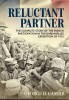
The Complete Story of the French Participation in the Dardanelles Expedition of 1915 by George H Cassar Helion , Warwick, 2019, 238 pp Hardback ISBN: 9781911628927 Reviewed by: Chris Roberts Over a century after the last British troops were withdrawn from Gallipoli, volumes are still being written about a campaign that has been likened to a Greek tragedy. Within the historiography of the English-speaking peoples, the focus inevitably has been almost entirely on the British and Anzac contribution. Yet …
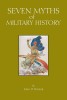
by John D Hosler Hackett Publishing Company , 2022, 185 pp Paperback ISBN: 97813942033201 Reviewed by: John Nash Military historians and theorists are often confronted by frustrating historical myths. Sometimes these are quite specific (e.g. a battle, historical figure, or piece of equipment), whereas sometimes they are historical constructs or historical arguments that have gained a life of their own and that come to bedevil the wider scholarship of war and military studies. The collection of chapters …
The Defence Strategic Review (DSR) was a call for action, which bluntly stated that we have seen ‘the return of major power strategic competition, the intensity of which should be seen as the defining feature of our region and time’. [1] Yet the DSR offers little insight into the nature of the competition that is being advanced by regimes such as the Chinese Communist Party (CCP) and others. Terms such as ‘grey zone’, ‘irregular warfare’ and ‘proxy warfare’ simply do not appear in the DSR, even though …
An Interview with Lieutenant General (Retired) Francis Hickling …
The Landings in Normandy* WAR in the desert had been described as “The tactician’s paradise—and the quartermaster’s hell,” a saying that must tank crews would have been quite prepared to endorse without bothering unduly how “The Q” felt about it—always excepting, of course, the vexed question of “The Bigger Gun,” War in Normandy was about equally exasperating for everybody. Before studying the problems of armour in the planning, and the initial battles, it is worth while to summarize the enemy’s …
THE designs of dress for the Post War Army have been announced and, as is to be expected with something that is right next to a man’s skin, a great deal of interest and discussion have been aroused. The success of the new uniforms and the reaction of the soldier to them will depend not only on the garments themselves but also upon his understanding of the methods used in arriving at the final decisions. Those whose own views have been confirmed will, no doubt, be quietly satisfied, but those who had wanted …
Introduction A cursory perusal of the Principles of War listed in Army Training Memorandum No. 53 (February — March, 1948), may lead to the supposition that the Chiefs of Staff in the United Kingdom have altered some of the old principles and introduced some new ones. Reflection, however, will show that all they have done is to re-state the well known and generally accepted principles in more precise terms, and to underline certain factors which, under the conditions of modern war, require emphasis. It …
PROMOTION examination for officers of the Regular Army will be introduced as from June, 1949. To assist candidates for both promotion and Staff College entrance examinations, part time courses will be arranged by Commands and Military Districts. It must be appreciated, however, that the raising of the Citizen Military Forces, and the increase in training activity generally, will throw a heavy burden on formation staffs. Time simply will not permit them to run comprehensive and lengthy examination classes …
Its Place in History IN September, 1947, the American Association of Scientific Workers, in a memorandum to the General Assembly of the United Nations, defined Biological Warfare as the use in war of pathogenic, or disease-producing, bacteria, fungi, protozoa, rickettsiae, viruses and other agents of infectious disease, of their toxic products, and of certain other organic chemical poisons (animal or plant toxins, plant “hormones”) intended to kill or incapacitate human beings or economically useful …