
Quantum Sensing Using Squeezed States
Author: Ria Rushin Joseph
Abstract
Quantum sensing uses quantum-mechanical effects to improve measurement precision beyond classical limits. In particular, squeezed states of light reduce quantum uncertainty in one quadrature of the electromagnetic field at the expense of increased uncertainty in the conjugate quadrature, and can therefore improve sensitivity in suitable measurement settings. This paper introduces the concept of quantum sensing using squeezed light and examines its potential for enhancing interferometric measurements. By controlling the squeezing parameters and matching the squeezed quadrature to the measured observable, squeezed light can improve the performance of interferometers, which are critical for detecting weak signals such as small displacements, weak gravitational-wave signals, and subtle changes in electromagnetic fields. The paper also discusses practical issues relevant to sensing applications, including signal-to-noise improvement, optical loss, phase stability, and environmental noise. These considerations make squeezed-light techniques a promising avenue for the development of more sensitive quantum sensors, including systems of possible relevance to defence applications such as navigation and target detection.
Introduction
Quantum technologies are emerging as a major focus of research due to their ability to fundamentally change and revolutionise various aspects of defence capabilities. Countries that successfully develop and deploy quantum technologies could gain a significant edge in military capabilities, particularly in relation to situational awareness, computational power, and communications, introducing new ways to enhance strategic decision-making and conduct operations. Quantum sensors could provide unprecedented precision in measuring physical quantities, potentially revolutionising surveillance and reconnaissance. Quantum computers could vastly outperform classical computers in solving complex problems, enabling better analysis, simulations and predictions related to military strategy and operations. In addition, quantum encryption and quantum key distribution (QKD)[1] can support information-theoretically secure key establishment under specified protocol and implementation assumptions. The profound implications of quantum technologies could lead to unprecedented capabilities in areas critical to military superiority and national security. As countries compete to develop and deploy these cutting-edge technologies, early adopters stand to gain a significant advantage. The full potential of quantum technologies for military applications is still unfolding, but their ability to push the boundaries of what is technologically possible makes them a critical area of focus in the future balance of military power.
Quantum technologies apply the principles of quantum mechanics to practical systems and devices by harnessing the unique properties of quantum phenomena (such as wave-particle duality, superposition, the Heisenberg uncertainty principle and quantum entanglement). Understanding their potential therefore requires an understanding of quantum mechanics, the fundamental theory in physics that describes the behaviour of matter and energy at microscopic scales, particularly the behaviour of atoms and subatomic particles such as electrons and photons. In contrast, classical physics describes the dynamics and interactions of objects at larger, macroscopic scales. Quantum mechanics governs phenomena at much smaller scales, where the usual laws of classical physics no longer adequately describe observed behaviour.
In classical physics, the state of an object is defined by its position and momentum, and these properties can be known with absolute precision at any given time. This deterministic view of the physical world suggests that, if we know the current state of an object, we can predict its future behaviour with complete accuracy. However, in quantum mechanics the situation is quite different. Particles, such as electrons and photons, do not behave like classical objects. Instead, they exhibit wave-like properties, and their state is represented by a wave function, which is a mathematical expression that encodes all the possible states the particle can occupy. This wave function obeys the principle of superposition, which means that, until measured, a quantum particle exists in a combination of all possible states simultaneously. It is only when an observation is made that the particle ‘collapses’ into a definite state.
One of the key features of quantum mechanics is the Heisenberg uncertainty principle. It states that certain pairs of physical properties (such as position and momentum) cannot both be precisely measured or known at the same time. The more accurately one property is measured, the less accurately the other can be known. This is a fundamental limitation of nature at the quantum scale, rather than a flaw in measurement techniques. The uncertainty principle highlights the intrinsic fuzziness of the quantum world, where exact values for certain quantities cannot be fully determined simultaneously. For example, if we try to measure the position of a particle very precisely, its momentum becomes more uncertain, and vice versa.
This inherent uncertainty in quantum measurements leads to the concept of squeezed states. Squeezed states are a special type of quantum state where one property (such as position or momentum) is made more precise with reduced uncertainty, while the uncertainty in the conjugate property is increased. This process is often described as ‘squeezing’ the uncertainty—essentially narrowing the uncertainty in one observable at the cost of increasing it in another. Squeezed states are a crucial tool in quantum optics and quantum information science, particularly for quantum sensing and quantum measurement. By squeezing one part of a quantum system, such as the phase or amplitude of light, we can achieve unprecedented levels of precision in measurements beyond what would be possible using classical techniques. This is particularly useful in fields like gravitational wave detection, quantum metrology, and high-precision measurements, where tiny fluctuations need to be detected with high sensitivity.
An even more fascinating and counterintuitive aspect of quantum mechanics is quantum entanglement. This phenomenon occurs when two or more particles become so deeply connected that their quantum states are intertwined. Once particles become entangled, the state of one particle is intrinsically linked to the state of the others, regardless of the distance between them. This implies that a measurement made on one particle will instantly affect the state of the other, even if they are separated by vast distances. The non-local nature of entanglement defies classical ideas of causality and locality and has profound implications for our understanding of the nature of reality. It also forms the foundation for emerging technologies in quantum computing and quantum communications, such as quantum cryptography and quantum teleportation.
Quantum entanglement occurs when the joint state of two or more systems cannot be written as a product of independent subsystem states. Measurements on entangled systems can exhibit correlations that cannot be reproduced by local hidden-variable models. However, each local outcome is random, and entanglement cannot be used to transmit controllable information faster than light. Entanglement underpins quantum communication, teleportation and several quantum-information protocols. Studies of all these quantum phenomena go beyond just theoretical curiosity. They have led to the development of technologies that promise to revolutionise fields like quantum sensing, quantum computing and quantum communications, each of which leverages quantum phenomena to unlock capabilities far beyond those of classical systems. Quantum computing is perhaps the most widely discussed application. In quantum computing, quantum bits (known as qubits) replace classical bits in processing information. Unlike classical bits, which are limited to being either 0 or 1, qubits can exist in multiple states simultaneously, due to the principle of superposition. Superposition and interference allow some quantum algorithms to manipulate amplitudes across a large computational state space. Particular algorithms can offer polynomial or exponential speedups for specified problems, but quantum computers do not generically test all solutions or solve all complex problems exponentially faster. This has the potential to revolutionise fields such as optimisation and simulation, enabling breakthroughs in areas ranging from artificial intelligence to materials science. In parallel, quantum sensing and metrology exploit quantum properties to achieve ultra-high precision in measurements. Quantum sensors, which rely on quantum phenomena like superposition, squeezed states and entanglement, can detect extremely small changes in physical quantities such as time, displacement, acceleration, electromagnetic fields, temperature, or even gravitational waves. These sensors offer unparalleled precision and sensitivity compared with classical devices, making them highly valuable for a wide range of applications.
As researchers continue to explore the potential of these quantum technologies, their ability to push the boundaries of what is technologically possible is becoming increasingly clear. From ultra-sensitive sensing devices to secure quantum communication and key-distribution methods under stated security assumptions and powerful new computational capabilities, quantum technologies promise to drive the next generation of advancements in defence, scientific research and beyond.
1. Theory
In this section, concepts of quantum mechanics underlying quantum technologies will be introduced. Quantum mechanics is a fundamental theory that describes the behaviour of nature at microscopic scale, such as the interaction of light with matter, and the behaviour of electrons. It can be contrasted with classical mechanics, which describes the dynamics of objects at macroscopic scale, such as the motion of satellites, spacecraft, planets, stars and galaxies.
The history of quantum mechanics can be traced back to the 19th century. One of the first major contributions came from Max Planck, who introduced the idea that energy is quantised, meaning that it can only be emitted or absorbed in discrete amounts called quanta. This concept was crucial in explaining black-body radiation, a problem classical physics could not solve. Later, Albert Einstein expanded on Planck’s idea to explain the photoelectric effect,[2] where light striking a metal surface ejects electrons. He proposed that light itself is quantised into particles called photons, each carrying a quantum of energy proportional to its frequency. The next significant development came from Louis de Broglie. He proposed that particles, such as electrons, exhibit both wave-like and particle-like properties, a concept known as wave-particle duality. This idea was experimentally confirmed through electron diffraction experiments. Then the two main mathematical formulations of quantum mechanics were developed. Werner Heisenberg formulated matrix mechanics, while Erwin Schrödinger formulated wave mechanics, given by his famous Schrödinger equation. These two approaches were later shown to be equivalent. Heisenberg also discovered the uncertainty principle, which states that certain pairs of physical properties, like position and momentum, cannot be simultaneously measured with arbitrary precision.[3] This principle highlighted the inherent limitations in our ability to predict the behaviour of quantum systems.
It is both impractical and impossible within the scope of this work to provide a full treatment of quantum mechanics starting from its postulates. However, we will discuss some important concepts which are crucial to understanding the idea of squeezed states of light and the working principle of quantum sensing using squeezed states. First, we will consider the dynamics of a classical harmonic oscillator. Using that as an example, we will introduce the concept of classical state and phase space of a classical system. Next, we will enter the regime of quantum mechanics and introduce the concepts of quantum state. Here, we will discuss the concept of measurement in quantum mechanics. Then we will introduce the uncertainty principle. After that, the fascinating phenomenon of quantum entanglement will be introduced. Quantum optics will then be considered, with a discussion on quantum harmonic oscillator. Following that, we will present the phase space of a quantum system and show the difference between the classical and the quantum phase space. Equipped with all these concepts, we will be ready to introduce the idea of squeezed states of light. An important technique used in quantum sensing, called interferometry will also be introduced. Finally, we will discuss the working principle of quantum sensing using squeezed states. In particular, the discussion will consider how quantum uncertainty in measurements in an interferometer can be reduced using squeezed states of light.
The Heisenberg uncertainty principle is a key concept in quantum mechanics that limits how precisely we can concurrently measure certain properties of a system, like position and momentum. In simple terms, it tells us that the more precisely we try to measure one property (like the position of an object), the less precisely we can measure its other related property (such as its momentum). This limitation also applies to the sensors we use to measure things like movement, force or temperature. In classical sensors, this leads to a phenomenon known as the standard quantum noise limit. Essentially, the standard quantum noise limit is the best precision that can be achieved with conventional technology, and it results from the inherent quantum noise in the system. In this regard, quantum noise refers to the tiny, unpredictable fluctuations that arise because of the uncertainty principle. For example, in optical systems like interferometers (which measure tiny displacements of mirrors by using light), quantum noise can limit how precisely we can measure small changes in position or phase. When we increase the brightness of light to improve measurement sensitivity, it increases noise in another aspect, such as the pressure the light exerts on the detector, creating a trade-off that prevents perfect accuracy. While this is a fundamental limit for classical sensors, quantum sensing techniques, like squeezed light, can break through the standard quantum noise limit by reducing the quantum noise in one part of the system, allowing for much more precise measurements. These advancements are pushing the boundaries of what is possible, allowing sensors to detect incredibly tiny signals, such as the ripples from gravitational waves, something classical sensors cannot do.
Squeezed states of light are a special type of light that has been altered in a way that reduces uncertainty or noise in one of its properties (like its phase), while increasing the uncertainty in another property (like its amplitude). Normally, light behaves in a coherent state, meaning that it has a balance of uncertainty between these properties—as described by the Heisenberg uncertainty principle. However, in squeezed states, we use quantum techniques to squeeze the uncertainty in one property, making that property much more precise than usual. By doing so we can, for example, make the phase of the light extremely stable and predictable. This is useful for measurements that rely on detecting tiny changes in phase, like in interferometers or gravitational wave detectors. The trade-off is the increase in uncertainty caused in the other property, such as the amplitude or intensity. By carefully controlling this balance, the use of squeezed light can dramatically improve the precision of measurements that are limited by quantum noise. This makes squeezed light particularly valuable for quantum sensing applications requiring high sensitivity, such as detecting tiny forces or measuring extremely small displacements beyond the sensitivity achievable with classical techniques.
a. Phase Space in a Classical System
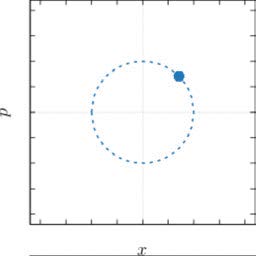
The state of the system is represented by a point with corresponding position and momentum. The axes use scaled, dimensionless position and momentum, so the constant-energy trajectory is circular.
In classical mechanics, the objective is to understand and predict the dynamics of a physical system, such as the motion of a particle over time. The phase-space method is an important tool for representing the state of a dynamical system. In this paper, these classical phase-space concepts are introduced first and then extended to the quantum-mechanical setting. A classical state of a system refers to a complete description of the system’s properties at a given time. This state is typically represented by specifying the positions and momenta of all the particles in the system. For example, in a system with n degrees of freedom, the classical state is described by 2n variables, which consist of n positions and conjugate momenta. The phase space is a multidimensional space where each possible state of the system is represented by a unique point. The state of a system evolving over time gives a trajectory in the phase space. This state is determined by solving the equations of motion, which are time-dependent differential equations.
Classical Harmonic Oscillator
To illustrate the concept of phase space, let us consider the classical harmonic oscillator. The harmonic oscillator is a one-dimensional system that consists of a mass attached to a spring fixed on a wall. The system has one degree of freedom; hence the phase space is a two-dimensional space spanned by the position x and momentum p axes. The state of the harmonic oscillator is represented by a point with coordinates (x,p). As the system evolves over time, this point traces out a trajectory. For the harmonic oscillator, the trajectory in phase space is an ellipse, reflecting the periodic nature of the motion. As we assumed the total energy of the system is conserved, the elliptical trajectory in phase space corresponds to a constant energy contour, with the size and shape of the ellipse determined by the total energy. In Figure 1, the position and momentum axes are expressed in scaled, dimensionless units; under this normalisation, the constant-energy phase-space trajectory appears as a circle rather than an ellipse.
Phase space offers a powerful way to analyse and visualise the dynamics of classical systems. By representing the state of a system as a point in phase space, we can gain insights into its behaviour, stability, and energy conservation. The classical harmonic oscillator serves as an excellent example, with its simple yet illustrative phase space trajectories demonstrating key principles of classical mechanics.
In classical mechanics, the future evolution of a system is fully determined by its current state. Given the initial positions and momenta, the equations of motion can predict the future behaviour of the system with certainty. In the classical point of view, nature is deterministic. A pure state specifies all information about the system precisely, while a mixed state represents a statistical ensemble of different possible pure states. In classical mechanics, we often deal with pure states, where the system’s properties are known exactly.
b. Quantum State
Wave-Particle Duality
To understand the quantum state of a system, we begin with a discussion on the differences between the fundamental properties and behaviours of waves and particles.
Particles:
- Localisation. Particles are localised in space, meaning they occupy a specific position at any given time.
- Discrete nature. Particles are discrete entities with defined boundaries. They have properties such as mass, volume, and charge.
- Interactions. Particles interact through collisions and can transfer momentum and energy in a straightforward manner.
Waves:
- Non-localisation. Waves are not localised. They are spread out over a region of space.
- Continuous nature. Waves are continuous and can overlap and interfere with each other. They are described by properties like wavelength, frequency and amplitude.
- Interactions. Waves can exhibit interference and diffraction. When two waves meet, they can constructively or destructively interfere, creating patterns of varying intensity.
Historically, light was first understood as a wave. This was supported by Thomas Young’s double-slit experiment, which demonstrated interference patterns typical of waves. Later, the experiment demonstrating photoelectric effect, which was explained by Albert Einstein, and showed that light also behaves as if it were made up of particles called photons. The photoelectric effect could not be explained by wave theory alone. The wave-particle duality suggests that light does not fit neatly into the classical categories of wave or particle. Instead, it can exhibit properties of both, depending on how it is observed. For example, light can form interference patterns (which shows the wave behaviour) or can be detected as individual photons (which shows the particle behaviour).
The wave-particle duality is not limited to light. It applies to all quantum particles, including electrons. Louis de Broglie proposed that particles such as electrons also have wave-like properties, and his hypothesis was later confirmed by experiments. This concept is a cornerstone of quantum mechanics and has profound implications for our understanding of the nature of reality.
Principle of Superposition
A quantum state is a fundamental concept in quantum mechanics that describes the state of a quantum system. It encapsulates all the information about the system’s properties and behaviour. A Hilbert space is a mathematical “room” where quantum states can be represented and compared as points or arrows. A quantum state is represented mathematically by a wave function or a state vector |ψ in a complex vector space. The wave function provides the probability amplitudes for the outcomes of measurements on the system. The square of the wave function’s magnitude gives the probability density of finding a particle in a particular state. The evolution of a quantum state is governed by the Schrödinger equation, which describes how the wave function or state vector of a quantum system changes over time.
Superposition is a fundamental principle of quantum mechanics. In classical physics, a system is in one definite state at any given time. However, in quantum mechanics, a system can exist in multiple states simultaneously until it is measured. For example, an electron can be in a superposition of being in two different places simultaneously. Superposition is a key concept that underpins many of the strange and fascinating phenomena in quantum mechanics.
Measurement in Quantum Mechanics
In quantum mechanics, measurement is a fundamental process that significantly differs from classical measurement. When a measurement is made on a quantum system, the wave function (which describes the probabilities of all possible outcomes) collapses to a single eigenstate corresponding to the measured value. This process is instantaneous and non-deterministic. Physical quantities—like position, momentum and energy—are represented by operators called observables. Each observable has a set of eigenstates and eigenvalues. When a measurement is performed, the system collapses to one of these eigenstates, and the measured value is the corresponding eigenvalue. The probability of obtaining a particular measurement outcome is proportional to the square of the amplitude of the wave function associated with that outcome. Measurement generally changes the quantum state of the system. Before measurement, the system is in a superposition of states, but after measurement, it collapses to a specific state. This change is central to the concept of quantum measurement. The probabilistic nature of quantum mechanics is one of its most intriguing and fundamental aspects. Unlike classical physics, which can predict the exact outcome of an event given enough information, quantum mechanics deals with probabilities.
The Heisenberg Uncertainty Principle
The Heisenberg uncertainty principle is a fundamental concept in quantum mechanics which was discovered by Werner Heisenberg[3]. It states that there are inherent limits to the precision with which pairs of properties of a quantum system, such as position and momentum can be known simultaneously. Mathematically, the uncertainty principle is formulated as

where σx is the uncertainty in position, σp is the uncertainty in momentum, and ℏ is the reduced Planck constant. The uncertainty is defined as the standard deviation of the variables. The uncertainty principle implies that there is a fundamental limit in measurement. It is impossible to measure both the exact position and the exact momentum of a particle simultaneously. The more precisely one property is measured, the less precisely the other can be known. In quantum mechanics, pairs of physical properties (known as canonically conjugate variables) are pairs of observables whose operators do not commute; and they are said to be incompatible observables. Mathematically, conjugate variables are Fourier transform duals. Apart from position and momentum, another example of such conjugate variables is time and energy.
Quantum Entanglement
The violation of Bell’s inequalities [4] has been established in a series of experiments.[5] [6] [7] These experiments demonstrated that quantum entanglement is a powerful tool. They laid the foundation for a new era of quantum technology. Entanglement demonstrates non-locality, whereby the properties of entangled particles are correlated in a way that classical physics cannot explain. This was famously referred to by Albert Einstein as ‘spooky action at a distance’. The Einstein-Podolsky-Rosen (EPR) paradox challenged the concept of entanglement, and the notion of local realism, by questioning the completeness of quantum mechanics. Later John Bell formulated a theorem, known as Bell’s inequalities, that provided a way to test the predictions of quantum mechanics against those of local realism. Experiments have, however, violated Bell’s inequalities, showing that entangled particles exhibit correlations that cannot be explained by classical physics.
Both classical and quantum theories can use statistical mixtures. A classical pure state specifies a definite phase-space point, whereas a quantum pure state is represented by a state vector or rank-one density operator. A pure state is a quantum state that is fully described by a single wave function or state vector. It represents a system with complete information about its properties. It can be visualised as a point on the Bloch sphere for a single qubit. Pure states exhibit well-defined quantum properties and can be in superposition. A mixed state represents a statistical ensemble of different possible pure states. It is used when there is uncertainty or incomplete information about the exact state of the system. Mixed states are described by a density matrix rather than a single wave function. This matrix accounts for the probabilities of the system being in various pure states. Mixed states arise in situations where the system is subject to decoherence or when it is part of a larger, entangled system.
Entanglement is a cornerstone of quantum mechanics and continues to be a rich area of research. It has practical applications in quantum computing, quantum cryptography, quantum communication and quantum teleportation.
Phase space of a quantum system
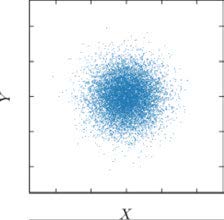
In classical mechanics, each possible state of a system is represented by a unique point in the phase space, and the state of a system evolving over time gives a trajectory. This description is no longer valid for a quantum system. In quantum optics, the phase space to describe the quantum state of light in terms of its amplitude and phase is called an optical phase space.
In optical phase space, a quantum state is represented by a quasiprobability distribution over the amplitude and phase quadratures. This is analogous to the use of position and momentum in classical phase space. Unlike classical phase space, where a point represents a definite state, quantum phase space represents the state using quasi-probability distributions. One important example is the Wigner function, which combines the two quadratures into a phase-space description of the light field. Because it is a quasi-probability distribution, the Wigner function can take negative values and therefore cannot be interpreted as an ordinary classical probability distribution. However, the measurable probability distributions of the amplitude and phase quadratures can be obtained from it as marginal distributions, by integrating over the other quadrature. Rather than following deterministic trajectories as in classical phase space, the Wigner function evolves in time according to a phase-space equation of motion, often written in quantum Liouville form, which provides a useful way to visualise and analyse the dynamics of quantum states of light.
c. Quantum Optics
Quantum optics studies the behaviour of light and its interaction with matter at the quantum level. It focuses on understanding the properties of individual quanta of light, known as photons. Quantum optics studies various quantum states of light such as coherent states, squeezed states and entangled states, which have unique properties not found in classical light.
Quantum Harmonic Oscillator
In quantum optics, light can be described as a quantum harmonic oscillator. This model helps in understanding the quantised nature of light and its interactions with matter. In classical mechanics, the energy of a harmonic oscillator can take any positive value. In quantum mechanics, the energy levels of a harmonic oscillator are discrete. For light, these energy levels correspond to different numbers of photons, with each photon adding a quantum of energy ℏω to the system, where ω is the angular frequency. The lowest energy state of the quantum harmonic oscillator, known as the ground state, corresponds to the vacuum state of light; where no photons are present it has a vacuum energy of ℏω⁄2. In this model, the creation operator adds a photon to the field, raising the energy by one quantum, while the annihilation operator removes a photon, lowering the energy by one quantum. Thus, excited states correspond to the presence of one or more photons. The state of the harmonic oscillator is described by wave functions, which are solutions to the Schrödinger equation. These wave functions, or eigenstates, correspond to the quantised energy levels.
Quadrature of Light
The term 'quadrature of light' refers to the components of the electric field of a light wave that are used to describe its quantum state. These components are analogous to the concepts of position and momentum in classical mechanics. The electric field of a light wave can be decomposed into two quadratures. The amplitude quadrature X corresponds to the in-phase component of the electric field, while the phase quadrature Y corresponds to the out-of-phase component of the electric field. Similar to position and momentum, the quadratures of light are subject to the uncertainty principle where the uncertainties ∆X and ∆Y are the standard deviations of the distribution of the quadratures X and Y. This implies that the amplitude and phase of the light field cannot be simultaneously known with arbitrary precision.
∆X∆Y≥1/4

d. Squeezed States of Light
Quantum states of light are the various ways in which light can exist and interact at the quantum level. In the discussion of quantum harmonic oscillator, this paper has briefly introduced the vacuum state of light. This section discusses different states of light in detail. In particular, it revisits the vacuum state and its impact on measurements. Then we will introduce the coherent states and the squeezed states.
Vacuum State
The vacuum state of light is the quantum state with the lowest possible energy, known as the vacuum energy. It is the ground state of the electromagnetic field. Despite having no photons, the vacuum state still exhibits quantum fluctuations due to the uncertainty principle. Despite containing no photons on average, the vacuum state has non-zero quadrature variances and zero-point fluctuations. These fluctuations are properties of the quantum state and should not be described as temporary classical changes in field energy. In classical physics, empty space or a vacuum is simply space devoid of matter or radiation. However, in quantum theory, the vacuum is a dynamic state with energy and fluctuations. It cannot be described by classical concepts of emptiness. In any optical measurement, quantum noise arises due to these inherent fluctuations in the vacuum state. This noise is unavoidable and sets a fundamental limit on the precision of measurements. This limitation is particularly significant in high-precision experiments.
Coherent State
Coherent states are quantum states of light that most closely resemble classical light waves. They are important in quantum optics because they saturate the Heisenberg uncertainty relation while distributing the quantum uncertainty equally between the amplitude and phase quadratures. In other words, the uncertainty is balanced between the two quadratures, so neither is preferentially reduced or enlarged. Coherent states therefore have the same quadrature uncertainty as the vacuum state. In optical phase space, a coherent state is represented by a circular Gaussian distribution centred at the point determined by its mean amplitude and phase. The width of this distribution reflects the quantum uncertainty and is the same in all directions.
Squeezed State
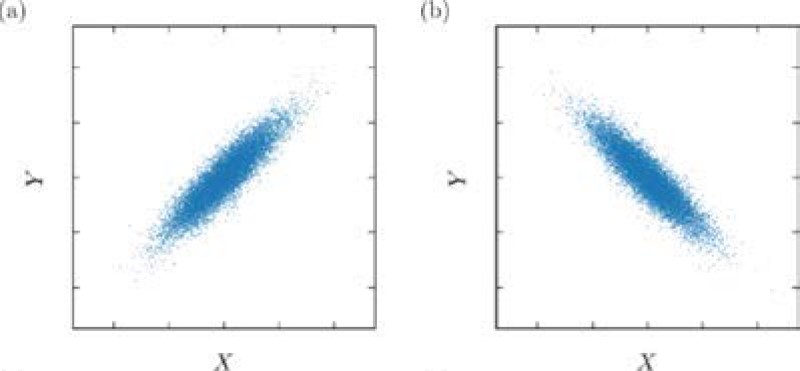
The amplitude quadrature and phase quadrature of a pair of entangled squeezed states of light. The quantum uncertainty in one quadrature is reduced at the expense of increased uncertainty in the orthogonal quadrature.
Squeezed states of light are quantum states in which the uncertainty in one quadrature is reduced below the corresponding coherent-state noise level, while the uncertainty in the orthogonal quadrature is increased, in accordance with the Heisenberg uncertainty relation. Amplitude squeezing reduces fluctuations in the amplitude quadrature while increasing fluctuations in the phase quadrature, whereas phase squeezing reduces fluctuations in the phase quadrature while increasing fluctuations in the amplitude quadrature. In optical phase space, an ideal squeezed state is represented by an elliptical Gaussian distribution centred at the point determined by its mean amplitude and phase. As shown in Figure 3, the uncertainty region is compressed along one quadrature and expanded along the orthogonal quadrature, illustrating the redistribution of quantum noise that characterises squeezing.
Two-Mode Squeezed State
A two-mode squeezed state is a type of quantum state in which two separate modes of light or other quantum systems are entangled and squeezed in such a way that the uncertainties in certain properties of the two modes are reduced below the standard quantum limit. At the same time, uncertainties in the conjugate properties increase. These states are a direct extension of single-mode squeezed states, but instead of squeezing a single beam of light, they involve squeezing two modes and creating an entangled state between them. In a squeezed state, the uncertainty in one quadrature of a system (such as amplitude or phase) is reduced below the standard quantum limit while uncertainty in the conjugate quadrature increases. For two-mode squeezed states, this squeezing occurs in both modes, where the squeezing operation is applied to both quadratures of the light field in each mode.
One of the most important characteristics of two-mode squeezed states is entanglement. The two modes of light, or the two quantum systems, are strongly correlated, meaning that measurements performed on one mode will instantly affect the other, regardless of the physical distance between them. In a two-mode squeezed state, the two modes are not only squeezed individually but also correlated with one another. This means that when a mode undergoes a fluctuation in one quadrature (such as the amplitude), the other mode will undergo a corresponding fluctuation in the conjugate quadrature (such as the phase). These correlations can be used to enhance the sensitivity and precision of measurements.
Generation of Squeezed States of Light
One of the widely used methods for generating squeezed light is parametric down-conversion [8]. This process occurs in a nonlinear optical medium, typically a nonlinear crystal. In this process, a high-energy photon from a laser splits into two lower-energy photons. The process relies on a nonlinear interaction in a medium such as a crystal of potassium titanyl phosphate (KTP) or beta barium borate (BBO). A strong pump laser beam, usually a coherent laser field, is passed through the nonlinear medium, where it interacts with the medium’s electric field. This interaction generates two lower-energy photons, known as the signal and idler, whose properties—such as phase, frequency, and polarisation—are correlated. These photons are entangled and exhibit squeezed quadratures. Depending on the phase-matching conditions, the output of parametric down-conversion can result in a squeezed vacuum state in one quadrature. By adjusting the pump power and the phase of the pump relative to the crystal, it is possible to achieve squeezing in either the amplitude or the phase quadrature. The degree of squeezing is controlled by the pump power and the characteristics of the nonlinear medium.
The efficiency of parametric down-conversion can be further enhanced by employing an optical parametric oscillator (OPO). An OPO uses a nonlinear crystal placed inside a cavity, which is pumped by a coherent laser beam. The cavity enhances the interaction between the pump and the crystal (typically a crystal like KTP or BBO), resulting in the efficient generation of squeezed light. In this process, the pump field drives the crystal, which is a nonlinear medium, within the cavity. The nonlinear interaction in the crystal generates a signal field and an idler field, both of which are squeezed states. The degree of squeezing depends on the phase relationship between the pump field and the cavity, as well as the detuning between the pump and the signal field. The output light from the optical parametric oscillator is a squeezed vacuum in one quadrature, determined by the relative phase.
Another technique for generating squeezed light is four-wave mixing.[9] In this process, squeezed light can be generated in optical fibres. Four-wave mixing occurs when two pump photons interact within a nonlinear medium, producing signal and idler photons. A pump laser field is launched into a nonlinear optical fibre. Here it interacts with itself due to the nonlinear Kerr effect, resulting in the generation of signal and idler photons. Using this method, squeezed states can be created if the interaction occurs at the appropriate frequencies. An advantage of four-wave mixing is that it can be carried out in standard optical fibres. So it is a potentially more accessible method for generating squeezed light compared with the large-scale nonlinear crystals typically used in parametric down-conversion.
Squeeze Factor


The amount of squeezing is characterised by the squeeze factor, which typically refers to how much the uncertainty in one quadrature has been reduced relative to the vacuum state. The squeeze factor is commonly expressed in terms of decibels (dB), where the squeezing is quantified as where  is the uncertainty in the squeezed quadrature and
  is the uncertainty in the vacuum state. Hence, the squeeze factor for a coherent state is 0 dB and any squeezed states will have squeeze factor >0 dB. Because this definition uses quadrature variances, a variance ratio of 0.5 corresponds to 3.01 dB of noise reduction. A 90 per cent reduction in variance, leaving 10 per cent of the vacuum-noise variance, corresponds to 10 dB. For a higher squeeze factor, the reduction of quantum noise in one quadrature becomes more significant. At the same time, limited by the uncertainty principle, the quantum noise in the conjugate quadrature increases. This increase in noise is often less of a concern depending on the type of measurement being performed. Experimental squeezing levels are reviewed in Section 3.
2. Optomechanical Sensors
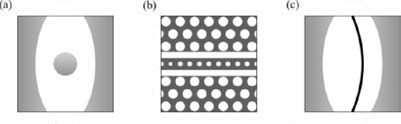
(a) A cold-atom optomechanical system. (b) A photonic-crystal cavity optomechanical system. (c) A membrane-in-the-middle optomechanical system.
A key area of quantum sensing is optomechanical sensors.[10] Optomechanical sensors are a class of highly sensitive devices that combine the optical techniques with mechanical systems. These sensors exploit the interaction between light and mechanical objects to detect with exceptional precision extremely small changes in physical quantities such as displacement, acceleration or force. In essence, optomechanical sensors work by using light to measure the motion of a mechanical element—such as a mirror, membrane or other small mechanical structures—which is extremely sensitive to environmental perturbations. The key advantage of these sensors is that they can achieve unprecedented levels of sensitivity by taking advantage of quantum mechanical effects, such as superposition, which are not available to classical systems. In these sensors, a beam of light is directed onto a mechanical element like a tiny mirror or membrane. As the mechanical object moves in response to external forces, the light is reflected or transmitted in a way that can be measured. One of the most common techniques used in optomechanical sensors is interferometry, where light is split into two paths and, after interacting with the mechanical element, recombines. The interference pattern reveals information about the displacement or motion of the mechanical system. Small displacements can cause noticeable changes in the interference pattern, making them detectable with high precision.
Optomechanical sensors are used in a wide range of fields due to their extreme sensitivity and precision. Optomechanical sensors can detect minute changes in displacement, acceleration or force. This makes them useful in applications that require high-precision measurements, such as in scientific research, where small changes need to be measured with extreme accuracy. One of the most prominent applications of optomechanical sensors is in gravitational wave observatories like the Laser Interferometer Gravitational-Wave Observatory (LIGO). These sensors are capable of detecting the tiny ripples in spacetime caused by the collision of massive astronomical objects, such as black holes or neutron stars. Gravitational waves produce displacements in mirrors that are in the order of one-thousandth of the diameter of a proton, making optomechanical sensors essential for detecting these events. Optomechanical sensors can be used in magnetometry to detect small variations in magnetic fields, making them valuable for applications such as geophysical surveys, mining exploration, and medical imaging like magnetic resonance imaging (MRI). These sensors are also key components in quantum metrology, a field focused on making extremely precise measurements using quantum effects. They are essential in areas where the highest possible precision is needed, such as in the detection of small-scale forces or fundamental constant measurements in physics.
a. Types of Optomechanical Sensors
The are different types of optomechanical sensors are briefly outlined below.
Cold-Atom Optomechanical System[11]
A cold-atom optomechanical system combines cold-atomic ensembles with mechanical elements and optical techniques. The atoms are cooled to near absolute zero temperatures using laser cooling techniques.[12] At these low temperatures, atoms exhibit quantum behaviour, such as quantum superposition and entanglement, allowing for extremely precise control and manipulation. An optical cavity is a set of mirrors that trap photons. The interaction between photons in the cavity and a mechanical element allows for precise control of the mechanical system’s motion. In cold-atom optomechanical systems, cold atoms are trapped in an optical cavity where they serve as the sensing medium and interact with light. The optomechanical coupling in a cold-atom system is strong, with light exerting radiation pressure [13] on the atoms, causing mechanical motion. Such systems serve as probes that measure small displacements or forces acting on the system with extreme precision. Besides cold atoms, the mechanical system in an optomechanical setup can also be a tiny membrane that moves in response to external forces. When placed inside an optical cavity, the mechanical element’s movement can change the properties of the light in the cavity, such as its phase or amplitude. By measuring these changes, one can deduce the mechanical motion.
Cold-atom optomechanical sensors are at the forefront of precision measurement technologies, particularly in the fields of force and acceleration sensing. One of the most exciting applications of these systems is in the development of quantum accelerometers. A quantum accelerometer based on cold-atom optomechanics is designed to measure acceleration with unprecedented precision. These sensors operate by measuring the interference patterns of matter waves associated with cold atoms within an optical cavity. The atoms' behaviour is influenced by acceleration, and their wave function is manipulated by light fields within the cavity. By detecting minute changes in the interference of these matter waves, the sensor can measure tiny variations in acceleration with extraordinary accuracy. Quantum accelerometers based on cold-atom optomechanical systems have the potential to significantly improve inertial navigation. Unlike classical accelerometers, which rely on mechanical components such as springs and masses and are subject to friction, wear and environmental noise, cold-atom optomechanical sensors are based on the quantum behaviour of atoms and light. This makes them more stable and less prone to physical degradation over time. They can provide highly accurate measurements of acceleration, allowing for precise determination of position and velocity without the need for external reference signals. These systems provide a high level of reliability and precision for navigating in GPS-denied environments, such as in submarines, missiles, autonomous vehicles, drones and robots.
Quantum sensing using cold-atom optomechanical systems has been an active area of research.[14] There are reports on the development of cold-atom sensors for inertial measurements based on atom interferometry.[15][16] There are also works on quantum sensing with optically levitated nanoparticles with long-lived quantum spatial superpositions for enhanced gravimetry.[17] Recently there has been a breakthrough in quantum sensing for gravity cartography which overcomes the limitation of long measurement times needed for the removal of vibrational noise to resolve metre-scale underground features.[18] Furthermore, there now exists an outline of a technology roadmap for cold-atom based quantum inertial sensor in space.[19] Apart from inertial measurements, quantum sensors could measure electromagnetic fields with unprecedented precision. There is a report concerning a protocol for precise field sensing in the optical domain with cold atoms in a cavity,[20] and a proposal for Rydberg atom electric field sensors for communications and sensing.[21]
While cold-atoms are currently more developed for stationary, high-precision measurements (such as lab-based gravimetry), recent developments in miniaturised cold-atom systems show promise for use in military applications, such as compact cold-atom sensors for inertial navigation[15][22] and compact chip-scale guided cold-atom gyrometers for inertial navigation.[22] However, these systems are not yet as flexible or easy to deploy in the field as systems based on the squeezed states of light. This is because of their size, complexity, cooling requirements, and environmental factors.
Cold atom optomechanical sensors are technically complex, requiring specialised equipment such as laser cooling systems, vacuum chambers and extremely stable optical cavities. These requirements make their set-up expensive and labour intensive, limiting their widespread use. Although cold-atom sensors are highly sensitive to changes in acceleration and force, they are also very sensitive to environmental factors such as vibrations, magnetic fields and temperature fluctuations. It is critical to shield and isolate these systems from noise to ensure their accuracy, but this can be challenging to achieve and may limit their practicality in some real-world environments. Currently, cold-atom optomechanical systems are relatively large due to the need for ultra-high vacuum chambers and cooling lasers. This makes them difficult to miniaturise for portable or field applications, although research is underway to develop more compact versions of these sensors. The infrastructure required to operate cold-atom-based sensors, such as laser systems and cooling technology, can be costly, which could limit their adoption in commercial or military applications compared with traditional accelerometers. Cold atom systems must operate in a very controlled environment to maintain their precision. This includes maintaining low temperatures and vacuum conditions, which can be difficult to sustain over long periods, especially in dynamic environments.
Cold atom optomechanical sensors, particularly quantum accelerometers, represent a major advancement in precision measurement technology. Their ability to measure acceleration and force with unparalleled sensitivity opens up exciting possibilities in fields like navigation. However, challenges related to environmental sensitivity, system complexity, size and form factor, and cost, must be addressed before these sensors can be deployed widely in practical applications. Despite these challenges, the potential advantages of cold-atom quantum sensors—particularly their quantum-enhanced sensitivity and long-term stability—make them a promising technology for the next generation of precision measurement devices.
Photonic-Crystal Cavity Optomechanical System
Photonic-crystal cavity optomechanical systems [23] integrate photonic crystals with mechanical elements to perform high-precision measurements. Photonic crystals are materials with a periodic structure in their dielectric constant, typically on the scale of the wavelength of light. They create a photonic band gap that can control the propagation of light in a similar way to how semiconductors create an electronic band gap for electrons. Photonic crystal cavities are small regions embedded within photonic crystal structures that can trap and enhance light by exploiting these periodic properties. These cavities are designed to support resonant optical modes, trapping light in a small volume. Because of the periodic structure, photonic crystals can provide very high quality (high-Q) resonant modes, meaning that light can be confined for long durations before it escapes.
When light is injected into the photonic-crystal cavity, the intensity of light in the cavity exerts a force on the mechanical element through radiation pressure. When the mechanical element moves, it changes the properties of the cavity, such as the optical resonance frequency or mode structure. This, in turn, affects the light. The coupling between the light and the mechanical motion is sensitive to factors like the mechanical displacement and the frequency of the optical mode. Mechanical motion can be measured by detecting shifts in the optical properties of the cavity. It can modify the properties of the photonic band gap, leading to measurable shifts in the optical response of the system. The high-Q cavity can enhance the interaction between light and a mechanical oscillator. Photonic crystals are often integrated on a chip, allowing these systems be compact in size. This makes them suitable for integrating optomechanical sensors into miniaturised systems or photonic circuits.
Membrane-in-the-Middle Optomechanical System
Membrane-in-the-middle optomechanical systems [24] are a type of optomechanical system where a thin, flexible mechanical membrane is placed inside an optical cavity. These systems typically have a high-Q optical cavity, often made from mirrors or photonic-crystal structures, which can confine light for long periods. The membrane within the system can be made from various materials, such as silicon nitride or graphene, and is typically in the order of micrometres or nanometres thick. It acts as a mechanical resonator positioned at the centre of the optical cavity. The radiation pressure that light exerts on the membrane causes it to move. The movement of the membrane, in turn, affects the optical cavity's properties, such as the resonance frequency. The motion of the membrane can be detected by measuring changes in the light, such as shifts in phase, frequency or amplitude. The coupling between the light field and the mechanical motion of the membrane allows the system to be sensitive to small displacements or forces acting on the membrane.
Interferometry
Interferometry is a technique in optomechanics which uses the interference of waves to extract information. Based on the principle of superposition, waves can exhibit interference. When two waves meet, they can constructively or destructively interfere, creating patterns of varying intensity. Interferometers are devices that split a beam of light into two or more paths, introduce a phase shift in one or more of the paths, and then recombine the beams to produce an interference pattern. This pattern can be analysed to extract precise information about the optical path differences. There are different types of interferometers; common types include the Michelson interferometer,[25] Mach-Zehnder interferometer [26], and Fabry-Pérot interferometer.[27]
Interferometry has a wide range of applications. In metrology, interferometers are used to measure small distances, surface profiles and refractive indices with high accuracy. They are essential in calibrating and testing optical components and systems. In Fourier transform spectroscopy, interferometers are used to analyse the spectral content of light, which is important in identifying chemical substances and in studying molecular structures. In microfluidics, they are used to study the behaviour of fluids at the microscale, which is important in developing lab-on-a-chip devices and other microfluidic technologies. In quantum information processing, interferometers are used in experiments involving quantum entanglement and superposition, concepts which are fundamental to quantum computing and communication. In LIGO, they are used to detect the passing gravitational waves.
Set-up
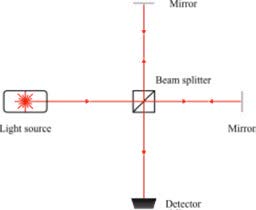
A light source emits a beam that is split by the beam splitter and reflected by the mirrors at the end of two paths. An interference pattern is detected.
The components of an interferometer work together to create precise and controllable interference patterns, which are essential for the various applications of interferometry. A light source provides the coherent light needed for interference. A coherent light source such as laser is used to emit a beam that is split and recombined to produce the interference patterns. A beam splitter is a component with a partially reflective mirror that divides the incoming light beam into two separate paths. It splits the light into reference and sensing beams, which travel different paths before recombining. Mirrors with highly reflective surfaces are used to direct the light beams along specific paths. They reflect the split beams back towards the beam splitter or other components. In some interferometers, one mirror may be movable to introduce a variable path length. Phase shifters are used to introduce a controlled phase shift between the beams. They adjust the phase difference between the beams to fine tune the interference pattern. Detectors such as photodiodes or charge-coupled device cameras are used to capture the recombined light. They detect the interference pattern created by the recombined beams. The pattern is analysed to extract information about the optical path differences. Some other optical path components like lenses, prisms, and waveplates are used to modify the optical path length, focus the beams or alter their polarisation to fine-tune the desired interference conditions.
Challenges and Limitations
Interferometers can make extremely precise measurements. However, they do face several challenges and limitations that can affect their accuracy and reliability. First, precise alignment of the optical components is crucial for accurate measurements. Misalignment can lead to errors in the interference pattern. Regular calibration is necessary to maintain the accuracy of the interferometer. Any drift in the calibration can result in systematic errors. Ensuring regular alignment checks and calibration can help maintain the accuracy of the interferometer. They are environmental sensitive: changes in temperature can cause expansion or contraction of the interferometer components, leading to measurement errors. Vibrations from the environment can disturb the alignment of the interferometer, affecting the interference pattern and thus the accuracy of the measurements. Variations in air density due to currents or turbulence can alter the optical path length, introducing noise into the measurements. These challenges can be overcome by environmental control, such as using vibration isolation tables, temperature-controlled environments, and air flow management.
Quantum Noise
Apart from the issues identified above, the accuracy of interferometers is limited fundamentally by quantum noise in measurement. Due to the uncertainty principle, even the ideal laser would still possess quantum noise equal to that of the vacuum state. At very high precision levels, this quantum noise becomes significant. Shot noise and phase noise are both types of quantum noise that are inherent to the quantum nature of light and that affect the precision of measurements in interferometry.
Shot noise arises from the discrete nature of photons and the resulting statistical fluctuations in the number of detected photons. It leads to random fluctuations in the numbers of photons detected over a given time period. This randomness introduces noise in the amplitude measurement of the light wave. Shot noise limits the precision with which the amplitude of the light can be measured. The noise level is proportional to the square root of the average number of photons, meaning that higher light intensities can reduce the relative impact of shot noise.
Phase noise arises from the phase fluctuations of light, leading to variation in the interference pattern. Phase noise can result in errors in the measurement of optical path differences. Such measurements are critical in applications like gravitational wave detection and high-precision metrology. Both shot noise and phase noise contribute to the overall noise in the interference pattern observed in an interferometer. Shot noise affects the intensity of the fringes, while phase noise affects their position and stability.
3. Emerging Developments
In 2008, researchers observed a squeeze factor of 10 dB.[28] This experiment used a monolithic cavity made from 7 per cent doped  to produce squeezed states via type I degenerate optical parametric oscillation (OPO). The outcome was a squeezed state of light at 1,064 nm below threshold. Three years later, researchers achieved squeezed light at 1,550 nm with a squeeze factor of 12.3 dB.[29] This experiment used a nonlinear resonator based on periodically poled potassium titanyl phosphate (PPKTP) crystal.
Experimental progress in squeezed-state generation has depended not only on stronger nonlinear platforms but also on improved control of optical loss, pump stability, and phase locking. For example, experiments in 2013 demonstrated coherent control of two-mode squeezed vacuum states at 1,550 nm with about 10 dB[30]of squeezing. In 2016, direct measurement of 15 dB squeezed vacuum states of light at 1,064 nm was reported,[31] representing a major milestone in optical squeezing. In the same year, Cox et al. demonstrated deterministic spin squeezing of 7.4(6) dB below the standard quantum limit using real-time feedback. Without feedback, but conditioned on the outcome of a joint premeasurement, they observed a 17.7(6) dB improvement in quantum phase variance for an ensemble of laser-cooled 87Rb atoms.[32] Taken together, these results illustrate broader progress in the control, stabilisation and measurement of squeezed and entangled quantum states, although the atomic spin-squeezing result is conceptually distinct from optical squeezed-vacuum generation.
a. Intracavity Squeezing
For decades, steady-state intracavity squeezing in standard parametric-amplifier models has been associated with a 3 dB limit, corresponding to a 50 per cent reduction of quadrature noise. In the usual picture, attempts to increase the squeezing further are accompanied by instability, loss, and amplified quantum noise, so that strong steady-state intracavity squeezing is difficult to sustain. This longstanding limit has made intracavity squeezing an important theoretical and experimental problem in quantum optics.
More recently, Qin, Miranowicz and Nori[33] proposed a fully quantum two-mode degenerate parametric amplifier in which the pump mode can, in principle, be driven into a squeezed steady state far beyond 3 dB through two-tone driving and engineered dissipation. Their result is important because it shows that the conventional 3 dB limit is not universally fundamental but depends on the physical model and the mechanism used to generate the squeezing. At the same time, this proposal has not yet become a standard experimental route for practical sensing platforms, so the extent to which the beyond-3 dB prediction can be realised and transferred to other architectures remains an open question.
Against this background, literature on intracavity squeezing must be interpreted carefully, because the conventional 3 dB limit and proposals for surpassing it concern different physical models and operating conditions. The beyond-3 dB prediction of Qin, Miranowicz and Nori relies on a fully quantum two-mode degenerate parametric amplifier with two-tone driving and engineered dissipation. It therefore remains an open question whether comparable steady-state squeezing can be achieved in simpler single-cavity architectures incorporating Kerr nonlinearity, detuning and photon loss. Future research should identify which elements of the two-mode scheme are essential and assess whether they can be implemented in experimentally realistic sensing platforms.
b. Propagating Field Squeezing
Recent developments in propagating field squeezing have shown considerable promise, with experimental demonstrations reaching up to 15 dB of squeezing. For propagating field squeezing, there are several techniques and approaches to improve squeezing. The majority of squeezed light sources use optical parametric oscillators to generate squeezed states. Recent improvements have been made to these devices, such as using higher-purity nonlinear crystals (such as PPKTP or BBO) for intracavity squeezing and introducing active feedback systems to stabilise squeezing. These measures have been crucial for achieving higher squeeze factors. Optical squeezing approaching 15 dB has been demonstrated; further improvement requires lower optical loss, high detection efficiency and stable phase control.
4. Applications for Quantum Sensing and Imaging
Quantum technologies hold immense potential for military applications, and this paper will specifically explore the roles of quantum sensing and imaging. The advantage of quantum sensing lies in its ability to enhance measurement accuracy. The quantum effects allow sensors to detect minute changes in physical quantities—such as time, displacement, acceleration, temperature, electromagnetic fields and gravitational fields—that are beyond the reach of classical sensors, making it particularly useful in environments where extreme precision is required. Squeezed-light enhanced optomechanical sensors and cold-atom based sensors both offer exceptional capabilities, but when it comes to military applications, squeezed-light enhanced optomechanical sensors have several advantages over cold-atom sensors. Squeezed-light optomechanical sensors are typically more compact and robust compared to cold-atom based sensors, which often require highly controlled environments, such as ultra-low temperatures and vacuum chambers. Cold-atom sensors are sensitive to environmental conditions, limiting their deployment to controlled settings. In contrast, squeezed-light sensors are more durable and can function in a wider range of real-world conditions, making them more suitable for mobile military platforms like drones, ground vehicles, or handheld devices used in dynamic and challenging environments.
Optical squeezed light can be integrated into compatible optical interferometers and photonic sensing systems. Microwave radar enhancement instead requires microwave quantum sources and specialised receiver architectures; it cannot generally be achieved by simply adding optical squeezed light to an existing conventional radar. Cold-atom sensors are extremely sensitive but also very fragile. They can be easily disrupted by external forces like vibrations, temperature fluctuations or even magnetic fields. This sensitivity can be a serious drawback in military environments where conditions can change rapidly and equipment may be subjected to physical stress. Squeezed-light based sensors are typically more resilient in environments with fluctuations in temperature, vibrations or electromagnetic interference. While they can still be affected by noise, their robustness and flexibility make them better suited for military applications where portability and reliability in unpredictable conditions are essential.
Squeezed-light optomechanical systems are often more cost-effective compared to cold-atom sensors, especially when scaled up for wide deployment. Cold-atom sensors are more complex and require precise environmental controls, making them more expensive to produce and maintain. Squeezed-light systems can be scaled up or modified to fit different military needs, ranging from small, portable sensors to large, advanced systems. This flexibility allows military forces to deploy squeezed-light enhanced sensors in a variety of configurations depending on the mission’s requirements, without significantly increasing costs.
While cold-atom sensors are exceptionally sensitive and provide high precision for measurements like inertial navigation, squeezed-light enhanced optomechanical sensors have significant advantages when it comes to robustness and integration into existing military systems. Squeezed-light sensors are more practical for field deployments, offering enhanced sensitivity in environments where portability and adaptability are crucial. They are ideal for applications like navigation, situational awareness and target tracking, making them highly valuable for modern military operations.
Quantum sensors based on squeezed-light are ideally suited for integration into a range of mobile military platforms and achieving this has been an active area of research.[34][35] One of the most famous applications of quantum sensing using squeezed states has been in the detection of gravitational waves. Gravitational waves are ripples in spacetime predicted by Einstein’s theory of general relativity. Gravitational wave detectors of LIGO use laser interferometry to measure the small changes in the distance between mirrors caused by gravitational waves from a black-hole merger.[36][37] By using squeezed-light, the detectors have achieved sensitivity beyond the classical shot noise limit, allowing them to detect gravitational waves with high precision.
There are several published reviews covering recent advances in quantum sensing and squeezed-light measurement systems.[14][15] Additionally, the concept of spin-squeezed optical clock ensembles has recently been presented.[38] Squeezed light also plays a crucial role in quantum information processing. For instance, researchers have explored homodyne measurements of two-mode squeezed light, generated via four-wave mixing.[39] These measurements are particularly useful for applications in quantum sensing. Moreover, there are proposals and demonstrations of an innovative asynchronous detection method for squeezed light, which eliminates the need for complex systems.[40]
In Australia, there is ongoing research to explore quantum sensing using optomechanical sensors with squeezed light in both theoretical and experimental works. Environmental factors are one of the key challenges in quantum sensing. Experiments have demonstrated that the usual requirements for quantum squeezing (such as temperature) can be significantly relaxed.[41] Another challenge is to achieve high squeeze factor. In this regard, researchers have demonstrated experimentally that an enhancement of up to 6.2 dB in one quadrature is achieved when a detuned parametric drive is used, surpassing the 3 dB limit to steady-state parametric squeezing of a mechanical oscillator.[42] In addition, nonlinear optomechanical measurements of mechanical motion have been reported. This can be used as a tool to experimentally explore models of the wave function collapse, which is one of the interpretations of quantum mechanics.[43] Furthermore, it has been shown that the combination of pulsed optomechanics with coherent control can break the usual thermal limit for classical sensing of impulse forces.[44] Researchers have also proposed a protocol—based on a sequence of four pulsed optomechanical interactions—to prepare squeezed mechanical states.[45] A quantum heat machine[46] based on optomechanics has also been studied, allowing access to a range of quantum thermodynamical behaviours that are otherwise inaccessible.[47] Theoretical work has also shown that continuous measurement can relax some requirements for preparing nonclassical states of macroscopic mechanical oscillators.[48]
Quantum decoherence[49] is the primary sensitivity limit for the use of squeezed states in interferometry for force sensing. It has been demonstrated that quantum decoherence in these sensors can be mitigated through an intracavity squeezing operation when the sensors are enhanced with optical cavities and squeezed-light injection.[50] These results open the door to quantum improvements in situations where high decoherence had previously prevented the use of squeezed light. Recently, it has been proposed that highly nonreciprocal optical squeezing can emerge by considering a spinning cavity optomechanical resonator and breaking reciprocal symmetry in the purely quantum regime. This breakthrough offers an efficient way to surpass the standard quantum limit and further enhance the capabilities of advanced quantum sensors.[51]
a. Challenges of Squeezed States
Squeezed states and two-mode squeezed states are quantum states of light that are widely used in applications such as quantum metrology, quantum information processing and quantum communication. While they offer significant advantages in terms of reducing noise in one quadrature (amplitude or phase) below the standard quantum limit, they come with their own set of challenges, especially related to losses, detuning and environmental factors.
One of the most significant challenges in using squeezed states is photon loss. This can occur due to imperfections in the experimental set-up, such as imperfect detectors, optical fibres or mirrors. When photons are lost, the squeezed state is diluted and the noise reduction becomes less effective. Photon loss can destroy the quantum coherence of the squeezed state, making it more similar to a classical state and thereby reducing the quantum advantages. For two-mode squeezed states, loss in one or both modes can degrade the entanglement and reduce the precision of measurements in quantum metrology applications. For example, if one mode of the squeezed pair is lost, or is transmitted through a noisy medium, the entanglement between the two modes can be partially or completely destroyed.
In both squeezed and two-mode squeezed states, the term 'detuning' refers to a mismatch between the frequency of the generated squeezed state and the frequency of the mode with which it interacts (such as the target system or detector). If the squeezing operation is detuned from the target frequency, the effectiveness of squeezing can be lost. This outcome may reduce the sensitivity of measurements or introduce unwanted noise. For two-mode squeezed states, phase detuning can also occur. This happens if the relative phase between the two modes changes during transmission or interaction with the environment. Phase mismatches can reduce the entanglement between the modes, weakening the performance in applications like quantum cryptography or quantum teleportation.
Squeezed states, especially those with large squeezing levels, are highly sensitive to thermal noise and decoherence from the environment. Even small thermal fluctuations in the environment can reintroduce noise in the quadrature that was previously squeezed, reducing the advantage that squeezed states offer over classical states. This can be particularly detrimental in applications like gravitational wave detection, where extreme precision is required. Squeezed states can interact with external fields or environments, causing decoherence and loss of the squeezing effect. This is particularly true for two-mode squeezed states, which rely on maintaining entanglement between two modes over a potentially long period or distance. Any interaction with the environment that disturbs the modes' coherence (like scattering, noise, or coupling with external systems) can degrade the entanglement and thus reduce quantum advantage.
Creating and maintaining squeezed states, particularly with high squeezing levels, requires careful control of experimental conditions. For example, nonlinear optical processes such as parametric down-conversion are commonly used to generate squeezed states. However, these processes are typically nonlinear and can be affected by imperfections in the nonlinear crystals or other components. This can lead to imperfect squeezing or additional noise. Maintaining two-mode squeezing over long distances or times is challenging. In practical systems, losses, detuning, and environmental effects can all accumulate. This degrades the quality of the entanglement between the two modes. Therefore, creating long-lived two-mode squeezed states that maintain their quantum correlations is a significant challenge in many practical applications.
To ensure the desired level of sensitivity or noise reduction, squeezed states must be carefully calibrated in terms of the amount of squeezing applied. However, the squeezing level can drift due to experimental instabilities, and improper calibration can lead to suboptimal performance. To take full advantage of squeezed states, highly sensitive detection schemes are required, such as homodyne detection or quantum-optical measurement devices. Any imperfections in these detectors can affect the measurement precision, reducing the effectiveness of the squeezed states.
While squeezed states and two-mode squeezed states offer substantial advantages in quantum metrology, quantum communication and other quantum technologies, they are sensitive to a range of experimental and environmental challenges. Losses, detuning and environmental interactions can degrade their performance, limiting their potential. Addressing these challenges requires careful control of experimental conditions, precise calibration, and advanced techniques for mitigating noise and decoherence. Despite these obstacles, squeezed states remain central to the development of quantum-enhanced technologies.
b. Quantum Sensing Using Squeezed States
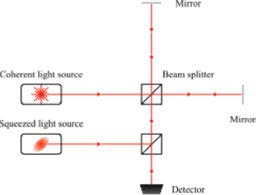
By using a squeezed state of light in optomechanical systems, their precision and sensitivity can be enhanced. For many years, theory and experiment have shown that using squeezed states of light in interferometry can significantly enhance the sensitivity of measurements by reducing quantum noise.[52] By injecting squeezed light into an interferometer, the sensitivity to small changes in optical path length or phase can be significantly enhanced. To use squeezed light in interferometers, the squeezed field is first generated through nonlinear optical processes, such as parametric down-conversion or four-wave mixing. These processes typically involve passing a laser beam through a nonlinear optical medium to produce squeezed light. The squeezed light is then injected into the interferometer through one of its input ports. For example, in a Michelson interferometer, it can be directed into the unused port of the beam splitter. The phase of the squeezed field must be carefully controlled so that the squeezed quadrature aligns with the measurement quadrature, thereby improving sensitivity. This alignment, often referred to as quadrature matching, maximises the reduction in measurement noise. The output field can then be analysed using an appropriate detection scheme, such as balanced homodyne detection.
Homodyne detection is a measurement technique commonly used in interferometry to extract information about the phase and amplitude of light fields. It is often used in conjunction with squeezed light and quantum interferometry, as it allows for the detection of specific quadratures of light with high precision. Homodyne detection involves comparing the signal field to a reference field (usually a local oscillator) which is a strong coherent light source, like a laser. The reference field and the signal field are combined using an interferometer and the interference pattern is detected on a photodetector. By measuring the difference in intensity between the two beams, homodyne detection allows one to measure the quadrature components of the signal field. For example, suppose the signal is in a squeezed state with reduced noise in the amplitude quadrature. If the local oscillator phase is aligned with that quadrature, homodyne detection can measure very small changes in intensity with high precision, such as tiny displacements or weak gravitational signals.
Precise phase control and stabilisation are required for squeezed light to be effectively used in applications such as interferometry. Since the squeezing process typically reduces noise in a specific quadrature, if the squeezing is misaligned relative to the measurement axis of the interferometer, the enhancement may be diminished. In many cases, active feedback systems, such as phase-locking feedback loops from the interferometer itself, are employed to maintain the proper alignment of the squeezed light.
5. The Military Potential of Quantum Sensing
Quantum enhancement is operationally relevant only when classical technical noise has already been reduced close to the quantum-noise floor. In many field environments, vibration, thermal drift, optical loss, detector inefficiency and platform motion dominate before squeezing becomes the limiting issue. The strongest near-term defence case for squeezed-light sensing is therefore in carefully engineered interferometric or photonic subsystems, rather than in every mobile sensor platform.
Quantum sensing has vast potential for military applications, offering enhanced capabilities in navigation, target detection and situational awareness. The extreme precision of quantum sensors can provide significant advantages in operations where classical technologies fall short. For instance, inertial navigation is used in the situation when GPS is unavailable. It is a navigation method used to determine one’s current position based on a previously known location and a series of measurements of speed, direction and time travelled. While effective for short distances, the traditional method of inertial navigation accumulates errors over time. Quantum-enhanced navigation systems (such as quantum accelerometers and quantum gyroscopes) are capable of high-precision measurements of acceleration and angular rotation. Additionally, quantum clocks can measure time with unprecedented precision. These quantum sensors operate without the need for moving mechanical parts and offer extremely good long-term stability. Their capabilities have the potential to revolutionise military navigation, particularly in environments where GPS signals may be unavailable or deliberately jammed. These systems leverage quantum properties to measure changes in displacement, velocity, acceleration and orientation with extremely high accuracy, allowing for inertial navigation that does not rely on external signals. This makes them particularly useful for submarines, missiles, and autonomous vehicles, drones and robots, ensuring that they can navigate in GPS-denied environments while maintaining pinpoint accuracy.
Quantum sensors can dramatically improve situational awareness and a military’s capacity to achieve hidden threat detection. For example, Army often encounters structures that cannot be seen using existing detection techniques. These may include hidden weapons, submarines, underground bunkers or tunnels. Despite being undetectable using traditional methods, all items of physical importance nevertheless have mass inherent to them and gravitational signals cannot be blocked and travel equally well through all matter and space. Quantum sensors are capable of detecting even the most subtle environmental changes, helping military forces identify hidden threats or track enemy movements. For instance, quantum magnetometers and quantum gravimeters can be used to detect minute variations in magnetic fields and gravitational fields, enabling the detection of hidden structures. Quantum gravimeters and magnetometers can enable subterranean detection and detailed ocean floor mapping based on the precise measurement of gravitational anomaly, giving militaries an advantage in surveillance and reconnaissance. Proposals for quantum-enhanced radar and quantum illumination should be distinguished from demonstrated conventional radar performance. Claims of superior range, precision, resolution or stealth detection require a specified receiver, benchmark and experimental source.
Quantum sensing has the potential to significantly enhance measurement precision across a range of critical applications, from navigation to situational awareness. This paper has outlined the theory and application of two of the most prominent quantum sensing technologies: squeezed-state and cold-atom based sensors. While both offer distinct advantages, squeezed light presents several compelling benefits, particularly for military applications. Below, we compare these two technologies based on key metrics relevant to Army operations.
a. The Advantages of Using Squeezed States
Squeezed light allows for the reduction of quantum noise in one quadrature of light, improving measurement precision beyond the classical limit. By applying squeezing, it is possible to enhance the sensitivity of interferometers, making squeezed light particularly useful in applications such as high-precision interferometry, detection of weak electromagnetic signals, and gravitational wave detection. The ability to reduce shot noise in the phase quadrature is especially useful for sensing weak signals like small displacements, vibrations, or electromagnetic field variations.
Cold-atom based sensors such as atomic interferometers also leverage quantum mechanical properties, such as superposition and entanglement, to achieve high sensitivity. Cold atoms are particularly effective for measuring inertial forces, such as accelerations or rotations, which is ideal for applications like inertial navigation. However, the sensitivity of cold-atom sensors is often limited by environmental factors such as magnetic noise, and they typically require ultra-low temperature to function, which can complicate their deployment in mobile scenarios.
One of the key advantages of squeezed states of light is their robustness to environmental factors. Unlike cold-atom systems, which are highly sensitive to temperature fluctuations and magnetic fields, squeezed-light based sensors are easier to implement in practical, real-world conditions. Squeezed light is transmitted via fibre optics or free space, which makes it adaptable to a wide range of environments. Additionally, optical fibres are less prone to mechanical vibrations and external disturbances, making squeezed-light sensors highly resilient in dynamic operational environments such as vehicles, drones or aircraft.
Integrated photonics is an emerging route to smaller squeezed-light sources. Current results demonstrate on-chip squeezing and related components, while robustness, cost, scalability and field deployment remain engineering goals.[53][54][55][56][57][58] Researchers are developing compact, on-chip sources of squeezed states that are much more stable, cost-effective, and scalable than bulk-optic systems. Miniaturised squeezed light sources on chips have the potential to drastically reduce the size and cost of quantum sensors, making them highly suitable for field deployment in defence applications. Squeezed-light sensors are compact, cost-effective and easily integrable into existing optical systems. Furthermore, as squeezed-light generation techniques become more efficient, the cost of implementing these systems is expected to decrease, making them more accessible for large-scale use in defence applications.
On the other hand, cold-atom based sensors, while also highly precise, are more vulnerable to environmental noise. The requirement for ultra-cold temperatures makes them difficult to integrate into mobile platforms. Furthermore, cold-atom systems are susceptible to magnetic and electric field fluctuations, which could hinder their performance in real-world environments. Shielding the apparatus from such noise sources requires a more complex set-up, adding to the system’s cost and reducing its versatility. Cold-atom sensors require complex cooling systems and large vacuum chambers, which make them bulkier and more expensive than squeezed-light systems and less adaptable to mobile applications.
While cold-atom based sensors provide impressive precision in specific applications like inertial measurement and gravimetry, their size, complexity, environmental sensitivity and cost make them challenging to implement in the field for military purposes. In contrast, squeezed-light based sensors offer numerous advantages in terms of compactness, robustness, scalability and cost-effectiveness, making them a strong candidate for deployment in a wide range of defence applications. These sensors are versatile, easily integrated into existing optical infrastructure, and capable of providing enhanced performance in critical areas such as navigation and situational awareness.
To integrate squeezed light into existing sensor technologies for military applications, several key steps need to be taken. First, optimising the generation of squeezed light with a high level of squeezing is essential, as greater squeezing means greater reduction of noise and better performance of quantum sensors. Next, integrating squeezed light with existing quantum sensors, such as cold-atom sensors, will be crucial for ensuring that it can complement and enhance current technologies. This may involve adapting sensor architectures to accommodate the injection of squeezed light. Finally, making the technology deployable in real-world military applications will require addressing challenges in robustness, miniaturisation and power efficiency. This will require interdisciplinary collaboration between scientists, engineers and military specialists to develop systems that are practical for use in the field.
b. Quantum Imaging
Quantum imaging is a subfield of quantum sensing; it is a cutting-edge field of technology that uses the principles of quantum mechanics to improve the resolution, sensitivity and capabilities of imaging systems beyond the limitations of classical optics.[59] Unlike conventional imaging, which relies on classical light sources and detectors, quantum imaging exploits quantum phenomena to achieve unprecedented imaging precision and sensitivity. In quantum imaging, quantum sensors are combined with an imaging apparatus. Quantum light sources like entangled photons are then used to probe and capture images. The quantum nature of these photons allows the imaging system to outperform classical systems in various ways, particularly in challenging environments where classical sensors might be limited by factors such as noise, interference or lowlight conditions. Quantum illumination uses correlated signal and idler modes to improve target detection in bright-noise, high-loss regimes under specified receiver and benchmark assumptions. A microwave implementation was proposed theoretically. 60 Microwave quantum illumination was later investigated experimentally using a digital receiver. 61 In that experiment, the receiver outperformed a symmetric classical-noise radar under the reported conditions; an advantage relative to the selected classical benchmark was obtained in an idealised analysis assuming perfect idler photon-number detection. These results do not establish a general improvement in radar range, imaging resolution or operation in low ambient light.
6. Conclusion
Quantum sensing with squeezed states of light provides a promising route for improving measurement precision beyond the shot-noise-limited performance of classical optical systems. This paper has reviewed the principles of squeezed-light sensing, the main methods used to generate squeezed states, and the range of sensing applications in which they can enhance interferometric sensitivity. It has also considered the practical relevance of these developments for defence-related technologies, particularly in areas such as navigation, weak-signal detection and precision measurement. Squeezed light has already delivered important gains in optical sensitivity and has become a valuable resource in quantum-enhanced metrology. By reducing quantum noise in an appropriately chosen quadrature, it can improve the performance of interferometric measurements used to detect small displacements, weak fields and other subtle signals. At the same time, the practical performance of squeezed-light sensors remains strongly influenced by optical loss, phase stability, detection efficiency and environmental noise, all of which must be carefully controlled in realistic systems.
This paper has also reviewed the longstanding problem of intracavity squeezing. Recent theoretical work by Qin, Miranowicz and Nori predicts that the conventional 3 dB steady-state limit can be surpassed in a fully quantum two-mode degenerate parametric amplifier. However, this conclusion applies to a specific physical model and should not be generalised automatically to simpler cavity architectures. Further theoretical and experimental work is needed to determine which features of the two-mode scheme— such as its fully quantum structure, two-tone driving and engineered dissipation—are essential for achieving steady-state intracavity squeezing beyond 3 dB, and whether those features can be incorporated into robust, experimentally realistic sensing platforms. Clarifying these conditions will be important for both squeezed-light generation and the development of quantum-enhanced sensors. Overall, squeezed-light quantum sensing has advanced substantially and remains a highly promising area of research. While some claims about ultimate performance must still be tested carefully against experimental constraints, squeezed states of light offer a realistic and potentially powerful path towards more sensitive optical sensors, including systems of possible relevance to future defence applications.
Endnotes
[1] Quantum key distribution is a method of sharing secret information between two parties using the principles of quantum mechanics to ensure security. It works by encoding data in quantum states of light. Any attempt to intercept the information would disturb the system, immediately alerting both parties to the presence of an eavesdropper.
[2] Albert Einstein, ‘On a Heuristic Point of View About the Creation and Conversion of Light’, Annalen der Physik 17, no. 6 (1905): 132–148.
[3] Werner Heisenberg, "Über den anschaulichen Inhalt der quantentheoretischen Kinematik und Mechanik." Zeitschrift für Physik 43, no. 3 (1927): 172-198.
[4] John S Bell, "On the einstein podolsky rosen paradox." Physics Physique Fizika 1, no. 3 (1964): 195.
[5] Stuart J Freedman, John F Clauser. "Experimental test of local hidden-variable theories." Physical review letters 28, no. 14 (1972): 938.
[6] Alain Aspect, Jean Dalibard, and Gérard Roger, "Experimental test of Bell's inequalities using time-varying analyzers." Physical review letters 49, no. 25 (1982): 1804.
[7] Gregor Weihs, et al., "Violation of Bell's inequality under strict Einstein locality conditions." Physical Review Letters 81, no. 23 (1998): 5039.
[8] Ling-An Wu, et al., "Generation of squeezed states by parametric down conversion." Physical review letters 57, no. 20 (1986): 2520.
[9] RE Slusher, et al., "Observation of squeezed states generated by four-wave mixing in an optical cavity." Physical review letters 55, no. 22 (1985): 2409.
[10] Shabir Barzanjeh, et al., "Optomechanics for quantum technologies." Nature Physics 18, no. 1 (2022): 15-24.
[11] Tom P Purdy, et al. "Tunable cavity optomechanics with ultracold atoms." Physical review letters 105, no. 13 (2010): 133602.
[12] Laser cooling is a technique where lasers are used to slow down the motion of particles, like atoms, by shining light on them in a very precise way. As the particles absorb and re-emit the laser light, they lose energy and their temperature drops, allowing us to cool them to extremely low temperatures, close to absolute zero.
[13] Radiation pressure is the tiny force exerted when light or other electromagnetic waves push against an object. This happens because light carries energy, and when it strikes an object, it transfers some of that energy, causing a small push in the direction of the light.
[14] Christian L Degen, Friedemann Reinhard and Paola Cappellaro, "Quantum sensing." Reviews of modern physics 89, no. 3 (2017): 035002.
[15] B Battelier, et al. "Development of compact cold-atom sensors for inertial navigation." Quantum optics 9900 (2016).
[16] Remi Geiger, et al., "High-accuracy inertial measurements with cold-atom sensors." AVS Quantum Science 2, no. 2 (2020).
[17] Markus Rademacher, James Millen, and Ying Lia Li, "Quantum sensing with nanoparticles for gravimetry: when bigger is better." Advanced Optical Technologies 9, no. 5 (2020): 227-239.
[18] Ben Stray, et al., "Quantum sensing for gravity cartography." Nature 602.7898 (2022): 590-594.
[19] Sven Abend, et al. "Technology roadmap for cold-atoms based quantum inertial sensor in space." AVS Quantum Science 5, no. 1 (2023).
[20] Robert J Lewis-Swan, et al. "Protocol for precise field sensing in the optical domain with cold atoms in a cavity." Physical Review Letters 124, no. 19 (2020): 193602.
[21] Charles T Fancher, et al. "Rydberg atom electric field sensors for communications and sensing." IEEE Transactions on Quantum Engineering 2 (2021): 1-13.
[22] Carlos L Garrido Alzar, "Compact chip-scale guided cold-atom gyrometers for inertial navigation: Enabling technologies and design study." AVS Quantum Science 1, no. 1 (2019).
[23] Matt Eichenfield, et al. "A picogram-and nanometre-scale photonic-crystal optomechanical cavity." nature 459, no. 7246 (2009): 550-555.
[24] Marin Karuza, et al. "Optomechanically induced transparency in a membrane-in-the-middle setup at room temperature." Physical Review A—Atomic, Molecular, and Optical Physics 88, no. 1 (2013): 013804.
[25] Albert Abraham Michelson and Edward Williams Morley. "On the relative motion of the Earth and the luminiferous ether." American journal of science 3, no. 203 (1887): 333-345.
[26] K P Zetie, S. F. Adams, and R. M. Tocknell. "How does a Mach-Zehnder interferometer work?." Physics Education 35, no. 1 (2000): 46.
[27] Alfred Pérot, and Charles Fabry. "On the application of interference phenomena to the solution of various problems of spectroscopy and metrology." Astrophysical Journal, vol. 9, p. 879 (1899): 87.
[28] Henning Vahlbruch, et al. "Observation of squeezed light with 10-dB quantum-noise reduction." Physical review letters 100, no. 3 (2008): 033602.
[29] Moritz Mehmet, et al. "Squeezed light at 1550 nm with a quantum noise reduction of 12.3 dB." Optics express 19, no. 25 (2011): 25763-25772.
[30] Tobias Eberle, Vitus Händchen, and Roman Schnabel. "Stable control of 10 dB two-mode squeezed vacuum states of light." Optics express 21, no. 9 (2013): 11546-11553.
[31] Henning Vahlbruch, et al. "Detection of 15 dB squeezed states of light and their application for the absolute calibration of photoelectric quantum efficiency." Physical review letters 117, no. 11 (2016): 110801.
[32] Kevin C Cox, Graham P Greve, Joshua M Weiner and James K Thompson, 'Deterministic Squeezed States with Collective Measurements and Feedback', Physical Review Letters 116, no. 9 (2016): 093602. DOI: 10.1103/PhysRevLett.116.093602.
[33] Wei Qin, Adam Miranowicz, and Franco Nori. "Beating the 3 db limit for intracavity squeezing and its application to nondemolition qubit readout." Physical Review Letters 129.12 (2022): 123602.
[34] Benjamin J Lawrie, et al. "Quantum sensing with squeezed light." Acs Photonics 6, no. 6 (2019): 1307-1318.
[35] Chuan Xu, et al. "Sensing and tracking enhanced by quantum squeezing." Photonics Research 7, no. 6 (2019): A14-A26.
[36] Maggie Tse, et al. "Quantum-enhanced advanced LIGO detectors in the era of gravitational-wave astronomy." Physical Review Letters 123, no. 23 (2019): 231107.
[37] Fausto Acernese, et al. "Increasing the Astrophysical Reach of the Advanced Virgo Detector via the Application of Squeezed Vacuum States of Light." Physical review letters 123, no. 23 (2019): 231108.
[38] John M Robinson, et al. "Direct Comparison of Two Spin-Squeezed Optical Clock Ensembles at the 10−17 Level." Nature Physics 20, no. 2 (2024): 208-213.
[39] Luis EE De Araujo, et al. "Characterizing Two-Mode-Squeezed Light from Four-Wave Mixing in Rubidium Vapor for Quantum Sensing and Information Processing." Optics express 32, no. 2 (2024): 1305-1313.
[40] Huy Q Nguyen, et al. "Digital Reconstruction of Squeezed Light for Quantum Information Processing." arXiv preprint arXiv:2411.07666 (2024).
[41] Alex Szorkovszky, et al. "Mechanical Squeezing via Parametric Amplification and Weak Measurement." Physical review letters107, no. 21 (2011): 213603.
[42] Alex Szorkovszky, et al. "Strong Thermomechanical Squeezing via Weak Measurement." Physical review letters 110.18 (2013): 184301.
[43] G A Brawley, et al. "Nonlinear Optomechanical Measurement of Mechanical Motion." Nature communications 7, no. 1 (2016): 10988.
[44] Kiran E Khosla, et al. "Quantum Optomechanics Beyond the Quantum Coherent Oscillation Regime." Optica 4, no. 11 (2017): 1382-1387.
[45] James S Bennett, and Warwick P. Bowen. "Rapid Mechanical Squeezing with Pulsed Optomechanics." New Journal of Physics 20, no. 11 (2018): 113016.
[46] A quantum heat machine is a device that uses the principles of quantum mechanics to convert heat energy into useful work, much like a traditional heat engine. Unlike classical machines, quantum heat machines can exploit quantum effects like superposition and entanglement to achieve higher efficiencies or perform tasks that classical machines cannot.
[47] James S Bennett, et al. "A Quantum Heat Machine from Fast Optomechanics." New Journal of Physics 22, no. 10 (2020): 103028.
[48] Chao Meng, et al. "Mechanical Squeezing via Fast Continuous Measurement." Physical Review Letters 125, no. 4 (2020): 043604.
[49] Quantum decoherence is the process by which a quantum system loses its ability to exhibit quantum behaviour, such as superposition, due to interactions with its environment. As a result, the system becomes more predictable and behaves like a classical object, making it harder to observe quantum phenomena.
[50] Mikhail Korobko, et al. "Mitigating Quantum Decoherence in Force Sensors by Internal Squeezing." Physical Review Letters 131, no. 14 (2023): 143603.
[51] Jie Wang, et al. "Quantum Advantage of One-Way Squeezing in Enhancing Weak-Force Sensing." arXiv 2403.09979 (2024).
[52] Carlton M Caves, "Quantum-Mechanical Noise in an Interferometer." Physical Review D 23, no. 8 (1981): 1693.
[53] Amir H Safavi-Naeini, et al. "Squeezed Light from a Silicon Micromechanical Resonator." Nature 500, no. 7461 (2013): 185-189.
[54] Avik Dutt, et al. "On-Chip Optical Squeezing." Physical Review Applied 3, no. 4 (2015): 044005.
[55] François Mondain, et al. "Chip-Based Squeezing at a Telecom Wavelength." Photonics Research 7, no. 7 (2019): A36-A39.
[56] Zijiao Yang, et al. "A Squeezed Quantum Microcomb on a Chip." Nature Communications 12, no. 1 (2021): 4781.
[57] Ruo-Jing Ren, et al. "Topologically Protecting Squeezed Light on a Photonic Chip." Photonics Research 10, no. 2 (2022): 456-464.
[58] Taewon Park, et al. "Single-Mode Squeezed-Light Generation and Tomography with an Integrated Optical Parametric Oscillator." Science Advances 10, no. 11 (2024): eadl1814.
[59] Hugo Defienne, et al. "Advances in Quantum Imaging." Nature Photonics (2024): 1-13.
[60] Shabir Barzanjeh, et al. "Microwave Quantum Illumination." Physical review letters 114, no. 8 (2015): 080503.
[61] Shabir Barzanjeh, et al. "Microwave Quantum Illumination Using a Digital Receiver." Science advances 6, no. 19 (2020): eabb0451.