
A Very Short Introduction
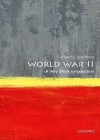
Oxford University Press, United Kingdom, 13 Nov 2014 ISBN 9780199688777, pp 144
Written by: Gerhard L. Weinberg
Reviewed By: Alexey D Muraviev
Last year marked 80 years since the end of the world’s most impactful and devastating war, World War Two (WWII). The study of its origins, conduct, the hidden layers that clearly characterised this very complex geopolitical phenomenon, its outcomes and (more importantly) the lessons learned has prompted the production of volumes of popular and specialised literature. Despite such extensive research, the world’s most devastating war continues to attract steady interest among historians, defence experts as well as military practitioners.
To anyone interested in military and political history, and certainly to those in the profession of arms, studying different aspects of WWII is an essential aspect of their professional development, training and growth. From a researcher’s perspective developments that preceded the formal opening of hostilities in September 1939, the six years of fighting across different strategic theatres, and its aftermath, remains a field with many unknowns. While some sensitive aspects of the war were gradually declassified, some would remain off limits for years and decades to come.
For military practitioners, revisiting the military-strategic aspects of WWII is prudent in light of the continuous transformation of war planning and its conduct on contemporary battlefields around the world. For example, although the war in (and over) Ukraine may have called into question previously mastered practices for planning and executing large offensive operations—including the massing of forces, positioning of large number of artillery pieces per kilometre, mass deployment of armour—lessons from WWII may still be relevant. In particular, they have continued resonance in terms of how to design echeloned defensive layouts, and how to conduct mobile air defence, camouflage and concealment, disinformation operations, sabotage and counter-sabotage operations, etc.
Beyond operational matters, the issue of politicisation of warfare endures. Like a well-known saying that ‘history if written by the victors’, the history of WWII has more different interpretations than, perhaps, any other major conflict in world history. The anti-Axis powers’ alliance (comprising the United Kingdom, the United States, the Soviet Union, France and other countries) was an ideologically diverse coalition of the willing. The follow-on Cold War—with its powerful ideological and information narratives—led to the emergence of alternative interpretations of the history of WWII. Of these, the two leading versions were ‘Western liberal’ and ‘Soviet’. Each claimed their unique and decisive roles in the defeat of the Axis powers, and each often downplayed the military contributions of their ideological antipodes-yet Allies. More recently, China has begun actively promoting its vision of the War in Asia and the Pacific, thus adding more sides to an already complex puzzle.
Weinberg’s contribution to Oxford’s Very Short Introduction series is a solid piece of work designed to provide an informed overview of major stages that led to the outbreak of hostilities in 1939 as well as major phases of combat across the main theatres of operation. The volume starts with the author’s arguments in defence of why the Third Reich’s (a more appropriate definition of expanded Nazi Germany post-1933) invasion of Poland should still be considered as the starting point of WWII, not events that preceded it (for example, Japan’s military offensives in China, or Italy’s invasion of Abyssinia or the Spanish Civil War). In Chapter One the author considers the significance of the change of government in Weimar Germany in 1933, viewing it as an escalating factor that led to the eventual outbreak of hostilities some six years later.
Chapters Two and Three provide a useful overview of the initial stages of WWII from September 1939 until early to mid-1941. Focusing predominately on the European strategic theatre, the discussion includes: the invasion of Poland by the Nazis and later the Soviet forces; Germany’s offensive operations in Denmark and Norway; the defeat of France and the so-called Phone War or Sitzkrieg in Western Europe (when several smaller European nations surrendered to the Nazis with little or no resistance); operations of the Axis powers in northern Africa and the Middle East; maritimisation of Hitler’s campaign against western allies and the Battle for Britain, and his strategic decision to invade the Soviet Union.
A stand-alone section of Chapter Three discusses the effect of the Third Reich’s military success in Europe on domestic politics within the United States. In particular, it considers the decision by then US President Franklin Roosvelt to run for a third term: ‘against his prior inclination.’ Here, the author examines how the Roosevelt-led coalition government prepared the country for a major war and set conditions for the supply of fighting allies with military aid—the Lend-Lease system.[1]
Chapters Four to Six offer helpful insights into major phases of WWII following the Third Reich’s invasion of the Soviet Union in June 1941 until mid-1944. In particular, the analysis of the campaign on the eastern front is more detailed than is generally provided in similar volumes (they tend to limit themselves to a brief outline of Operation Barbarossa and the Battle of Stalingrad of 1942–43). It offers a good account of the initial progress made by the Nazi and Allied forces followed by the Soviet’s eventual comeback and seizure of the strategic initiative. Other parts of these three chapters overview the war in the Pacific, Allied operations in Sicily and Italy, confrontation at sea and in the air, as well as organised resistance against occupying forces.
Chapter Seven presents an interesting account of what was happening in the ‘rear’ of each fighting country. Here the author blends analysis of the state of the so-called ‘home front’ of major participants in the war as well as occupied countries. That included Germany and Italy, the Third Reich’s occupied European countries, and Japan on one hand; and the Soviet Union, the British Commonwealth and the United States on the other. This aspect of WWII normally gets overlooked in publications that seek to offer a ‘bird’s eye view’ of the war, hence making Weinberg’s work more interesting to read and a more useful guide for follow-on research.
In the final chapter, Weinberg offers a snapshot of the major phases of the coordinated Allied offensives in European and Pacific strategic theatres from 1944–45. This period was critical, ultimately leading to the capitulation of Nazi Germany in May and imperialist Japan in September 1945. The challenge in writing such a synopsis of a major political-military event is that it involves inevitable omission of some aspects or historical events. Personally, I would have liked to see more analysis on the 1938 Munich Conference (or even a clear reference to it) similar to how the author considers the 1939 Molotov-Ribbentrop Pact.[2] Further, there would have been value in mentioning of the Soviet-Finnish so-called ‘Winter War’ of 1939–40, as well as providing some analysis of the Soviet strategic offensive in Manchuria in August 1945 (the latter regarded by many strategists as one of the most successful swift military campaigns of modern era).
Nonetheless, Weinberg’s monograph is a handy educational tool. For readers with a general interest in military history and strategic affairs, it is likely to trigger follow-on inquiries into different aspects of WWII. And for those with a deeper understanding of this period of military history, it constitutes a useful memory refresher. Either way, the enduring relevance of the topics covered by World War II-A Very Short Introduction are evident. As observed by Weinberg in his concluding note, “A different world emerged from its greatest conflict, one that by its nature, and especially by its conclusion, warned all to be cautious thereafter”.[3] Given the current state of geopolitical fragility, this is an assertion with which it is hard to argue.
Endnotes
[1] Gerhard L. Weinberg, World War II. A Very Short Introduction. Oxford University Press, 2014, pp. 41–42.
[2] Ibid., pp. 14–15, 18.
[3] Ibid., p. 125.