Tokyo, Hiroshima and the Surrender of Japan
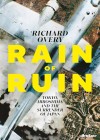
Allen Lane Press, United Kingdom, 2025, ISBN 9780241700693, 224 pages, RRP $55.00
Author: Richard Overy
Reviewed By: Greg Swindon
Richard Overy’s latest book, Rain of Ruin Tokyo, Hiroshima and the Surrender of Japan, is a must read for academics, military officers and politicians. The topic has been assessed and analysed for decades, so what is new? For many readers the dropping of the two atomic bombs was the ‘air war’ over Japan. However, as Overy describes (in succinct detail), ending the Pacific campaign entailed a range of tactical, operational and strategic issues. Additionally there were operational and strategic issues and difficulties for the Allies and the Japanese Government; including how actually to terminate the war.
By early May 1945, Germany had been defeated but Japan continued to fight on. US Marines landed on the small Japanese islands of Iwo Jima and Okinawa during April-June and captured both; but suffered horrendous casualties. US forces continued to liberate the Philippines and after several weeks of bitter street fighting they capture Manilla. Over the same period Australian forces were active in the liberation of Northern Borneo, and British forces, in Burma, began preparations for the landing on the west coast of Malaya and the push southwards to liberate Singapore. The Allies were also planning the invasion of the Japanese home islands even though Japans military forces still controlled much of China and South East Asia. US Army Air Force B-29 bombers operating from Chengdu, in western China, and the recently captured Pacific Ocean islands (such as Saipan) had been bombing the Japanese home islands since mid to late 1944, inflicting heavy casualties on the civilian population. Nevertheless, the Japanese showed no outward desire to end the war. On 12 April 1945, President Franklin Delano Roosevelt died and Vice President Harry S. Truman (who had served in the US Army on the Western Front during WW1) entered the Oval Office where he was briefed on the new atomic weapon being built and tested in the deserts of New Mexico. At this stage for the Allies, the end of the war with Japan appeared to be nowhere in sight.
In reality, by the beginning of 1945 Japan was effectively losing the war and Emperor Hirohito had begun seeking a way to ‘terminate’ the war; but for the Japanese this did not mean surrender. Japanese industry was faltering due to a lack of raw materiel (i.e. rubber, iron ore, tin, etc.) caused by the very effective Allied submarine blockade that stopped 85% of shipping reaching Japan. Food was also becoming scarce throughout Japan. Air raids on Japanese cities and factories, by B-29 bombers dropping incendiaries (firebombing), was destroying large portions of the major cities, including Tokyo, due to the wooden construction of many buildings. This destruction only slowed when US production of the incendiary bombs could not keep pace with usage!
The Japanese high command expected the Allies to land on the southern island of Kyushu and therefore commenced preparation for the expected invasion. Hirohito in turn directed his government to seek ways to ‘terminate the war’ while maintaining Japan’s autonomy. This involved approaches to non-belligerent nations such as Russia (who had not declared war on Japan), the Vatican and other neutral nations such and Switzerland and Sweden. The Japanese Government sought peace, in line with the Potsdam Treaty, as long as the emperor remained on the throne. Japan was not a democracy and any attempt to subvert government control was crushed without mercy by the police and military. Indeed some sections of the military sought to continue the war even if it meant removing the Emperor from power. To make matters worse, on 8 August an opportunistic Russia declared war on Japan and seized the island of Sakhalin before moving southwards onto the Korean peninsula and towards the 38th parallel. In fact, Japanese officials had travelled across Russia, by train, seeking Russian assistance to terminate the war only to have the Russian declaration of war on Japan read to them upon their arrival in Moscow! The war with Russia was short-lived, concluding on 5 September 1945 even though the Japanese surrender took place on 2 September.
Meanwhile the testing of the atomic bomb in the deserts of New Mexico proved the atomic weapon worked and Truman, with some trepidation, authorised its use. Target cities were chosen with the only real caveat being that Kyoto could not be bombed. This followed Secretary Stimson’s’ directive that the old Japanese capital was not to be struck (some claim that as he had visited Japan as a young man he had a cultural awareness of the importance of the city in the Japanese psyche). Ultimately, Hiroshima and Nagasaki were destroyed with significant loss of life. Despite his divine position, when Hirohito approved the surrender several high ranking Japanese officers sought to over-throw the Government; but failed. Many others accepted the decision and then committed suicide.
With hindsight the big question still remains – did the two atomic bombs need to be used? Truman made the ultimate decision and he never shied away from that. Hundreds of thousands of Allied service-personnel were spared the ordeal of invading the Japanese homeland and potentially the same number of Japanese military personnel and civilians were also spared further conflict. The firebombing of Japanese cities was effective – as was the sea blockade in pushing the Japanese towards ‘termination’ of the war. The question remains, however, as to whether these measures alone would been enough to the end the war? The debate has continued since 1945 and it is unlikely to stop.
Overy’s analysis looks at the defeat of Japan through many lenses and not just the standard ‘dropping of the two atomic bombs ended the war’. Overall he has produced and excellent short book (150 pages) analysing the many events and issues from 1945 to the current day. It is well worth the read and provides a deeper background on the issues facing Japan and the Allies in 1945. Ultimately, however, it is left to the reader to decide what was right and what was wrong, and what others options to end the war could have been explored.