
Proceedings from the 2022 Strategic Landpower Symposium
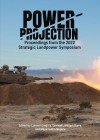
Marine Corps University Press, Quantico VA, 2024, ISBN 9798986259567, 142 pp
Editors: Colonel Gregory Cantwell, William Barry, and Major Justin Magula
Reviewed By: Shaun Cameron
In May 2022, the United States (US) Army War College held their inaugural Strategic Landpower Symposium with the aim of advancing concepts on the role of land power during cooperation, competition, deterrence, and joint all-domain operations. Over two days, original research was presented by subject matter experts on six main research topics: cooperation and setting the theatre, competition and integrated deterrence, homeland defence, multi-domain operations, leadership and the military profession, and future warfare considerations. This book collects several of the best papers from the symposium, each paper organised as an individual chapter.
At chapter 1, a US Army colonel working in Futures Command and a professor of military history discuss competition below the threshold of armed conflict and US Army responses to a security environment that has increasingly been dominated by grey zone operations. Strengthening alliances and expanding the US global land power network are outlined as avenues towards ensuring US positional advantage.
Colonel Julian Urquidez and Professor Tom Hanson argue that US Army presence with partners bolsters US deterrence and can capitalise on militaries across the Indo-Pacific generally having army representatives as their chiefs. In the region, senior army officials often play key roles, not only in the joint military domain, but in domestic and political affairs as well. Chapter two similarly examines the role of US land power in the Indo-Pacific. Author Captain Josha Ratta concludes that in any eventuality where China invades Taiwan, a credible response will require integrated joint operations with US allies, rather than relying on US power projection alone.
These opening chapters have some relevance for the Australian Army, which too finds itself in a region where partner armies often play a prominent role in military and domestic affairs. Australian Army representatives can make an outsized contribution to regional cooperation and diplomatic initiatives, developing collective strength and responses to the threats outlined in the first two chapters. One example is through the Australian Defence Cooperation Program (DCP) which is highly valued across our region. The DCP allows for partner personnel to benefit from training and education opportunities provided by Australian defence and tertiary institutions, English language courses, as well as to participate in bilateral and multilateral exercises.[1] Exercise Talisman Sabre 2025 is a prime and ongoing example.
The DCP allows for people-to-people links between the Australian Defence Force and partner nations that have facilitated speedy and sympathetic hearings during foreign policy discussions. Defence relationships such as these are particularly important for smaller nations in the Pacific that are unable to form strategic multilateral alliances such as the Quad and AUKUS. The Australian Army is in a unique position to advance Australian interests through DCP channels, building genuine and enduring relationships with partner nations.
In chapter three, Major Brennan Deveraux studies the role of theatre support missiles (TSM), a catch-all term encompassing a range of ballistic missile systems. With experience as a national security researcher at the US Army War College’s Strategic Studies Institute, MAJ Deveraux, argues that with the demise of the 2019 Intermediate-range Nuclear Forces (INF) Treaty, there is increasing interest from nations such as the US, China, and Russia in employing non-nuclear equipped TSMs with ranges of 500-5,500 kilometres. Any use of such missiles increases the risk of false positives and escalation in tensions, as it remains difficult to determine if a TSM is nuclear or conventional once in flight.
The Australian Army has looked to its own long-range strike capability as a contribution to regional deterrence strategies. High Mobility Artillery Rocket Systems (HIMARS) can be equipped with six Standard Guided Multiple Launch Rocket Systems (GMLRS) or two Precision Strike Missiles (PrSM). GMLRS rockets have a range of 84 kilometres, more than double that of traditional artillery. GMLRS Extended Range missiles launch out to 150 kilometres, PrSM to 400 kilometres, and PrSM Increment 4 can fire more than 1000 kilometres.[2] If Australia were to use these systems, it is unlikely that any potential adversary would mistakenly believe them to be nuclear capable. As such, they offer a means of clear and credible deterrence in the region, without the same risks of miscalculation outlined by Major Deveraux in the TSM context.
Chapter four considers US homeland defence in a strategic environment whereby potential adversaries increasingly operate within the grey zone, blurring the lines between competition, crisis, and conflict. Dr John Borek discusses deterrence measures that entail whole-of-government approaches to national resilience, with potential actions outlined for US government decision makers. This includes the Department of Defence developing awareness of grey zone activities across government agencies and prioritising—in future defence planning and security reviews—response options to the threat of grey zone operations within the US homeland.
Homeland defence is similarly the focus of chapter five, whereby a fictional scenario is used to illustrate the concept that the ‘homeland is not a sanctuary.’ The US is vulnerable to hostile domestic actors taking action, to cause turmoil and disruption, that falls below the threshold that would trigger deeper investigation by policing agencies or that would draw public outcry. Examples include the use of information operations, cyber-attack, or drone attacks on critical infrastructure such as power stations or logistics hubs. The authors, Colonel Phil Brown and Lieutenance Colonel Jahara Matisek, both have experience teaching and researching at the US Air Force academy, with Colonel Brown now a senior fellow at the Homeland Defence Institute at the US Air Force Academy and Lieutenant Colonel Matisek teaching at the US Naval War College.
They argue that the US cannot necessarily defend against such threats militarily and so suggests the need for whole-of-nation approaches to defence, resilience, security, and homeland protection. This chapter outlines how homeland defence receives a lower budget than other defence activities as US policymakers and planners believe the US will never be invaded. The use of grey zone activities, such as cyber and mis- and disinformation, bridge the natural security protection provided by US geography. Based on the issues arising from the scenario, the chapter concludes that homeland defence requires dedicated strategists, planners, and fiscal support directed towards this element of security.
Similar to the focus on homeland defence of chapters four and five, the Australian 2024 National Defence Strategy (NDS) signals national defence as a priority for Australian security.[3] While Power Projection does not include any direct insights or lessons beyond what the 2024 NDS already outlines, it does illustrate US defence and army thinking at the time of the symposium. Other partners such as the United Kingdom[4] and New Zealand[5] have similarly looked to develop coordinated whole-of-government and whole-of-nation approaches to national security in the modern strategic environment.
Chapter six discusses US defence enterprise readiness for prosecuting war, primarily using the example of US involvement in the Iraq War. Defence enterprise is defined as a combination of defence, joint and service staffs, and their relevant agencies. The authors, Dr. Thomas Galvis, Dr. Con Crane, and Dr. Michael Lynch come to the topic from the perspective of academia and military leadership studies. They conclude that enterprise readiness takes place in peacetime, rather than in conflict. Professional military education should expand its focus to include strategic analysis, doctrine development, organisational design, outreach, and professional stewardship.
The final chapter of Power Projection considers the future of the US Army profession, which is described as experiencing a lack of clarity on its character. This includes its expert knowledge, human expertise, and jurisdictions of practice. Dr. Richard Lacquement Jr. and Dr. Thomas Galvin write that the US Army faces three challenges in assessing its profession: adapting to the changing character of war, a lack of strategic effectiveness in recent conflicts such as those in the Middle East, and pressure on the military to adapt and conform to emerging societal norms, such as diversity and inclusion. The authors conclude that a new analysis of the military profession is required. This includes analysis of the requisite areas of expert knowledge required of military personnel and their jurisdiction within broader US society. Urgent dialogue is required to maintain public trust and the relationship between society and its military in a modern democracy.
In sum, Power Projection provides a varied discussion of challenges, opportunities, and lessons for the US Army and military more broadly as the character of modern warfare changes and new threats arise in the form of grey zone activities and emerging technology. I found the primary utility of this book was to give Australian defence planners and strategists an insight into US Army and defence thinking.
It is unfortunate that publication of the book has been delayed until two years after the proceedings at the 2022 Strategic Landpower Symposium, as US thinking on the topics addressed has likely shifted and evolved since that time. This delay is particularly salient considering the commencement of the Russo-Ukraine War only a few months before the 2022 Symposium. Perhaps as a result of this timing, Power Projection does not explore some of the newly proven aspects of modern warfare, such as the use of drones, information operations, and command of the electromagnetic spectrum. That said, TSM use and grey zone operations have been enduring and remain relevant.
Chapters on homeland defence and the military profession also ring true for Australian defence planners today. The 2024 NDS outlines national defence and domestic resilience as a priority,[6] while the Chief of Army Lieutenant General Simon Stuart[7] has recently outlined three pillars to guide the Australian Army profession. These are jurisdiction, referring to the unique service to society Army provides, expertise as practitioners and scholars of warfare, and self-regulation and discipline in its application. US Army thinking in 2022 on national defence and the military profession continue to be relevant for Australian defence thinkers in the present.
Endnotes
[1] Shaun Cameron, “Cooperation: The Hidden Tool of Defence,” Australian Outlook, January 13, 2022, https://www.internationalaffairs.org.au/australianoutlook/cooperation-h….
[2] Max Blenkin, “New HIMARS Vehicles Delivered to Army.”
[3] 2024 National Defence Strategy (Commonwealth of Australia, 2024), 17, https://www.defence.gov.au/about/strategic-planning/2024-national-defen….
[4] The Strategic Defence Review 2025 (UK Ministry of Defence, 2025).
[5] New Zealand’s National Security Strategy 2023-2028 (New Zealand Government, 2023).
[6] 2024 National Defence Strategy (Commonwealth of Australia, 2024), 17.
[7] Simon Stuart, “Strengthening the Australian Army Profession,” Lowy Institute Events, April 3, 2025, https://www.army.gov.au/news-and-events/speeches-and-transcripts/2025-0….