As the summer holidays approach, full of the promise of reading (or listening) time, it is worth looking at some of the books, articles, and other writings that have inspired members of the Australian Army Research Centre’s (AARC) Academic Team over the last year.
John Nash – AARC Academic Research Officer
Nick Lloyd, The Eastern Front. A History of the First World War, Penguin, 2025 (paperback)
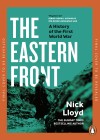
Writing a single-volume history of the Eastern Front – and in a previous book, on the Western Front – is an ambitious undertaking. But historian Nick Lloyd does an excellent job. The Eastern Front is a fascinating work that details the lesser known front of the First World War, including the oft-forgotten Italian campaign. It details the vast and nebulous conflict that changed the face of Europe forever. It is an eminently readable book, where Lloyd is able to discuss matters at the tactical, operational, and strategic levels, giving sufficient detail without getting bogged down. Just as his 2022 Western Front volume is perhaps the best single-volume history, The Eastern Front is a worthy follow-up.
Charlie English, The CIA Book Club, Harper Collins, 2025

This is a fascinating look at information operations behind the Iron Curtain, specifically, in Poland in the 1980s. It details efforts by internal resistance movements, aided by those in exile and supported by the CIA, to spread ‘subversive’ and ‘reactionary literature’ throughout communist controlled Poland and beyond. The brave men and women from Poland and other European countries is on full display as they pushed back against a repressive regime bent on controlling the contemporary and historical narrative, in the most Orwellian sense. It is a powerful reminder about how important ideas can be, whether passed through books, pamphlets, or indeed electronic means. It is a salutatory reminder that free, open, and truthful information is the bedrock upon which democratic societies are built, and any threat to this is a threat to that society.
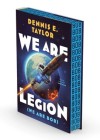
Dennis E. Taylor, We Are Legion (We are Bob), (eBook, Audiobook, paperback and hardback), 2016
Set in the not too distant future, the titular Bob of the first book in this series awakes from a horrible accident to find that his consciousness had been placed in a computer, in a country (the Free American Independent Theocratic Hegemony, or F.A.I.T.H) and future he no longer recognises. His consciousness is implanted into a spaceship and he is sent out into the galaxy to test new technology and to explore, while the situation on Earth becomes desperate due to climate change and rampant conflict between nations. This unrest bleeds over into space as various nations launch efforts to explore and find new resources. It is a faced paced, highly entertaining read that explores all manner of issues, from new technology including artificial intelligence, through to science, society and human conflict. It is the first book in a series of highly engaging reads.
Jordan Beavis – AARC Academic Research Officer
Timothy Zahn, Star Wars: Thrawn Ascendancy – Chaos Rising, Random House, 2021.

Chaos Rising is the first book in a trilogy that explores the early years of an infamous character of the Star Wars universe – Mitth’raw’nuruodo, otherwise known as ‘Thrawn’. Regarded by both enemies and friends alike as a flawed military genius incapable of understanding politics or following the laws of his Chiss society, in this book Thrawn battles to counter what he sees as a threat to the Chiss Ascendancy. As a military leader, Thrawn embodies the aphorism that ‘culture eats strategy for breakfast’ – by studying the culture of his opponents he is able to identify the weaknesses of their strategies and tactics, a lesson that many in the Defence enterprise should take to heart.
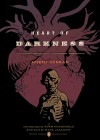
Joseph Conrad, Heart of Darkness, Penguin Books, 2011.
Joseph Conrad’s 1899 novella, Heart of Darkness, is turn-of-the-20th century literature at its best. The book explores sailor Charles Marlow’s recollection of his time in command of a steamer on a river in Africa, from his arrival to the completion of his first voyage (and a brief insight into his return to Europe). A dark, brooding tale that explores the worst parts of human nature and consciousness, Heart of Darkness pushes us to consider how the reader would cope with isolation and psychological stress. Modern readers are warned that the novella contains racial language and imagery of its time.
Alexander Mikaberidze, The Napoleonic Wars: A Global History, Oxford University Press, 2020.
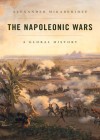
In The Napoleonic Wars: A Global History, author Alexander Mikaberidze provides what it says on the cover – a global history of wars related to revolutionary France (and later Napoleonic France) that occurred from 1792-1815. Mikaberidze’s excellent research takes the reader from Europe, to India, to North America, the Caribbean, the Middle East, North Africa and beyond, providing one of the first holistic examinations of what were truly global conflicts between great (and not so-great) powers of the age. A hefty book, readers will be surprised at how far from the famous battlefields of Austerlitz and Waterloo the Napoleonic Wars stretched, and begin questioning to what degree the First World War of 1914-1918 was really the ‘first world war’.
Andrew Richardson – Senior Academic Research Officer
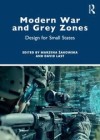
Marzena Żakowska and David Last (eds.), Modern War and Grey Zones: Design for Small States, Routledge, 2025.
Born out of a War Studies Working Group in the International Society of Military Science (ISMS), this new work pulls together academics and military practitioners to consider various to identifying, analysing and challenging ‘grey zone’ activities. Spread across four themes (‘Modern War and Grey Zones’; ‘Policy, Strategy, Operations and Tactics’; ‘Deterring and Managing Violence’; and ‘Society and People’), the 17 main chapters are braced by ‘Design Problems’ where so-called ‘archipelago of design’ (AoD) assessments explore divergent and innovative design approaches to each theme. Covering topics as diverse as the environment, lawfare, cyber, space, information warfare, state security and social cohesion, this academic volume provides a holistic consideration of grey zone activities, with ideas for how small states can strengthen their resilience in the face of external interference. Less a military focus than a whole-of-government/whole-of-society emphasis, this book’s approach to grey zone activities rightly situates it within its proper multi-domain, multi-agency collective context.
Nick Lloyd, The Western Front: a History of the First World War, Penguin, 2021.
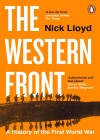
The precursor to Lloyd’s more recent Eastern Front title (see above), this masterly single volume of the cataclysmic fight on World War One’s main front deftly weaves the political and strategic threads of the conflict into a comprehensive narrative, and links them to their operational expression on the battlefield. It covers the great campaigns from 1914’s manoeuvre war (ending at the Marne and Ypres), the attritional battles of Verdun, the Somme, and Third Ypres, and the return of manoeuvre in 1918’s Spring Offensives and ‘Hundred Days’. In narrating and analysing the war’s developments, Lloyd outlines the profound changes to the global political and economic landscape that emerged at war’s end, and the technological, physical and psychological impacts that persisted. As a transnational account of the war across France and Belgium, it is both remarkably accessible and historically authoritative. For Australian readers, this work is also a welcome antidote to Australian-centric histories that too frequently are divorced from their appropriate international context.
Robert Graves, Goodbye to all That, Penguin, 2009.
This 1929 classic autobiography from acclaimed poet, classicist and author, Robert Graves, bears witness to the corrupting influence of modern industrialised armed conflict on the individual. A junior officer in World War One, Graves produces a thoughtful and deeply articulate treatment of the importance of leadership, command, responsibility and determination, while cataloguing the war’s effects on both himself and colleagues around him. This timeless work by one of the 20th Century’s most acclaimed writers deserves recurrent consultation as a refresher on the reality of war’s deleterious impacts on its human participants.