
Urban Battlefields: Lessons Learned from World War II to the Modern Era
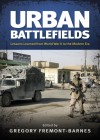
Naval Institute Press, 2024, 392 pp, RRP USD$44.95 (hardcover)
Hardcover ISBN 9781682477243
Editor: Gregory Fremont-Barnes
Brutal Catalyst: What Ukraine’s Cities Tell Us About Recovery From War
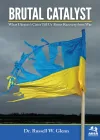
Key Point Press, 2024, 532 pp, RRP AU$45.05 (hardcover)
Hardcover ISBN 9798990915879
Author: Dr Russell W Glenn
Reviewed by: Albert Palazzo
Urban operations are the type of battle that the military like to avoid but inevitably have to fight. The aversion is easy to understand. Urban fights usually result in heavy casualties, particularly among trapped civilians, and cause widespread destruction to housing and infrastructure. As the scale of firepower available to combatants has grown, the brutality of urban operations has commensurately increased. In earlier times, cities could be besieged and starved into submission, but since the start of the firepower age no-one has found a painless way to take a city that did not want to be taken.
There is a simple reason why the fight for cities is unavoidable. A city is where a majority of the population lives, where an adversary’s government is located, where media is concentrated, where critical logistic hubs are found and where much of the enemy’s vital national infrastructure sits. In addition, humanity has tended to establish cities at strategic points, such as on the shores of a good harbour, at the confluence of rivers, or near a pass through a mountain range. Humans also prefer locations with ready access to resources—in other words, cities are on or near desirable terrain that cannot be disregarded. As people continue to migrate to cities, the urban mission is likely to become more central, not less. Those who serve in the military, particularly those in the land force, will have little choice but to understand how to fight—and prepare to fight—in a city, despite any desire to avoid such operations.
In this context, these books by Gregory Fremont-Barnes and Russell W Glenn deserve the attention of all thinking military professionals. Individually, they are excellent and timely works; read together, they cover the entire gamut of how to take, manage and restore a city. Fremont-Barnes, as the editor of Urban Battlefields, and Glenn, as the author of Brutal Catalyst, make critical, insightful and complementary contributions to our understanding of how to undertake the urban fight and how to manage a city’s population, both while the contest rages and in its aftermath. The 11 contributors to Urban Battlefields focus on the battle itself, drawing out lessons for those who may have to face the challenge of a future urban fight—after all, ‘the wise man learns from the mistakes of others’, as Otto von Bismarck once remarked. Glenn’s focus is less on the battle and more on what happens once the fight has ended and the process of rebuilding and rejuvenation begins. The two works also differ in their focus. As befits a collection of essays, Urban Battlefields ranges widely across 20th and 21st century case studies, with the exception of an essay on the 1846 battle for Monterrey in the war between the United States and Mexico. By contrast, Glenn’s goal is to highlight what needs to be done to rebuild and restore urban life in Ukraine as a result of its current war with Russia.
The reader will likely be familiar with some of the battles that are the focus of Urban Battlefields. Much has already been written on the fights for Manila, Grozny, Mogadishu and Fallujah, although it is surprising that Fremont-Barnes did not source an essay on the battle for Hue. Perhaps Hue has already received sufficient coverage and there was little left to discover. In fact, this is why his inclusion of chapters on the less covered fights for Ortona (1943), Cherbourg and Saint-Lô (1944), Warsaw (1944), Seoul (1950), Gaza (2009) and Raqqa (2017) are so welcome. These less popular battles give the collection a certain freshness, and this reviewer found Lee Windsor’s and Jason Geroux’s chapter on Ortona particularly thought provoking.
There is a consistency in Fremont-Barnes’s collection. Over the past several centuries, urban battles have taken on a certain pattern. Common elements include restricted fields of fire, the presence of subterranean features and multi-storey buildings, a challenging communications and command environment, and a defender that can hide much more easily than in the surrounding countryside. The terrain’s natural advantages all lie with the defender, which forces the attacker to proceed slowly and to choose between expending lives and expending ordnance. As the authors demonstrate, in cities from Ortona to Gaza it is often easier, quicker and safer to level a building than to clear it.
Even with the assault force’s best intentions these battles invariably prove costly to civilian populations. When US forces closed up on Manila, the plan was to methodically clear the city rather than destroy it. As Brian Drohan shows in his essay, ferocious Japanese resistance, Japan’s use of civilians as hostages and shields, and rising American casualties forced a change in US practice. Rather than lose American soldiers (which the US needed for the invasion of the Japanese homeland), the hammer came out and Manila’s buildings were the anvil. Those caught inside, combatants and civilians alike, simply died. As all the essays in Urban Battlefields demonstrate, such is the pattern when taking a city.
Military professionals may find Glenn’s focus on the recovery from war less interesting than its actual waging. This would be unfortunate. That the military will be able to avoid having a role in the recovery phase of war is about as likely as its being able to avoid an urban battle in the first place. In fact, this likelihood is the essence of Marine General Charles Krulak’s observation on urban combat that became known as the ‘Three Block War’. As some troops engage the enemy, other force elements may guide civilians to safety, while others try to restore the urban water supply. Soldiers are likely to encounter residents who align with the enemy and will thus need to be guarded and protected, while for other civilians the military will need to provide care and offer hope. Expecting to evade recovery operations is unwise. Soldiers should plan for this activity instead.
Recovery operations are a key element in bringing peace to a war-devastated region. As soldiers know, the true goal of war is not victory on the battlefield. Rather, it is achievement of a war aim, which is then followed by resumption of the conditions of normality that peace aims to bring. Eventually, the military will be able to hand over much of the reconstruction to government agencies, as well as to national and international aid organisations—as Glenn highlights—but until that happens, it is the military that will be doing the heavy lifting. In fact, even during the conflict the military must be cognisant of what may be too vital to destroy (no matter the tactical situation) because it provides an essential service that will be soon needed. None of this is easy; nor can it be made up on the fly, as the US experience in Iraq demonstrated after the removal of the Saddam Hussein regime. Done right, reconstruction requires complex and detailed planning, the kind of planning at which the military can excel when tasked with it as a priority. Glenn also makes it clear that perception is critical because, in the internet age, the world will be watching and no force wants to win the tactical battle only to lose the strategic one. The Australian Army might consider expanding its civil-military cooperation capability so that anticipatory planning, before a crisis hits, becomes a part of its standard planning process.
A reviewer can always find something to quibble about, although in the case of these books this has been harder than usual. In every collection some essays stand out more than others, sometimes simply due to the reviewer’s background and personal biases. For me, Douglas Winton’s ‘The Battle for Fallujah’ came across more as a post-operation report than as a studied analysis. Equally, while Fremont-Barnes’s case study on the battle for Monterrey is an enjoyable and interesting read, it struggles for relevance as the only pre-World War II chapter. Perhaps Fremont-Barnes can use it as the starting point for a second volume on earlier urban conquests—a step this reviewer would welcome. Glenn could have brought greater discrimination to Brutal Catalyst. He is a well-known urban warfare scholar, so the book is packed with the detail that reflects his passion for the subject, but as a result it is arguably longer than needed. For example, some of the non-Ukraine backstory is not core to the main narrative.
War is ultimately about control of the people and the resources that the land contains. In fact, people are themselves a resource too and—as leaders of the Australian Department of Defence are fond of saying—they are our most important one. This has only become more accurate in the information age. Cities are likely, therefore, to be the critical battleground of the future and an unavoidable one. Fremont-Barnes and Glenn deserve to be read by military professionals. It is through incorporating the lessons these authors offer that the military will underpin its readiness for the wars to come. I recommend both without reservation or hesitation.
About the Reviewer
Dr Albert Palazzo is an Adjunct Professor at the University of New South Wales, Canberra, in the School of Humanities and Social Sciences. Formerly he was the long-serving Director of War Studies in the Australian Army Research Centre. His latest book is The Big Fix: Rebuilding Australia’s National Security, in which he argues for a different Australian security policy and a more relevant organisation for the ADF.
