
Search
Using the filters to the left, click your selection, it will become bold and filter the results, click it again to remove that filter.
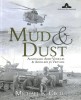
Mud & Dust – Australian Army Vehicles and Artillery in Vietnam Written by: Michael K Cecil, New Holland Publishers, 2009, ISBN 9781741107678, 272pp Reviewed by: Ian Kuring, Australian Army Mud & Dust by Michael Cecil is the third book of a series sponsored by the Australian War Memorial. It is a well researched, interesting and easy to read reference book covering the armoured fighting vehicles, artillery, logistic vehicles and engineer equipment used by the Australian Defence Force in Vietnam. Also …
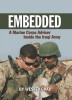
Embedded: A Marine Corps Adviser Inside the Iraqi Army Written by: Wesley R Gray, Naval Institute Press, Annapolis, 2009, ISBN 9781591143406, 272pp Reviewed by: Graeme Sligo, Australian Army Second Lieutenant Wesley Gray was a young Marine at Okinawa in 2006 when told he was being posted—at short notice—to Anbar Province to advise and train members of the Iraqi Army. It was a seven month tour. When Gray arrived, in July 2006, the insurgency was at a critical stage. The Golden Mosque bombing that year …
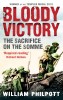
Bloody Victory: The Sacrifice on the Somme and the Making of the Twentieth Century Written by: William Philpott, Little, Brown, London, 2009, ISBN 9781408701089, 736pp Reviewed by: Albert Palazzo, Land Warfare Studies Centre For most readers the mention of the Somme brings forth the image of a futile and tragic campaign in which a generation of fine British and Imperial soldiery was wilfully slaughtered by an incompetent and distant command. William Philpott, in his breakthrough book Bloody Victory: …
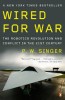
Wired for War: The Robotics Revolution and Conflict in the Twenty- first Century Written by: Peter Singer, The Penguin Press, New York, 2009, ISBN 9781594201981, 512pp Reviewed by: Richard S Bowyer, Defence Science and Technology Organisation Peter Singer’s Wired for War: The Robotics Revolution and Conflict in the Twenty-first Century takes the reader on a twenty-two chapter journey through the space occupied by the mechanical, electronic and software world of real robots doing real stuff. Situated …
The Thin Blue Line: How Humanitarianism Went to War Written by: Conor Foley, Verso, New York and London, 2008, ISBN 9781844672899, 266pp Reviewed by: Tristan Moss, Australian National University Since the end of the Cold War the world has seen the significant growth in the profile and importance of humanitarian aid. Running parallel to this is the increasing currency of the concept of ‘humanitarian intervention’, an idea often used as a justification for government action in foreign crisis zones. …
The Science of War: Defence Budgeting, Military Technology, Logistics, and Combat Outcomes Written by: Michael E O’Hanlon, Princeton University Press, 2009, ISBN 9781400830930, 280pp Reviewed by: Mark Thomson, Australian Strategic Policy Institute Michael O’Hanlon is a prominent figure in the US national security debate. As senior author of the Brooking Institution’s Iraq Index and its Afghanistan and Pakistan variants, he has done as much as anyone to promote an evidence-based discussion of ongoing US …
Diggers and Greeks: The Australian campaigns in Greece and Crete Written by: Maria Hill, UNSW Press, Sydney, 2010, ISBN 9781742230146, 496pp Reviewed by: Karl James, Australian War Memorial After its successful campaign in the Libyan desert at the start of the year, in late March and early April 1941, the Australian 6th Division was sent to mainland Greece with other British and New Zealand troops. The British had promised the Greeks military assistance if Greece was attacked. When the anticipated …
Counterinsurgency Written by: David Kilcullen, Scribe, Melbourne, 2010, ISBN 9781921640346, 264pp Reviewed by: Peter Leahy, University of Canberra David Kilcullen has already earned a well deserved reputation as a practitioner, advisor and author in the field of counterinsurgency. In his latest book he substantially adds to his reputation. The book is a must-read for those struggling with counterinsurgency today and for those with an eye on the future of insurgency and terrorism. Although initially …
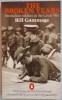
The Broken Years: Australian Soldiers in the Great War, Written by: Bill Gammage, Melbourne University Publishing, 2010, ISBN 9780522854947, 336pp Reviewed by: Peter Stanley, National Museum of Australia Almost exactly fifty years ago a teenaged schoolboy from Wagga Wagga visited Canberra with his family. At the Australian War Memorial his mother confidently disregarded old ornate wood-and-glass doors marked ‘Staff Only’ and they found themselves in the former library. There they met staff member …
Abstract Adaptive Campaigning – Army’s Future Land Operations Concept is a wake up call for the Army and ADF as a whole, as it seeks to generate effects in the modern complex operational environment. A core element of the concept is the requirement to recognise and utilise the global information environment to support operations. While the concept in various versions has been available for some time, Army has yet to fully embrace the capabilities already resident within its organisation to focus on winning …