Each month, members of the Australian Army Research Centre’s Academic Team curate a selection of recommended readings or presentations, including academic articles, podcasts, conference presentations, books, blogs, and commentary. These selections are drawn from their ongoing research and are chosen for their relevance to the challenges and opportunities facing the Australian Army today.
While many recommendations will align with the AARC’s research priorities, the series also ranges more broadly across topics such as military theory, contemporary operations, regional dynamics, institutional and campaign studies, and strategic affairs.
These resources are intended to support both individual professional development and unit-level study, complementing the AARC’s own publications. Inclusion in this series does not imply endorsement of the views expressed in the original works.
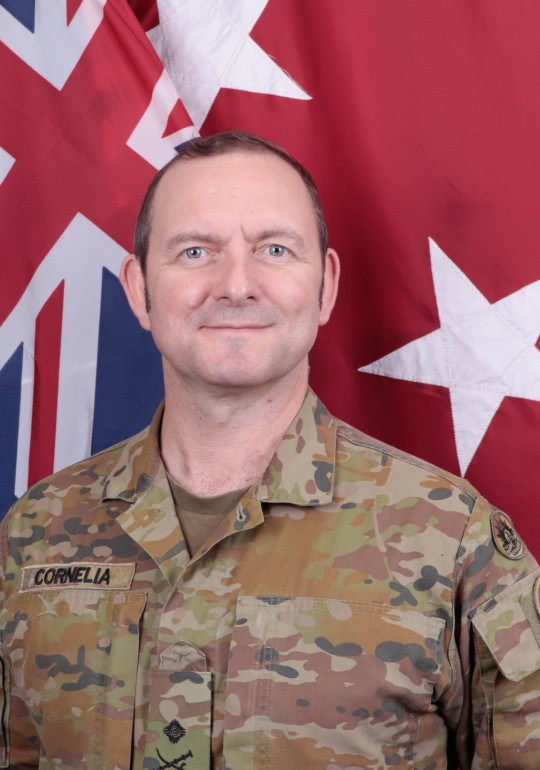
Additionally, the AARC welcomes recommendations from Army’s Senior Leadership. For the month of August 2026, Major General Giles Cornelia DSM, CSM has provided us with a recent favourite.
Please note: Items indicated as being available through the Defence Library Service are only accessible by Australian Defence Organisation (ADO) personnel.
Books
Connable, Ben. Ground Combat: Puncturing the Myths of Modern War. Georgetown University Press, 2025.
Available as an ebook and audiobook through the Defence Library Service
In Ground Combat, author Ben Connable has prepared an exhaustive quantitative examination of ground combat from the Second World War to the early 2020s. In the longitudinal analysis, Connable argues that over this period the characteristics of ground combat have remained remarkably consistent, despite frequent hyperbole from commentators, theorists, and practitioners announcing revolutions in military affairs or rapid changes in the ‘character of war’. Ground Combat offers a sober analysis and highlights the continued importance of the traditional combat arms (infantry, artillery, tanks) to contemporary and future land warfare.
Articles
Chin, Warren. ‘A Janus-faced war: exploring the role of technology in shaping outcomes in the Russia-Ukraine conflict.’ Defence Studies [Early Access] (13 August 2026): 1-22.
Available as an Open Access article through Taylor & Francis Online.
In this article, Warren Chin hypothesis the concept of a ‘Janus-faced war’, this being a modern type of conflict (exemplified in the Russo-Ukranian War) wherein the industrial-era mass warfare and post-industrial precision mix to form ‘an information-saturated form of attritional warfare in which the defence enjoys significant advantages, offensive action remains possible but highly constrained, and operational breakthroughs are fragile and difficult to exploit at scale’. Chin therefore suggests that the war in the Ukraine is neither a ‘clean break’ with 20th Century warfare nor a simple return to it, and that modern militaries need to ensure that their acquisition and integration of new technologies is matched by commensurate investment in the training, doctrine, and organisational reformed needed to integrate them for battlefield success.
Clare, Thane C., ‘Hyman Rickover and the Birth of Nuclear Power’, War on the Rocks, 12 August 2026.
Available at: https://warontherocks.com/cogs-of-war/hyman-rickover-and-the-birth-of-nuclear-power/
This is the eighth article in a series on War on the Rocks dealing with US defence innovation over the years. It offers a useful introduction to the achievements of Admiral Hyman Rickover, the father of the United States’ nuclear navy. A strong and at times polarising figure, he was nevertheless instrumental in not only rapidly transforming the USN submarine fleet to nuclear propulsion, but doing so with a spotless nuclear safety record. It is a salutary reminder that military innovation can be both fast and effective.
Fox, Amos. ‘Maneuvering to Obsolescence: The Death Ride of the Armor Branch.’ Small Wars Journal, 13 July 2026 & Suthoff, Joshua. ‘Enabling Maneuver – Imagining the Next Chapter in Armored Warfare.’ Small Wars Journal, 5 August 2026.
Available at https://smallwarsjournal.com/2026/07/13/maneuvering-to-obsolescence-the-death-ride-of-the-armor-branch/ & https://smallwarsjournal.com/2026/08/05/the-next-chapter-in-armored-warefare/
In these articles, Amos Fox and Joshua Suthoff explore differing views on the future of armoured warfare, and the US Army’s Armor branch. While Fox suggests that the US Army’s armour is plagued by outdated assumptions about maneoeuvre warfare, and have not addressed the contemporary threat posed by battlefield transparency, drones, and a contested air-ground littoral, Suthoff argues that manoeuvre remains the ultimate objective of war and that armour is essential for enabling decisive ground operations, particularly in the Indo-Pacific. Studied in pair, these articles offer many considerations for contemporary force design, manoeuvre, battlefield protection, survivability, adaptation, and the role of armoured forces in the Indo-Pacific.
Reports
Clark, Bryan, Ian Crone & Dan Patt. The Quick and the Dead: How Adaptation in Contact Drives Military Advantage, Hudson Institute, March 2026
This report from the Hudson Institute proposes that the adaptation cycle while in contact is the determinant of success in war. Drawing from historical case studies and analysis from Ukraine, the authors contend that ‘the deliberate weaponisation of the learning cycle...represents the next revolution in military affairs’. Their model argues that, over time, a more adaptive force enjoys a roughly 3:1 advantage over a less adaptive but initially more lethal force. This thought-provoking piece prioritises the value of innovation and adaptation to develop asymmetric advantage and is useful context ahead of October’s Chief of Army Symposium theme on rewiring armies for continual adaptation.
Podcasts
Amble, John and Theo Lipsky. ‘Defeat Into Victory’. MWI Book Club, 1 August 2026.
Available at: https://mwi.westpoint.edu/mwi-book-club-defeat-into-victory/
In this episode of the new MWI Book Club podcast, John Amble (Editor-in-Chief of the Modern War Institute at West Point) and Theo Lipsky (Instructor, West Point) discuss William Slim’s classic book, Defeat into Victory and how it remains relevant to military professionals today. Over 1.5 hours, the hosts provide an overview of the book’s content, the context behind the Burma campaign, and then explore what the book teaches us on leadership, command, morale, combined arms manoeuvre, and warfighting in a coalition. As a book featured on the 2025 CA Professional Study Guide (and a mandatory reading for SGTs and LT), this accessible introduction to Defeat into Victory is essential listening.
Spahr, Tom, Kelly Ihme and Michael Moore, ‘Open-Source Intelligence and Artificial Illusions’. A Better Peace: The War Room Podcast, 28 July 2026.
Available at: https://warroom.armywarcollege.edu/podcasts/open-source-intelligence/
In this episode of the A Better Peace podcast, host Tom Spahr joins Kelly Ihme and Michael Moore to explore how the intelligence community is navigating the challenge of artificial intelligence and the proliferation of AI slop in OSINT. The guests highlight the continuous feedback loop being experienced in this field, with adversaries and competitors generating large amounts of hallucinatory ‘AI slop’ products for propaganda and influence operations, with this then being ingested into AI systems being used to support blue-force personnel in analysing the mass amounts of available data. This podcast is an important reminder of the importance of human judgement and analysis in intelligence operations of all types.
Movies
The Cruel Sea (1953)
Director: Charles Friend (126 mins)
Available to buy or rent from YouTube
A Royal Naval Reserve officer is recalled to duty at the outset of World War Two and takes command of a corvette assigned to North Atlantic convoy escort duties. Over the course of the war, the ship's junior officers mature as the crew faces adversity caused as much by the harsh weather as by the enemy. Though a film about naval warfare, the leadership styles of the different officers on board provide diverse case studies, both positive and negative, that are relevant to Army personnel serving in small team command appointments. At one point in the film, the captain makes a decision to depth charge a German U-boat – despite knowing that the explosions will kill merchant sailors in the water who have abandoned their own torpedoed ship. This is an important ethical case study to challenge a viewer’s own position, and whether they would make the same decision in the same situation. Based on Nicholas Monsarrat's novel of the same name, itself inspired by his own naval service during the war, The Cruel Sea is an excellent example of how the professional development of Army personnel can benefit from considering the experiences of personnel serving in other Services and domains.
Senior Leaders Recommend…
Major General Giles Cornelia DSM CSM, Deputy Commanding General (Strategy and Plans) US Army Pacific
Thompson, Peter. The Battle for Singapore: The True Story of the Greatest Catastrophe of World War II. Piatkus, 2006.
Hardcopies available for loan through the Defence Library Service.
Peter Thompson’s The Battle for Singapore is an excellent account of the failed defence of Malaya and the fall of Singapore on 15 February 1942. Written with a journalist’s flair for story-telling and rich with insights as to the characters of the key participants; I recommend this book for officers and soldiers getting ready for an Rifle Company Butterworth (RCB) rotation, as well as those seeking to learn from our Army’s failures – which are probably more valuable to learn from than our successes. In this campaign, the British and Australian forces were ‘outgeneralled, outwitted and outfought’ by a numerically smaller Japanese Army. The conduct of Major General Gordon Bennett in his lacklustre command of the ill-fated 8th Division, 2nd AIF and in his dishonourable escape from Singapore (while his Division went into captivity), is a stark departure from the best of the Australian Army’s traditions of tactical excellence and of servant-leadership and this is well worth pondering.