
Author: Charles Bevan
Acknowledgement. This essay is based on a paper selected from student essay submissions to the United Kingdom Intermediate Command and Staff Course (Land). This course exists to educate, train and assess British Army and Royal Marine Majors, instilling a manoeuvrist mindset and intellectual edge essential to winning in war. The views expressed in this essay are not official UK policy and do not represent the official UK view.
Introduction
Confidence is essential to effective military command because it enables decisive action under uncertainty. Yet confidence becomes dangerous when it slips out of contact with evidence and hardens into conviction that resists challenge and screens out disconfirming cues. This essay argues that confidence and arrogance differ not in intensity but in how they are regulated. Confidence remains adaptive when belief stays open to correction; arrogance appears when that corrective space collapses and certainty becomes self-sealing.
This essay employs and develops a reflective confidence framework, which holds that in a military setting, sound judgement depends on three interacting components: self-efficacy, epistemic humility and a feedback architecture that transmits reality to the commander. Confidence remains reflective only when these components work together to keep belief answerable to the environment under pressure.
Drawing on contemporary psychological research on judgement and decision-making, the analysis focuses on the cognitive, emotional and organisational mechanisms that protect or erode this balance, rather than attempting a survey of wider leadership theories. It first clarifies the conceptual distinction between confidence and arrogance, then introduces the framework, examines the mechanisms that govern drift between the two concepts, and illustrates these dynamics through a comparison of the command performances of General William Slim and General Douglas MacArthur. It concludes by showing how individual habits and institutional practices sustain these mechanisms and thereby mitigate arrogance in military decision-making.
Conceptual Distinction: Confidence and Arrogance
Confidence in command is often described as a personal attribute, yet psychological research suggests it is better understood as a regulated judgement state which balances conviction with uncertainty and feedback. It reflects a leader’s sense that they can influence events despite the manifold ambiguities of war. That belief remains adaptive only while it remains permeable to correction and grounded in changing conditions. Confidence is therefore not a fixed disposition but an ongoing calibration between intuition, evidence and reflective oversight.[1]
Although arrogance is often characterised as excessive confidence, the difference is more structural than quantitative. Arrogance emerges when confidence loses its capacity to be informed and revised by new information. It is a self-sealing form of certainty in which conviction protects itself from challenge and fails to register disconfirming cues. Leaders often rely more heavily on familiar interpretive habits, and over time, the reflective processes that keep belief answerable to reality fade. Where confidence engages with uncertainty, arrogance explains it away.[2]
Dual-process models can clarify such drifts in decision-making. Under pressure, commanders depend on fast, experience-based judgements that allow rapid action. These intuitions are often valuable, but their reliability depends on a slower, reflective capacity that tests coherence against evidence. Without that oversight, interpretations that come easily can feel accurate because processing fluency is mistaken for validity. Repeated success will often deepen this metacognitive illusion, allowing cognitive ease to masquerade as evidence.[3] Arrogance is thus not merely ‘too much’ confidence but the breakdown of reflective governance over intuitive judgement. This regulatory account sits between heuristics-and-biases perspectives[4]—which emphasise systematic error in intuitive judgement—and naturalistic decision-making approaches that stress the adaptive value of expert intuition in time-pressured operations.[5]
Affective and social influences deepen this shift. Stress narrows attention and reduces cognitive flexibility, making it harder to question assumptions or hold alternative interpretations in mind.[6] Organisational hierarchy amplifies the problem. Subordinates will often moderate their candour to avoid reputational or career risk, and that silence can be mistaken for agreement. As that upward challenge diminishes, belief becomes increasingly insulated and more vulnerable to distortion.[7]
Confidence and arrogance therefore represent different regulatory conditions rather than different levels of conviction. Confidence is a calibrated equilibrium between agency and doubt; arrogance is conviction that no longer responds to evidence. The decisive distinction is whether belief remains permeable to challenge. This regulatory account, which provides the conceptual foundation for the reflective confidence framework that follows, contrasts with trait-based views that treat arrogance as a fixed personality trait; instead, it identifies the regulatory levers that leaders and organisations can deliberately adjust.
Existing accounts of ‘hubris syndrome’ describe arrogance as an acquired personality change produced by prolonged power, suggesting a quasi-trait rather than a situational state.[8] The reflective confidence framework is compatible with this view but locates the mechanism in cumulative regulatory failure: power, success and insulation gradually erode humility and feedback until confidence becomes self-confirming. This understanding aligns with the multi-component model of arrogance developed by Cowan et al., which distinguishes early miscalibration of self-knowledge from later features such as resistance to feedback, failures of perspective-taking, and denigration of others.[9] It is these later-emerging components that the framework interprets as the behavioural expression of regulatory breakdown.
The Reflective Confidence Framework
The reflective confidence framework used here is an analytical model introduced and developed in this essay from the psychological literature discussed above. It is useful in this context because confidence and arrogance in command are adequately explained not by a single trait but by the interaction between agency, openness to correction and the quality of the feedback environment. Reflective confidence remains adaptive under uncertainty when judgement stays open to correction. It depends on the interaction of three components: self-efficacy, epistemic humility and a feedback architecture that communicates operational reality to the leader. Together, these components regulate how intuition is used, how conviction is revised and how situational awareness is sustained in military decision-making. Different imbalances between them produce different patterns of command judgement, ranging from apprehension and hesitancy to reflective confidence or arrogance.
Self-efficacy, defined here as a leader’s belief in their capacity to organise and execute action effectively under pressure, provides the sense of agency required for decisive action. It reflects a leader’s sense that their efforts can shape outcomes even when information is incomplete.[10] That confidence supports initiative but becomes fragile when insulated from evidence. Past success can also inflate perceived control, making familiar patterns feel more reliable than they are and giving intuitive interpretations an unwarranted sense of accuracy. Self-efficacy is therefore beneficial only when paired with awareness of its limits.
Epistemic humility sustains that awareness. Defined here as a disciplined openness to uncertainty, it keeps leaders receptive to challenge and willing to revise their understanding when necessary. It is important to emphasise that such reflection does not weaken authority; rather, it strengthens judgement by preserving cognitive flexibility, by supporting the reflective habits that regulate intuition. Humility also signals to others that dissent is legitimate, shaping whether subordinates treat feedback as a professional contribution rather than as a personal threat.[11] In doing so it carries a moral function, restraining the drift towards self-sealing certainty and keeping authority answerable to evidence rather than to a leader’s own conviction.
Feedback architecture describes the interpersonal and organisational conditions within which accurate information, dissent and correction can reach the leader. Commanders often operate at distance from events, and their understanding depends on the candour of those around them. Psychological safety is central here because it shapes whether people feel able to raise concerns or present unwelcome evidence.[12] In military milieus, effective feedback environments are not permissive; instead, they are disciplined spaces where candour is expected and protected because it serves the mission. Structured mechanisms such as red-teaming, assumption testing and after-action reviews reinforce this environment by revealing not only errors but the assumptions that produced them.[13] Self-efficacy and humility define the orientation of judgement within the framework, while feedback architecture regulates how leaders move within this space and helps to prevent drift into self-doubt, indecision or arrogance.
Reflective confidence emerges when these components reinforce one another. Self-efficacy provides momentum, epistemic humility creates evaluative space, and feedback architecture keeps judgement responsive to the environment. Together they regulate intuition by ensuring that conviction remains open to correction. Figure 1 illustrates the framework, showing how this interaction keeps confidence reflective and how confidence can drift towards arrogance when a leader’s internal regulatory conditions weaken.
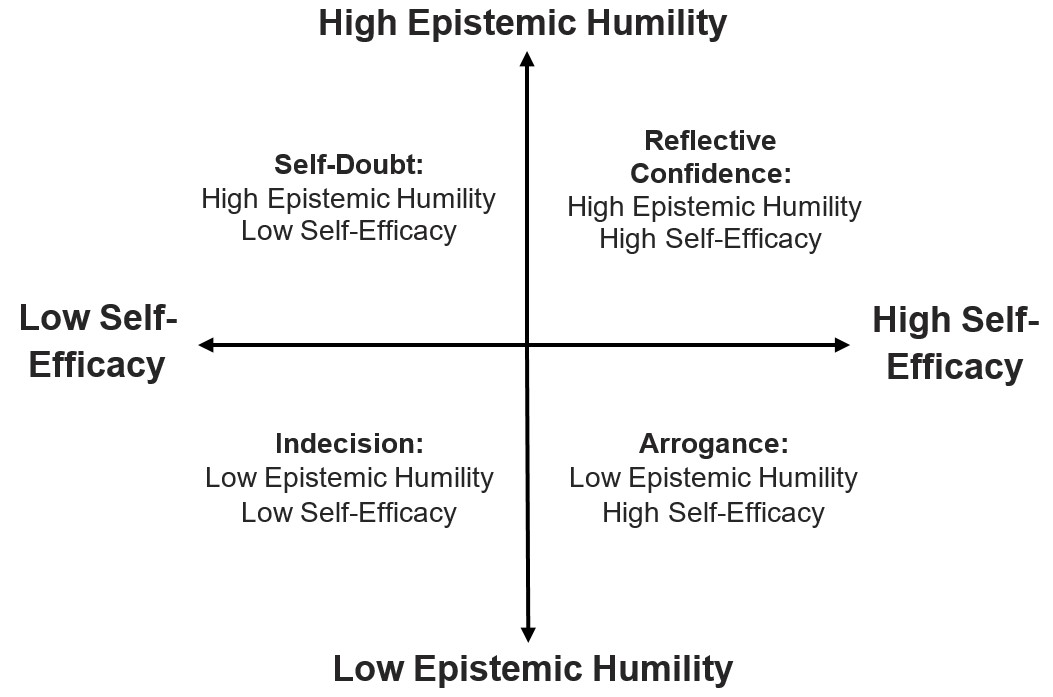
Self-efficacy and epistemic humility define four patterns of judgement: reflective confidence, self-doubt, indecision and arrogance. Feedback architecture (not shown) regulates how leaders move within this space.
Psychological Mechanisms Shaping Drift Between Confidence and Arrogance
Confidence and arrogance do not develop abruptly. In a military context, they emerge through cognitive, emotional and social processes that shape how leaders interpret information and respond to uncertainty, and they are reinforced successively through success and failure. These mechanisms exert pressure on the components of the reflective confidence framework and determine whether self-efficacy remains grounded, humility is sustained, and feedback continues to reach the leader.
Cognitively, commanders under pressure rely heavily on intuitive pattern recognition that draws on experience. Intuition accelerates judgement in complex environments, yet it can mislead when surface similarities mask deeper differences.[14] Human cognition favours cognitive ease, so interpretations feel accurate when they fit familiar narratives.[15] Without reflective habits that check these interpretations, ‘ease of fit’ is frequently mistaken for evidential strength. Overconfidence bias then magnifies this pattern by inflating the perceived reliability of one’s own judgement, particularly after repeated success,[16] while confirmation bias entrenches it by giving greater weight to information that supports existing beliefs and by screening out disconfirming cues.[17] These biases erode epistemic humility and weaken the reflective oversight that ordinarily keeps intuition answerable to reality. In positions of command, this can make familiar patterns feel more trustworthy than they are, especially when tempo and prior success make initial interpretations difficult to challenge.
Emotional mechanisms intensify these vulnerabilities. Stress narrows attentional scope and erodes the cognitive flexibility on which reflective thought depends.[18] Under sustained pressure, prefrontal systems that support inhibitory control and working memory degrade, reducing one’s capacity to inhibit first interpretations, hold alternatives in mind and revisit assumptions. Emotional threat then compounds this: challenges to judgement are experienced as threats to competence or identity, and leaders defend familiar interpretations instead of revising them. Such defensive reasoning arises precisely when humility is most needed and often remains invisible to those experiencing it because it appears as realism rather than defensiveness. The result is a form of judgement that feels resolute to the leader but becomes progressively less able to revisit assumptions, absorb unwelcome information or test itself against alternatives.
Social mechanisms exert a further amplifying influence. Military organisations are structured around hierarchy, and subordinates will adjust their candour in response to a leader’s perceived openness. When leaders project certainty or react poorly to friction, subordinates will frequently soften critique or avoid presenting unwelcome evidence.[19] As upward challenges diminish, leaders become increasingly reliant on their own intuition and less exposed to the corrective friction that sustains reflective confidence—they place greater emphasis on their own interpretation and decision-making than on accepting external observations and suggestions. Research on power highlights this risk; as authority increases, individuals tend to overestimate the accuracy of their own judgements while receiving less corrective feedback.[20] Confidence invites deference, deference reduces challenge, and reduced challenge increases overconfidence. This is problematic when it sidelines relevant external contributions to the decision-making process. In a military headquarters, the effect is that warning signals may still exist but no longer travel upward with enough candour or force to alter decisions.
These mechanisms rarely operate in isolation. Cognitive shortcuts become more attractive under stress, emotional defensiveness grows when feedback feels risky, and hierarchical filtering screens out the disconfirming information required to correct misjudgements. Success reinforces familiar interpretations and can dull curiosity about alternatives. Over time, these pressures shift leaders from adaptive intuition towards a more rigid interpretive stance.
Taken together, these mechanisms show how reflective confidence becomes vulnerable to erosion. Self-efficacy inflates when cognitive ease displaces scrutiny, humility weakens when emotional strain narrows interpretive space, and feedback architecture degrades when candour becomes costly. When all three conditions fail, confidence detaches from evidence and hardens into self-sealing certainty. This transition is not simply a failure of character but the cumulative effect of psychological and social pressures acting on judgement under demanding conditions. In practice, these pressures become visible when early interpretations harden too quickly, disconfirming reports are softened as they move upward, and commanders receive less challenge precisely when uncertainty is greatest.
These dynamics also explain variation in command performance. The disparate leadership approaches of two senior generals—Sir William Slim and Douglas MacArthur—provide helpful case studies to observe how such traits can play out in wartime scenarios. Leaders who remain reflective, like Slim, intentionally cultivate habits that protect humility, maintain emotional steadiness and sustain feedback pathways even in adversity. Others, such as MacArthur, appear to exhibit a breakdown in these regulatory processes, leading to a conviction that becomes progressively insulated from correction. The next section examines these contrasting trajectories through an assessment of each respective leadership performance.
Case Studies of Reflective Confidence: Slim and MacArthur
The experiences of General William Slim in Burma and General Douglas MacArthur in Korea provide a useful comparison of how reflective confidence is either sustained or lost under pressure. Their divergence is explained less by context than by how they regulated judgement through self-efficacy, humility and feedback architecture. Slim assumed command of the 14th Army in October 1943 after severe setbacks. Rather than projecting certainty, he began by scrutinising his own assumptions and wrote candidly about early errors, which suggests a leader more concerned with learning than image.[21] He moved widely among subordinate units, sought ground-level perspectives and encouraged honest reporting even when such information was unwelcome.[22] These behaviours strengthened the feedback architecture around him and created conditions in which subordinates could challenge planning assumptions without fear of reprisals. Slim’s self-efficacy supported decisive action yet remained open to revision. He routinely tested his interpretations against alternative explanations, treated success as provisional and showed a willingness to alter assessments when evidence required it. Emotional steadiness reinforced this approach; contemporary accounts describe his composure under pressure, indicating that challenging information could be raised safely.[23] In this way Slim sustained the regulatory balance that keeps confidence connected to reality.
MacArthur’s experience followed the opposite trajectory. Early victories—such as the landings at Inchon in September 1950—deepened his belief in the reliability of his intuitive judgement. Success magnified his sense of strategic insight and narrowed his receptivity to competing interpretations.[24] This impacted the quality and credibility of the information his staff fed him; intelligence assessments warning of Chinese intervention were reframed to fit his expectations rather than used as prompts to revisit assumptions.[25] As self-efficacy intensified, humility eroded and reflective oversight of intuition weakened. Feedback architecture around MacArthur deteriorated in parallel. Staff officers reported that dissent was unwelcome and that presenting contradictory evidence that challenged MacArthur’s assumptions carried the risk of marginalisation.[26] Power amplified this pattern. Deference constrained upward candour, and information increasingly reflected what subordinates believed MacArthur wanted to hear. This narrowing removed the friction needed to challenge his interpretive stance, while emotional volatility further discouraged dissent and signalled that challenge was unsafe, accelerating the drift towards self-sealing certainty.
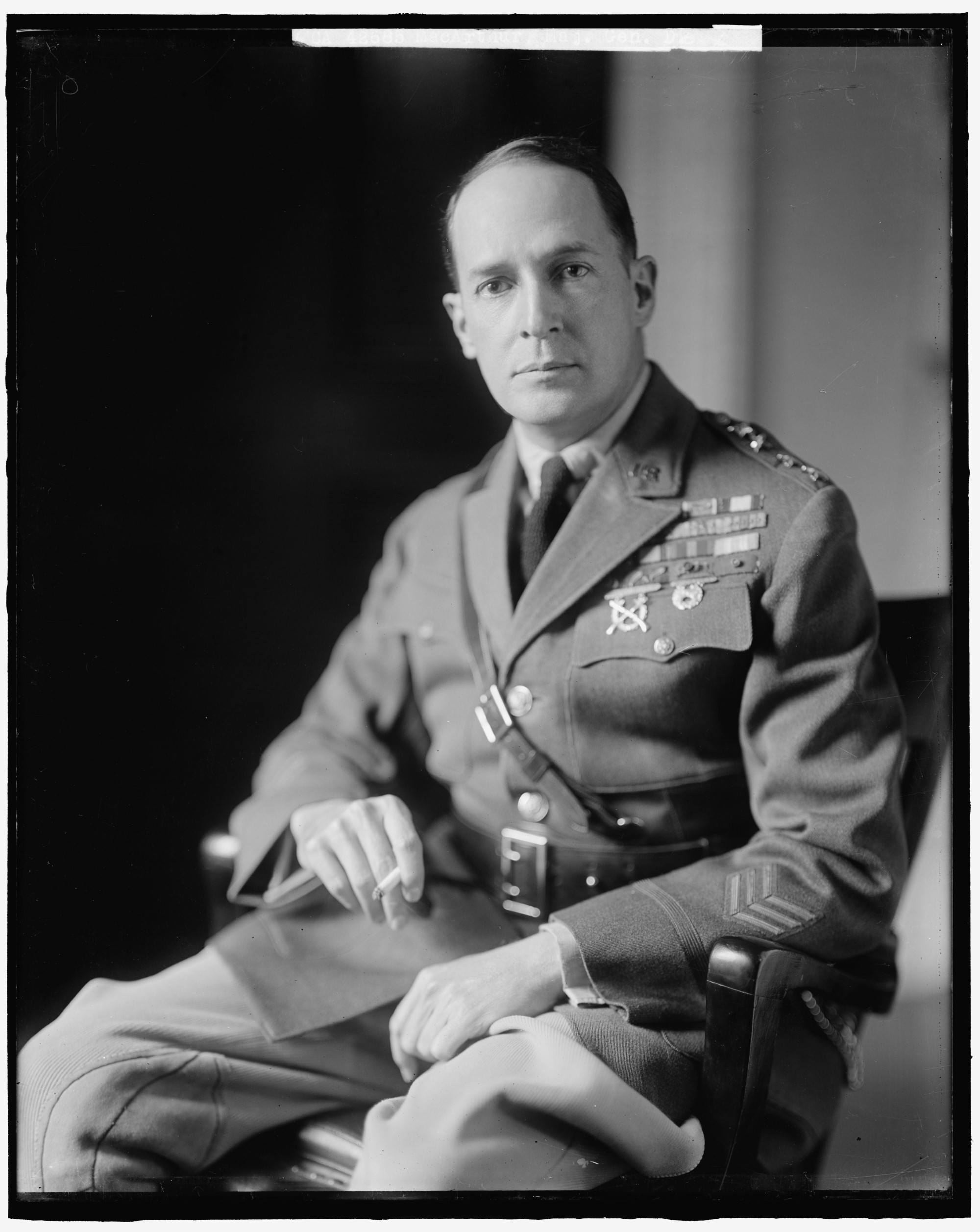
Harris & Ewing Collection, Library of Congress, LC-DIG-hec-18381.
Slim and MacArthur thus show how the reflective confidence framework operates under stress. Slim reinforced the conditions that kept his self-efficacy grounded, sustained his humility and protected feedback channels. MacArthur allowed each of these components to erode in the face of his own sense of right. Rising confidence invited deference; deference reduced challenge; reduced challenge strengthened conviction. Confidence hardened into arrogance, not because MacArthur lacked ability but because the regulatory system around his judgement was progressively eroded, including by his own resistance to correction.
Methodologically, these cases demonstrate that reflective confidence is not a fixed trait but a regulatory state maintained through habits of judgement and organisational permeability. Both leaders faced uncertainty and time pressure, yet their approaches diverged in ways that shaped their campaigns’ outcomes. Slim went on to lead the successful defeat of Japanese forces in Burma and the reoccupation of Rangoon. For MacArthur, the campaign in Korea deteriorated following the arrival of Chinese communist forces and his own unilateral ultimatum to China. The comparison strengthens the central claim of this essay: confidence remains adaptive only when belief is exposed to evidence, tested by challenge and supported by emotional steadiness, whereas arrogance emerges when these conditions collapse.
Mitigation: Sustaining Reflective Confidence in Command
Sustaining reflective confidence requires more than appeals to humility. It depends on reinforcing the regulatory balance between self-efficacy, epistemic humility and feedback architecture. Each component degrades differently under pressure, so mitigation must target their specific vulnerabilities. The aim is not to slow tempo but to keep confidence open to correction rather than protected by momentum or rank.
Protecting the cognitive dimension of self-efficacy begins with creating brief but reliable opportunities for evaluation during planning and execution. High tempo compresses the space in which leaders can question their assumptions and increases reliance on intuitive coherence. Short reflective moments such as pre-mortems, assumption checks, decision exercises in rehearsals and peer interrogation help to counteract this narrowing.[27] In the British Army these practices can be built into tools such as the Combat Estimate and treated as cognitive battle drills so that reflective checks become routine rather than discretionary. A common concern is that such practices reduce tempo. However, this risk diminishes once evaluation becomes routine rather than discretionary, as the checks then regulate intuition without undermining momentum.
Strengthening epistemic humility requires sustained habits of reflection as well as institutional reinforcement. Humility is an active orientation to uncertainty that preserves interpretive flexibility. Individual practices such as brief reflective journaling or short post-decision reviews help leaders identify the triggers that cause reflective oversight to weaken and make cognitive drift easier to detect.[28] Humility also has an interpersonal function. Leaders who acknowledge uncertainty invite alternative perspectives and normalise doubt, signalling that ‘challenge’ is both safe and valued and demonstrating that evidence, rather than ego, governs decision-making.[29]
Humility must also be supported by organisational incentives. When promotion and evaluation systems reward candour, reflective critique and intellectual honesty, humility becomes an indicator of competence rather than a performative posture.[30] Yet military institutions face trade-offs: encouraging openness can be perceived as undermining unity or decisiveness, especially in cultures that prioritise conformity and cohesion. Without careful calibration, leaders may feel pressure to project unwavering certainty, encouraging the defensive reasoning that accelerates drift towards arrogance.
Reinforcing feedback architecture is critical because confidence becomes brittle when deprived of challenge. Commanders operate at distance from events, and their judgement depends on the candour of those who report to them. Psychological safety sits at the centre of this architecture; leaders shape it through their micro-behaviours, reactions to bad news, openness to junior perspectives and treatment of uncertainty.[31] Structural mechanisms such as red-teaming, independent challenge and rigorous after-action reviews can improve behaviours by revealing assumptions and blind spots that are difficult to identify from within the command team itself.[32]
Mitigation must also address the emotional dimension of command, because emotional steadiness underwrites both humility and feedback. Stress narrows attentional bandwidth and weakens the cognitive functions needed for reflective override. Short decompression intervals, focused breathing techniques and other simple regulation routines help maintain access to these capacities.[33] Leaders who manage emotional strain effectively become more predictable in their responses and reduce the interpersonal threat that makes subordinates hesitate to raise unwelcome information.
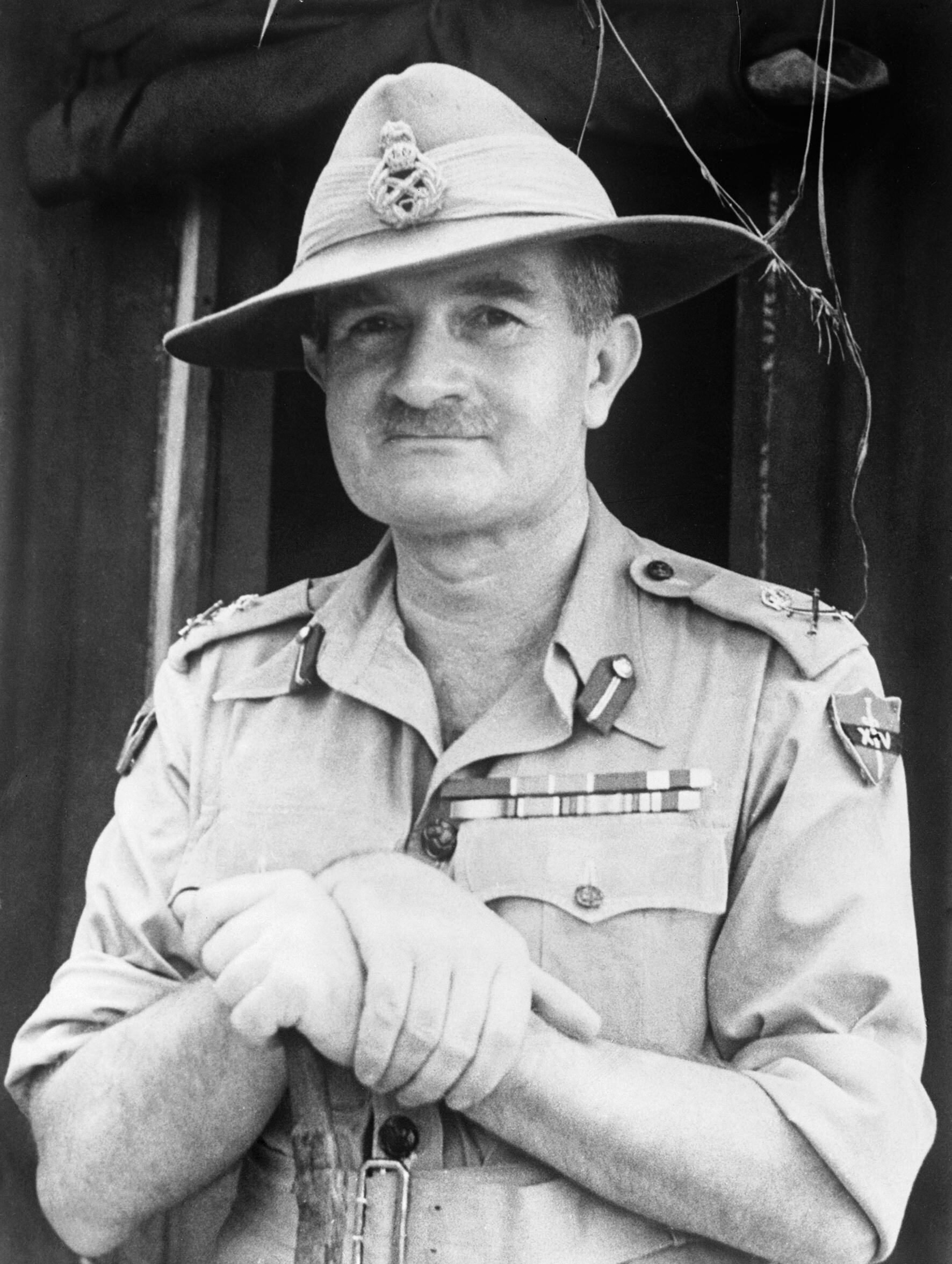
No. 9 Army Film and Photo Section, Army Film and Photographic Unit, © IWM (IND 3595) and © Crown copyright reproduced under delegated authority from The Keeper of Public Records, Wikipedia Commons.
These interventions are not without limits. Cognitive checks can become performative if framed as administrative requirements, feedback mechanisms also lose diagnostic value when cultural norms discourage genuine challenge, and emotional regulation techniques require discipline that may be difficult to sustain during prolonged operations. They are most effective when embedded in habitual practice rather than introduced episodically during moments of crisis. Taken together, however, these measures help to maintain reflective confidence by reinforcing the balance between self-efficacy, humility and feedback architecture. They protect commanders from the gradual drift towards self-sealing certainty and preserve the permeability needed for accurate judgement under operational tempo.
Limitations and Boundary Conditions
The reflective confidence framework offers a structured way to explain how confidence remains adaptive under pressure, but its effectiveness is constrained by several boundary conditions. These limitations do not invalidate the framework but indicate the contexts in which reflective confidence becomes most vulnerable and where mitigation must be applied most carefully.
The first limitation concerns tempo and emotional strain. Operational environments compress decision cycles to a degree that restricts the cognitive space required for reflection. Even well-designed checks may be abbreviated or omitted when urgency dominates. Reflective cognition is resource dependent, so the framework’s regulatory functions weaken under fatigue, threat and time pressure.[34] Stress, moral pressure and personal strain further degrade the capacities that support reflective confidence, so moments of greatest operational significance may coincide with moments when leaders have the least access to reflective control.[35]
A second limitation relates to organisational culture and power asymmetry. Feedback architecture depends on cultural norms that legitimise challenge and protect dissent, not just on formal mechanisms. In hierarchical or conservative units, subordinates may moderate candour even when leaders attempt to model openness,[36] and senior commanders receive more filtered information as their authority increases.[37] Psychological safety cannot be produced by instruction alone; it develops through consistent behaviour over time. Current Defence efforts to promote psychological safety are necessary but not sufficient: they can reduce interpersonal threats, yet without routinised reflective practices and aligned incentives, they risk producing surface-level declarations of openness rather than the deep, habitual reflective confidence that holds under high tempo and threat. Cultural pressures for unity can also cast disagreement as disloyalty, further weakening upward challenge.
A further limitation is methodological and rhetorical. The framework is derived from psychological theory and historical case analysis, so its empirical generalisability remains uncertain, and confidence, humility and feedback may not map cleanly onto behaviour in live decision environments. It should therefore be operationalised and tested in high-tempo training and decision-making exercises to clarify where it adds diagnostic value beyond existing doctrine. A parallel risk is rhetorical misuse: leaders may adopt the language of ‘humility’ and ‘psychological safety’ while preserving cultures that in practice punish dissent, so any application demands scepticism about whether behavioural and structural change have genuinely occurred. In sum, the framework is most effective when operational tempo permits reflection, culture supports candour and leaders are able to sustain emotional steadiness. Recognising these boundary conditions clarifies where confidence is most vulnerable and where the risks of drift into arrogance are greatest.
Conclusion
Confidence in command is not simply a matter of temperament. It is a regulated cognitive process shaped by humility, sustained by organisational permeability and vulnerable to psychological and social pressures that narrow interpretation under stress. Reflective confidence emerges when self-efficacy, epistemic humility and feedback architecture operate in balance. When this balance deteriorates, confidence becomes brittle and begins to detach from evidence. The contrasting experiences of Slim and MacArthur show how this drift unfolds in practice: Slim reinforced the conditions that kept his judgement open to challenge, while MacArthur allowed success, tempo and authority to erode the mechanisms that ordinarily prevent confidence from hardening into arrogance.
The framework outlined here can help to explain how judgement remains adaptive, but also highlights the fragility of its regulatory conditions. Mitigation requires deliberate institutional practices to maintain cognitive friction, reinforce humility and protect the flow of honest feedback. Nonetheless, such measures do not eliminate drift. Instead, they reduce its likelihood and slow its progression, making confidence more resilient by limiting the conditions in which arrogance takes root. In doing so, these measures reduce operational risk by keeping plans responsive to disconfirming information. Future research could test this framework empirically in high-tempo training environments to examine how emerging AI-enabled decision-support tools alter feedback architecture and humility, clarifying whether they strengthen reflective confidence or further insulate commanders from disconfirming evidence.
Until then, reflective confidence remains an aspiration as well as a discipline, yet it offers a practical route towards more resilient judgement in complex operations. It strengthens authority not by reducing decisiveness but by ensuring that conviction remains answerable to reality. When cultivated deliberately, it provides a durable foundation for sound command in uncertain environments and helps to prevent the gradual slide from confidence into arrogance.
About the Author
Major Charles Bevan RLC commissioned into the Royal Logistic Corps in April 2017 after completing officer training at the Royal Military Academy Sandhurst. He has served in a range of regimental roles, including Adjutant and Squadron Commander at 9 Regiment RLC, alongside staff appointments in strategic logistics, defence capability and acquisition, and information operations. He also served as Military Assistant to the Standing Joint Command Chief of Staff during the UK COVID-19 response. He holds a BA in Philosophy and is completing an MSc in Psychology, focusing on decision-making, cognitive bias, and leadership in complex environments. An avid sportsman, he represents the Army at cricket and has a longstanding interest in the role of sport in developing leadership, resilience and team cohesion.
Endnotes
[1] Daniel Kahneman, Thinking, Fast and Slow (New York: Farrar, Straus and Giroux, 2011).
[2] Dominic Johnson, Overconfidence and War: The Havoc and Glory of Positive Illusions (Cambridge MA: Harvard University Press, 2004), pp. 1–34.
[3] Daniel Kahneman and Amos Tversky, ‘Judgment Under Uncertainty: Heuristics and Biases’, Science 185, no. 4157 (1974): 1124–1131, at: https://doi.org/10.1126/science.185.4157.1124.
[4] Kahneman, Thinking, Fast and Slow.
[5] Gary Klein, Sources of Power: How People Make Decisions (Cambridge MA: MIT Press, 1999).
[6] Amy FT Arnsten, ‘Stress Signalling Pathways That Impair Prefrontal Cortex Structure and Function’, Nature Reviews Neuroscience 10, no. 6 (2009): 410–422, at: https://doi.org/10.1038/nrn2648.
[7] Amy C Edmondson, ‘Psychological Safety and Learning Behavior in Work Teams’, Administrative Science Quarterly 44, no. 2 (1999): 350–383, at: https://doi.org/10.2307/2666999.
[8] David Owen and Jonathan Davidson, ‘Hubris Syndrome: An Acquired Personality Disorder? A Study of US Presidents and UK Prime Ministers over the Last 100 Years’, Brain 132, no. 5 (2009): 1396–1406, at: https://doi.org/10.1093/brain/awp008.
[9] Nelson Cowan et al., ‘Foundations of Arrogance: A Broad Survey and Framework for Research’, Review of General Psychology 23, no. 4 (2019): 415–435, at: https://doi.org/10.1177/1089268019877138.
[10] Albert Bandura, ‘Self-Efficacy: Toward a Unifying Theory of Behavioral Change’, Psychological Review 84, no. 2 (1977): 191–215, at: https://doi.org/10.1037/0033-295X.84.2.191.
[11] Bradley P Owens and David R Hekman, ‘How Does Leader Humility Influence Team Performance? Exploring the Mechanisms of Contagion and Collective Promotion Focus’, Academy of Management Journal 59, no. 3 (2016): 1088–1111, at: https://doi.org/10.5465/amj.2013.0660.
[12] Edmondson, ‘Psychological Safety and Learning Behavior in Work Teams’.
[13] Chris Argyris and Donald A Schön, Organizational Learning II: Theory, Method, and Practice (Reading MA: Addison-Wesley, 1996).
[14] Klein, Sources of Power, p. 47.
[15] Kahneman and Tversky, ‘Judgment Under Uncertainty’, pp. 1124–1125.
[16] Don A Moore and Paul J Healy, ‘The Trouble with Overconfidence’, Psychological Review 115, no. 2 (2008): 502–517, at: https://doi.org/10.1037/0033-295X.115.2.502.
[17] Raymond S Nickerson, ‘Confirmation Bias: A Ubiquitous Phenomenon in Many Guises’, Review of General Psychology 2, no. 2 (1998): 175–220, at: https://doi.org/10.1037/1089-2680.2.2.175.
[18] Arnsten, ‘Stress Signalling Pathways’.
[19] Edmondson, ‘Psychological Safety and Learning Behavior in Work Teams’.
[20] Dacher Keltner, Deborah H Gruenfeld and Cameron Anderson, ‘Power, Approach and Inhibition’, Psychological Review 110, no. 2 (2003): 265–284, at: https://doi.org/10.1037/0033-295X.110.2.265.
[21] William Slim, Defeat into Victory (London: Pan Macmillan, 2009), p. 35.
[22] Ibid., pp. 47–48.
[23] Robert Lyman, Slim, Master of War: Burma and the Birth of Modern Warfare (London: Constable, 2004), pp. 118–119.
[24] Richard B Frank, MacArthur (New York: Palgrave Macmillan, 2007), pp. 212–214.
[25] Clay Blair, The Forgotten War: America in Korea, 1950–1953 (Indiana: Naval Institute Press, 2003), pp. 131–135.
[26] Frank, MacArthur, p. 219.
[27] John H Flavell, ‘Metacognition and Cognitive Monitoring: A New Area of Cognitive–Developmental Inquiry’, American Psychologist 34, no. 10 (1979): 906–911, at: https://doi.org/10.1037/0003-066X.34.10.906.
[28] Kahneman, Thinking, Fast and Slow, pp. 203–205.
[29] Owens and Hekman, ‘How Does Leader Humility Influence Team Performance?’.
[30] British Army, Army Leadership Doctrine (Centre for Army Leadership, 2023).
[31] Amy C Edmondson, The Fearless Organization: Creating Psychological Safety in the Workplace for Learning, Innovation, and Growth (John Wiley & Sons, 2018).
[32] UK Ministry of Defence, Red Teaming Handbook, 2nd edition (Development, Concepts and Doctrine Centre, 2021).
[33] Flavell, ‘Metacognition and Cognitive Monitoring’.
[34] Kahneman, Thinking, Fast and Slow, pp. 203–205.
[35] Arnsten, ‘Stress Signalling Pathways’, pp. 410–422.
[36] Edmondson, The Fearless Organization.
[37] Keltner, Gruenfeld and Anderson, ‘Power, Approach and Inhibition’.