
A Potential Game-Changer for Military Applications
Author: Ria Rushin Joseph
Introduction
In recent decades, the emergence of quantum technologies has assisted in a new era of precision and innovation, with far-reaching significance across scientific, industrial and defence domains. Among these, quantum imaging[1]—a technique that exploits the unique properties of quantum states—has attracted much attention for its ability to exceed classical imaging constraints.[2] Particularly, the use of squeezed states of light[3] has demonstrated potential to enhance resolution, noise suppression and performance.[4] For military or security applications, where precision and operational effectiveness are of particular significance, these capabilities offer new possibilities for improvements in surveillance, reconnaissance, target detection and secure communications.
This article proposes that the integration of squeezed states of light into optomechanical sensors can significantly enhance their sensitivity and precision, particularly for military applications. Specifically, it aims to demonstrate how careful optimisation and manipulation of squeezed states, through both propagating field squeezing and intracavity squeezing, can mitigate quantum noise and overcome traditional limitations associated with quantum sensing technologies. The research suggests that achieving squeezing levels beyond established theoretical limits (such as the widely accepted 3 decibel barrier) could revolutionise military sensing capabilities—notably in GPS-denied navigation, target detection and secure communications—provided that practical environmental noise challenges are effectively addressed.
Optomechanics Explained
Quantum imaging represents a branch of quantum sensing[5] that exploits the principles of quantum mechanics to achieve better measurement precision and sensitivity beyond classical limits.
Optomechanical sensing devices typically utilise coherent light sources[6] but their performance is constrained by quantum noise. To overcome this limitation and enhance measurement sensitivity beyond the classical quantum limit, squeezed-light sources[7] can be used as the driving light in place of coherent light. Yet in many Army field scenarios, technical noise sources (like vibrations or temperature swings) may dwarf quantum noise. Where quantum noise does dominate—for instance, in highly tuned or cryogenically cooled sensor set-ups—squeezing can slash the shot-noise[8] floor and yield unmatched sensitivity. By reducing noise in one variable (such as amplitude or phase) while increasing it in its conjugate counterpart, squeezed states result in enhanced signal-to-noise ratios and heightened sensitivity.[9] By utilising these noise-reduction properties, optomechanical sensors that use squeezed states excel in scenarios where conventional sensors struggle due to quantum noise, low light or challenging environments. The following section introduces the concept of squeezed states, which improve optomechanical sensors by strategically reducing quantum noise in one variable (e.g. amplitude or phase) while allowing increased noise in the conjugate variable. This primer provides the basis for this article’s further examination of measures to overcome traditional limitations on the use of quantum imaging in military contexts.
Squeezed States: a Brief Primer
Squeezed states of light are quantum states where the quantum uncertainty in one quadrature is reduced, or squeezed, at the expense of increased uncertainty in the orthogonal quadrature. For practical sensor design, including Army applications, the key is to align or ‘twist’ this reduced-noise quadrature with the physical parameter of interest (e.g. a displacement signal), so that the sensor reads out smaller fluctuations than a standard coherent or thermal state would allow. This reduction in uncertainty can be below the standard quantum limit, which means the uncertainty in one quadrature can be smaller than . In simpler terms: you either reduce intensity fluctuations at the cost of increased phase noise or vice versa, depending on your measurement needs. In the optical phase space, a coherent state is represented by a circular Gaussian distribution, while a squeezed state is represented by an elliptical Gaussian distribution, centred at a point corresponding to the amplitude and phase. The quadratures of both coherent states and squeezed states of light in the optical phase space are plotted in Figure 1 for comparison. The amount of squeezing is characterised by the squeeze factor, which typically refers to how much the uncertainty in one quadrature has been reduced relative to the vacuum state.
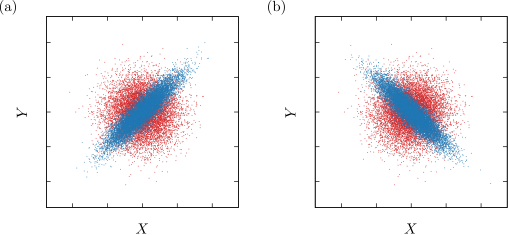
Figure 1 notes: (a) Illustration of a squeezed state of light (blue points) in phase space compared with a coherent (classical) state (red points). Here, the ellipse is oriented so that the squeezing axis approximately aligns with X, making the variance smaller along that quadrature.
(b) A similar squeezed state oriented at a different angle, showing reduced variance primarily along Y. Note that if the squeezed ellipse is rotated away from the X or Y axes, then simply measuring the X or Y quadrature alone may yield a variance similar to the coherent state. To observe the noise reduction below the standard quantum limit, one must ‘twist’ or align the measurement basis to the squeezed quadrature—otherwise the squeezed state can appear identical to its classical counterpart in these plots.
The ‘quadrature of light’ in Figure 1 refers to the components of the electric field of a light wave that are used to describe its quantum state. The amplitude quadrature corresponds to the in-phase component of the electric field, while the phase quadrature corresponds to the out-of-phase components of the electric field. The quadratures of light are subject to the uncertainty principle ∆X∆Y≥1⁄4, where the uncertainties ∆X and ∆Y are the standard deviations of the distribution of the quadratures X and Y. This implies that the amplitude and phase of the light field cannot be simultaneously known with arbitrary precision.
In quantum optics, light can be described as a quantum harmonic oscillator. The energy levels of light are discrete and they correspond to different numbers of photons, with each photon adding a quantum of energy ℏω to the system, where ℏ is the reduced Planck’s constant and ω is the angular frequency. The ground state that corresponds to the vacuum state of light has a vacuum energy of ℏω⁄2. Despite having no photons, the vacuum state still exhibits quantum fluctuations due to the uncertainty principle. In any optical measurement, quantum noise arises due to these inherent fluctuations in the vacuum state. This noise is unavoidable and sets a fundamental limit on the precision of measurements. Coherent states are quantum states of light that most closely resemble classical light waves. They have the minimum possible uncertainty in both amplitude quadrature and phase quadrature, which is equal to that of the vacuum state. The quantum uncertainties in both quadratures are each equal to 1⁄2.
There are two approaches to generating squeezed light: propagating field squeezing and intracavity squeezing. These are outlined briefly below.
Propagating Field Squeezing
Propagating field squeezing[10] refers to the generation of squeezed light that propagates through space or optical fibres after exiting an optical cavity. Experimental demonstrations have achieved remarkable results[11] reaching up to 15 decibels of squeezing. Such high levels of squeezing have been instrumental in improving the sensitivity of instruments like the Laser Interferometer Gravitational-Wave Observatory (LIGO),[12] where squeezed light is used to reduce quantum noise and enhance the detection of gravitational waves. In propagating field squeezing, one of the widely used techniques is parametric down-conversion (PDC),[13] which involves a strong pump beam interacting with a nonlinear optical medium, such as a potassium titanyl phosphate (KTP) crystal. In this process, pairs of entangled photons exhibiting squeezed quadratures are produced. The first successful demonstration of squeezed light through PDC was reported in 1985.[14]
The efficiency of PDC can be further enhanced by employing optical parametric oscillators (OPOs), which have become the standard for generating continuous wave squeezed light. OPOs use nonlinear crystals to achieve phase matching, enabling efficient energy transfer between the pump and the generated photons.[15] Another prominent technique is four-wave mixing (FWM),[16] which occurs in nonlinear media such as optical fibres and atomic vapours. In FWM, multiple light waves interact within the medium, leading to the generation of squeezed light. This approach has demonstrated high-quality squeezed states, particularly in rubidium vapour, with noise reductions reaching −9.2 decibels.[17] The Kerr nonlinearity offers another approach to generating squeezed light by making use of the intensity-dependent refractive index of a medium. Squeezing can be achieved through self-phase modulation or cascaded interactions.[18] Advances in PDC techniques, for instance, could lead to more efficient and reliable generation of squeezed states.
The difficulties in implementing squeezed states when they are generated external to the optical cavity are well known. These challenges are primarily due to transmission and injection losses. Specifically, when squeezed light is transmitted through optical components or injected into cavities, losses can degrade the squeezing by introducing additional noise. These losses are detrimental because they can negate the advantages provided by the squeezed states, especially in precision measurement applications.
Intracavity Squeezing
Intracavity squeezing[19] refers to the generation and manipulation of squeezed states within the optical cavity itself. Achieving significant squeezing inside a cavity is inherently more challenging due to the inevitable interaction between the dynamics of intracavity field within the optical cavity and the impact of quantum noise processes that arise from fundamental vacuum fluctuations and photon losses. Noting these limitations, a theoretical limit of 3 decibels has historically been applied to intracavity squeezing.[20]
A promising strategy to mitigate these issues is to prioritise intracavity squeezing, where the generation and manipulation of the squeezed field occurs directly within the cavity itself. This approach minimises the risk that quantum devices and sensors are exposed to external losses and environmental noise.[21] Intracavity generation ensures that the squeezed state is preserved in its highest quality form, enhancing the performance of quantum devices and sensors. By enabling the generation of high-quality squeezed states within the cavity, intracavity squeezing not only addresses the limitations of injection losses but also opens new avenues for enhancing measurement precision. A recent research study[22] claims to have theoretically broken the longstanding 3 decibel barrier for intracavity squeezing. While these research results are promising, they have not yet been verified through experimentation, leaving room for further research and exploration in the field.
Cavity optomechanics[23] has emerged as a pivotal field in quantum imaging and sensing, utilising the intracavity squeezed states to achieve better sensitivity and precision, with profound implications for military applications. These advancements hold the potential to transform surveillance, reconnaissance, target detection and secure communication, providing a decisive edge in modern defence operations. Recent technological advances highlight the potential of cavity optomechanical sensors (particularly when enhanced by quantum phenomena such as entanglement and squeezed light) to push sensor capabilities beyond classical limits. This enables extremely sensitive detection of forces, displacements, and subtle changes in optical signals. For instance, Xia et al. demonstrated that optomechanical sensors, when probed with entangled light, outperform those using classical laser light. By achieving superior force resolution and measurement bandwidth, such sensors have crucial application to inertial navigation and acoustic imaging.[24] Scientists attribute this enhancement to the ability of entangled light to reduce quantum noise, thereby improving measurement sensitivity. Moreover, the integration of nanostructures, such as semiconductor nanowires, into cavity optomechanical systems has opened new avenues for developing hybrid sensors. These nanowires have the potential to facilitate novel quantum hybrid systems, which could significantly enhance the capabilities of optomechanical sensors.[25]
Quantum interference can induce double-passage ground-state cooling, allowing researchers to manipulate the absorption spectrum of optomechanical cavities to achieve low thermal noise levels—an essential step towards high-precision quantum imaging measurements.[26] This capability is essential for achieving low thermal noise levels, which is a prerequisite for achieving the high-precision measurements necessary for quantum imaging.
To enhance the sensitivity of gravitational-wave detectors, a widely adopted strategy involves injecting squeezed light into the interferometer.[27] Though gravitational-wave detection might be beyond Army’s immediate scope, the same principle—injecting squeezed light to push beyond shot-noise limits—can inform advanced inertial sensors or secure communications set-ups with Defence. It is significant that the capacity to measure weak forces with high precision is vital for various applications, including astrophysics and fundamental physics experiments. Furthermore, the exploration of imaging-based cavity optomechanics has revealed that information about mechanical resonator motion can be encoded into the spatial modes of optical fields. This innovative approach allows for enhanced imaging capabilities and for the potential of these systems to provide detailed insights into mechanical dynamics.[28] The integration of advanced imaging techniques with cavity optomechanics could revolutionise fields such as biomedical imaging and materials science.
Utilising Squeezed Light
By using squeezed light in optomechanical systems, the precision and sensitivity of these systems can be enhanced. There are three types of optomechanical systems to realise the squeezed light. A cold atom[29] optomechanical system[30] combines cold atomic ensembles with mechanical elements and optical techniques. A photonic crystal[31] cavity optomechanical system[32] integrates photonic crystals with mechanical elements to perform high-precision measurements. A membrane-in-the-middle optomechanical system[33] is a type of optomechanical system where a thin membrane is placed inside an optical cavity. In Army contexts, all these platforms would need robust packaging and minimal sensitivity to temperature fluctuations to remain effective.
When we use light in these sensors—what we call optically transduced sensors—we shine light on the system and then analyse how certain properties of the light change after interaction. These properties might include the light’s strength (amplitude) or the position in its wave cycle (phase). The ability of a sensor to detect very small changes in the quantity we’re measuring—its sensitivity—depends on several factors. Firstly, it depends on how strongly the sensor responds to changes in the quantity. Secondly, it depends on the inherent noise or fluctuations in the light we use to probe the sensor. Lastly, it depends on how many times we repeat the measurement to improve accuracy.
In particular, when we focus on measurements involving the intensity of light (essentially, how bright the light is), reducing the noise in the light becomes crucial. One way to achieve this is by using the squeezed light. Squeezed light has reduced fluctuations in its intensity compared to regular light, meaning it is more stable and less ‘noisy’. By using squeezed light, we lower the minimum change in the quantity that our sensor can detect. This happens because the reduced noise allows us to distinguish smaller variations that would otherwise be obscured. The more we can ‘squeeze’ the light (that is, reduce its noise), the better our sensor becomes at detecting tiny changes.
Moreover, while adding more photons generally improves measurement precision by increasing the signal relative to shot noise, many real-world systems are never pushed to this shot-noise limit because other forms of noise or practical constraints dominate first. In Army scenarios—where dust, mechanical vibrations and broad temperature fluctuations may be unavoidable—classical noise can mask quantum-level improvements unless carefully mitigated. In extremely high-precision applications such as the LIGO—where detecting incredibly faint signals demands enormous optical power—shot noise does become a key limitation, and injected squeezed light is used to further reduce measurement noise. Even so, ‘photons are cheap’ (a remark sometimes heard in quantum optics and photonics discussions) only holds to a point. There are scenarios where you cannot simply raise the optical intensity—for instance, if there is a risk of damaging a sensitive sample, saturating a detector or creating excessive heat. In these situations, squeezed light offers a more efficient way to enhance sensitivity without increasing power. Although such shot-noise-limited conditions are relatively rare in many practical sensors, advanced quantum-optical systems and next-generation military or aerospace sensors may deliberately design out classical noise, leaving photon shot noise as the primary barrier to higher precision. In those niche but critical use cases, turning to quantum states of light is the only way to push performance beyond the classical limit.
It is also important to note that everything we have discussed so far involves measuring just one property of the light field. If we develop measurement strategies that consider all possible information from the light—including both its amplitude and its phase—we can push sensitivity even further. By optimising our measurements in this way, we can approach the ultimate limit of precision dictated by quantum mechanics, known as the Quantum Cramér-Rao bound.[34] Reaching towards this limit means we are making measurements as precise as the laws of physics allow, breaking new ground in the field of quantum sensing.
Observations Concerning the Use of Optomechanic Sensors in the Military
Optomechanical sensing combines optical and mechanical components to measure physical quantities with high precision and it holds considerable promise for defence applications—ranging from enhanced detection of hidden targets to high-fidelity inertial navigation. In theory, incorporating intracavity squeezing can further suppress quantum noise and boost sensor performance. However, real-world military environments typically introduce far more intense sources of noise—such as vibrations, thermal fluctuations and electromagnetic interference—than those targeted by squeezing. Consequently, while many types of optomechanical sensors exist, their practical benefits in military contexts often hinge on whether these classical disturbances can be reduced to levels where quantum noise truly becomes the limiting factor.
The following overview highlights various sensor categories, discusses their potential operational value, and addresses the noise-related barriers that must be overcome for quantum-enhanced sensing to deliver robust, field-ready capabilities.
- Displacement sensors form the foundation for many other sensor types by detecting changes in the position of a mechanical resonator, which may be internal to the optical cavity or externally coupled.[35] They can serve military needs in precise alignment, structural health monitoring and weapon stabilisation systems, though controlling environmental noise is crucial for reliable performance.
- Mass sensors[36] rely on shifts in the resonance frequency of a mechanical resonator caused by the adsorption of an additional mass. The sensitivity of these sensors is determined by the effective mass and quality factor of the resonator, with optomechanical systems achieving femtogram-range sensitivity.[37] Sensors of this type have the potential to detect trace chemical deposits on surfaces. Mass sensors, however, require carefully controlled conditions to be effective to avoid overshadowing quantum noise with environmental disturbances. Therefore, their utility to Army is likely to be limited.
- Force sensors[38] detect forces acting on a mechanical resonator by measuring the resulting displacement, with sensitivity linked to displacement sensitivity through the mechanical susceptibility of the resonator. They could aid in military applications such as vibration monitoring of sensitive installations or early detection of tampering, but high environmental noise might limit their quantum-level advantages.
- Acceleration sensors measure acceleration by detecting the displacement of a test mass. They can be highly useful for inertial navigation in GPS-denied environments, though practical deployment requires robust noise mitigation to realise their quantum-level precision.
- Magnetic field sensors[39] employ magnetostrictive materials, which change dimensions in response to magnetic fields, coupling these changes to a mechanical resonator for optical readout.
- Ultrasound sensors[40] can detect acoustic waves via photoelastic effects or pressure-induced deformations. From a military perspective, this technology could potentially aid in stand-off detection of hidden structures. However, classical noise disruption would likely overshadow the potential to achieve quantum noise reduction in a military context.
- Micro-electro-mechanical systems (MEMS) based gravimeters incorporate intracavity squeezed states and represent a potential quantum enhancement in detecting subtle gravitational anomalies caused by subterranean structures like tunnels or bunkers. While squeezing could theoretically improve sensitivity, in a military context seismic vibrations and inefficient detectors reduce their practical effectiveness. For instance, reconnaissance missions in complex terrains, such as the Indo-Australian archipelago, may not significantly benefit from squeezing due to high environmental noise floors.
- Optomechanical gyroscopes measure rotation and acceleration via optical resonance shifts. Such gyroscopes could theoretically benefit from intracavity squeezing to reduce quantum noise and improve accuracy. However, military deployments typically encounter much higher noise levels from mechanical vibrations, temperature fluctuations and platform movements. Consequently, quantum squeezing may have limited practical impact in most field scenarios.
Despite factors that generally inhibit the effective use of optomechanical sensors in military contexts, there are nevertheless some areas of practical application, including those outlined below.
- In surveillance and reconnaissance, sensors can detect small environmental disturbances, aiding in the identification of hidden threats. For instance, optomechanical accelerometers have been deployed on ground-surveillance platforms to measure micro-vibrations caused by foot traffic or vehicles, allowing soldiers to detect concealed personnel and vehicles at safe distances in complex battlefield scenarios.
- Navigation and guidance systems can benefit from optomechanical sensors, providing accurate acceleration and orientation data critical for missiles, drones and autonomous vehicles. These systems are especially valuable in GPS-denied environments, where traditional methods fail. For example, miniaturised optomechanical inertial measurement units tested on small unmanned aerial vehicles (UAVs) have demonstrated stable and precise control in underground or GPS-jammed areas.
- The sensitivity of optomechanical chemical and biological sensors, which detect hazardous substances through frequency shifts caused by molecular adhesion, might be improved with intracavity squeezing. Nevertheless, challenges such as surface contamination, temperature and humidity variations, and detector inefficiencies significantly limit these theoretical benefits in practical conditions.
- Certain niche Army-specific applications, such as detection of buried improvised explosive devices, navigation of UAVs in GPS-denied environments, and surveillance of concealed threats, could potentially benefit from squeezed-light techniques in situations where quantum noise becomes a relevant contribution to the overall sensor noise budget. In those cases, squeezing may improve sensitivity by reducing the quantum-noise floor and enhancing the detectability of weak signals. However, achieving this in practice would require substantial engineering effort to produce robust, field-deployable systems that can operate reliably in harsh environments.
Key Innovations and Contributions
This article takes the novel approach of diverging from the theoretical approach outlined above by making use of another theoretical approach: quantum phase-space methods.[41] Phase space provides a powerful framework for visualising and analysing quantum states using representations like the positive P.[42] Rather than assuming that extra nonlinear terms automatically lift the longstanding intracavity-squeezing limit, this article uses quantum phase-space methods and numerical optimisation to test that proposition directly. Phase-space methods provide a practical way to analyse non-classical states in driven, lossy cavities, while the optimisation routine helps identify the most favourable operating points for the model studied here.
Having established the promise of optomechanical sensors—and the practical constraints imposed by loss, instability and environmental noise—the article then examines whether a nonlinear cavity model with Kerr interaction, parametric coupling and detuning can relax the conventional 3 decibel steady-state limit for intracavity squeezing. The value of this analysis is not that it proves a beyond 3 decibel result in the present system; rather, it shows how far the model can be pushed and where its limitations remain.
This distinction matters. Qin, Miranowicz and Nori show that squeezing beyond 3 decibels can, in principle, arise in a fully quantum two-mode degenerate parametric amplifier with two-tone driving and engineered dissipation. Our analysis does not reproduce that result in the single-cavity setting considered here. Instead, it indicates that the squeezing remains limited in this model, even after systematic exploration of Kerr nonlinearity, parametric interaction and detuning.
In simpler terms, the model describes optical modes in a nonlinear cavity, one affected by intensity-dependent Kerr shifts and another driven parametrically by an external laser. Detuning changes the relative frequency offset between the optical modes and the drive, which can improve stability and reshape the noise landscape. These elements can enhance squeezing and help identify favourable operating regimes. In the present study, however, they do not justify a claim that the longstanding 3 decibel steady-state limit has been decisively broken.
The model Hamiltonian therefore serves a diagnostic role as well as a predictive one. It captures the key ingredients needed to explore how nonlinear interactions, external driving, and photon loss interact in a realistic cavity system. Through analytical calculations and numerical simulations, the model shows where quadrature noise can be substantially reduced, but it also reveals the constraints that still prevent a clear beyond 3 decibel steady-state result in this particular formulation.
The Kerr nonlinearity, parametric coupling and carefully chosen detuning remain valuable because they map the boundaries of improved performance. Our optimisation results show that these parameters can reduce quadrature noise and identify promising operating regions, even though the present single-cavity model does not establish steady-state intracavity squeezing above 3 decibels. The next step is therefore to explain clearly why this result differs from the Qin–Miranowicz–Nori proposal and which physical ingredients must be retained if beyond 3 decibel squeezing is to be realised in practice.
The squeeze factor is commonly expressed in decibels by comparing the variance of the squeezed quadrature with the vacuum variance. On that scale, −3 decibels corresponds to a 50 per cent reduction in noise. The practical significance of the present results is therefore not that they demonstrate nearly 10 decibels of intracavity squeezing in this system. Instead, they show where meaningful noise reduction is achievable, where the limit appears to persist, and why clarifying the route to a genuine beyond 3 decibel steady state remains an important research problem for quantum sensing.
By clarifying why the conventional 3 decibel limit remains hard to beat in this model, the research still makes a useful contribution to quantum measurement science. It separates achievable noise reduction from unsupported extrapolation and it provides a more credible foundation for the next generation of sensor proposals.
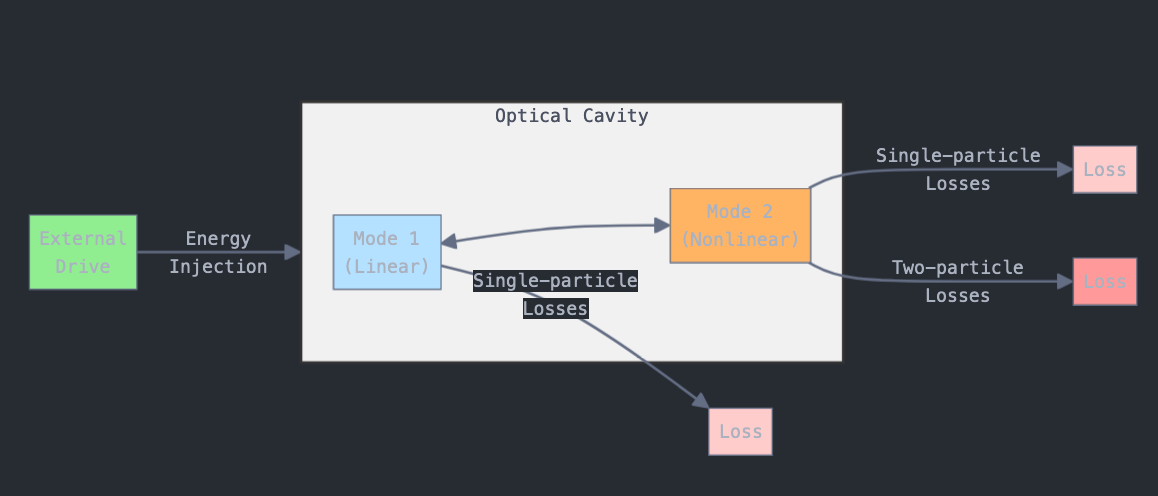
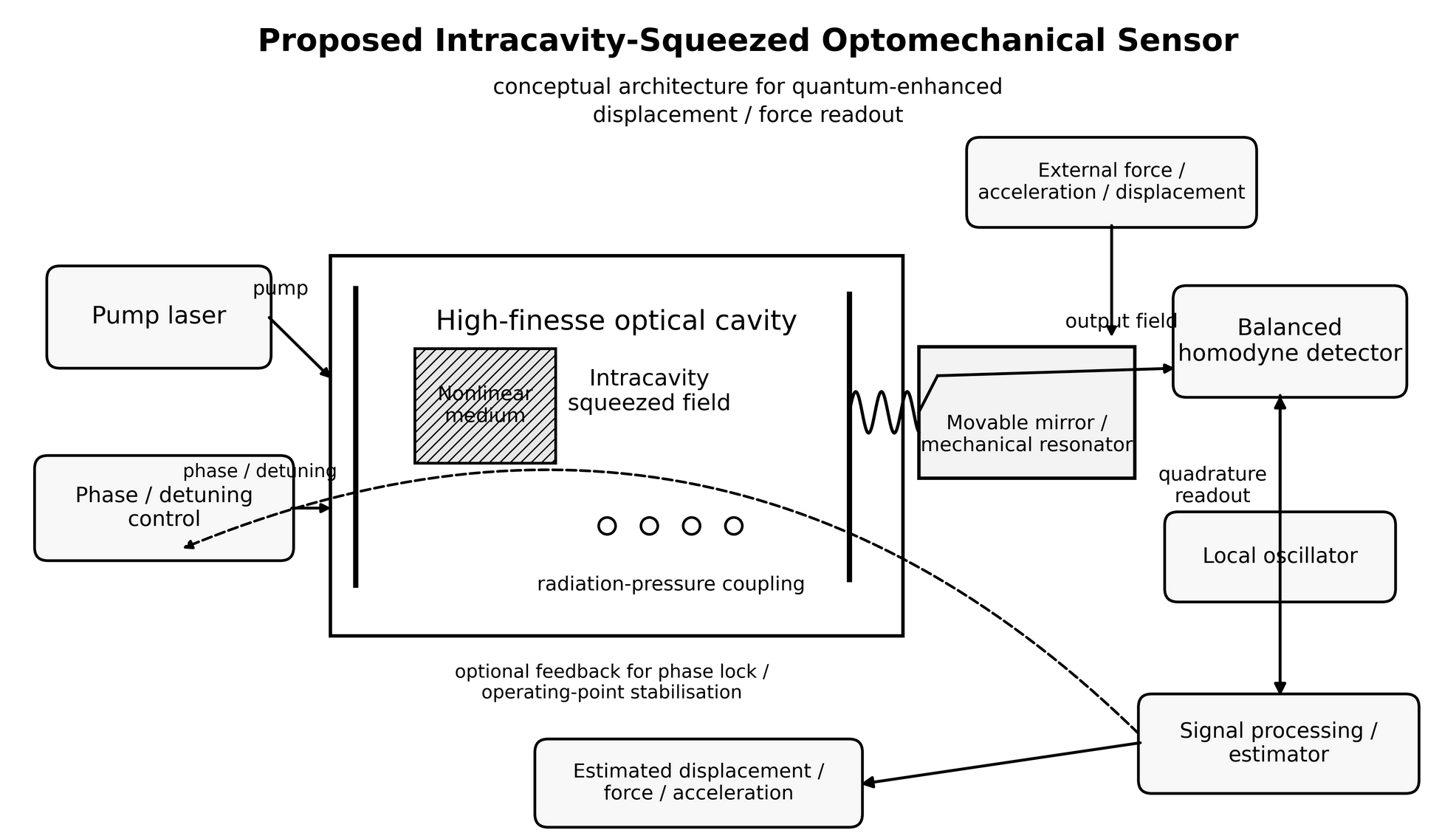
Building on the concepts discussed in this article, we propose a quantum optomechanical sensor (Figure 3) that uses intracavity squeezing to reduce measurement noise and improve readout precision. The proposal is intentionally presented as a sensor architecture, not as a claim that the specific model analysed here has already demonstrated steady-state squeezing above 3 decibels. Its purpose is to show how a practical system might exploit intracavity nonlinear interactions while also providing a framework for testing the remaining limit experimentally.
The core of the proposed sensor is a high-finesse optical cavity with a movable end mirror or membrane that functions as the mechanical resonator. A nonlinear medium inside the cavity generates intracavity squeezing, while a pump laser drives the system at a controlled detuning. External forces, displacements or accelerations perturb the resonator and imprint phase or amplitude changes on the optical field. The output is then measured by balanced homodyne detection and processed to estimate the quantity of interest.
The advantage of this proposal is that it keeps the squeezed field inside the cavity, reducing the transmission and injection losses that often weaken externally generated squeezing. In principle, that makes the architecture attractive for high-precision sensing. In practice, its performance will depend on whether sufficient squeezing can be stabilised under realistic loss, phase-noise and environmental conditions. For that reason, the proposed sensor should be presented as a credible next-step platform for testing quantum-enhanced readout, rather than as proof that the 3 decibel steady-state limit has already been overcome.
The Impact on Army of Exceeding 3 Decibels of Squeezing
Traditionally, the 3 decibel intracavity-squeezing limit has been treated as a major benchmark because deeper steady-state noise suppression would translate into more sensitive optical readout. If future architectures can robustly exceed that benchmark under realistic operating conditions, the military pay-off could be substantial, particularly for niche platforms where classical noise has already been suppressed and quantum noise becomes the dominant remaining floor.
In a defence context, that could matter for optomechanical accelerometers or inertial sensors operating in carefully engineered GPS-denied navigation systems, or for specialised surveillance platforms trying to resolve very weak signals. However, the present work does not yet justify claiming such a performance step in the model analysed here. What it does provide is a more honest and strategically useful conclusion: before the Army can count on beyond 3 decibel intracavity squeezing, the field must clarify why the Qin–Miranowicz–Nori scheme predicts it and why simpler single-cavity nonlinear models do not.
Existing quantum sensors based on cold atoms remain strong competitors for inertial measurement, but squeezed-light platforms still offer potential advantages in optical integration, fibre compatibility, miniaturisation, and operation in dynamic environments. Even without a verified beyond 3 decibel result in the present model, the proposed sensor remains relevant because moderate squeezing, careful loss reduction and robust readout design can still improve practical sensitivity. The most convincing military message is therefore not that the 3 decibel barrier has already been beaten here, but that resolving this question is a necessary step towards fieldable quantum optomechanical sensors.
Conclusion
This study underscores the pivotal role of squeezed states in advancing quantum sensing technologies, demonstrating their capacity to surpass classical measurement limitations by significantly reducing quantum noise. However, such advantages primarily manifest in regimes where classical and technical noises are minimised—something that must be carefully addressed if these sensors are to be used in typical Army settings. Our research highlights how optimised squeezed states, generated and maintained through sophisticated quantum phase-space methods and advanced optimisation algorithms, can mitigate the detrimental effects of quantum noise, photon losses and environmental disturbances. This breakthrough not only enhances the performance of quantum sensors in principle but also ensures potential reliability if the environment can be well controlled, an ongoing challenge for the demanding conditions inherent in military operations.
To fully realise the potential of squeezed-state quantum sensors within the defence framework, several critical steps must be undertaken. Firstly, continued investment in research and development is essential to overcome existing challenges related to the generation and stabilisation of squeezed states in real-world environments. Collaboration between quantum physicists, engineers and military strategists will be crucial to tailor these technologies to specific defence needs. Furthermore, the development of robust integration protocols will facilitate the seamless incorporation of quantum sensors into existing military infrastructure, ensuring scalability and portability for field deployment. Equally important is the systematic testing of these systems in relevant noise environments—only then can we confirm whether the extra decibels of squeezed light genuinely translate into fieldable capabilities that surpass today’s classical sensors.
Final Recommendations and Call to Action
- Foster collaborative partnerships: Encourage partnerships between academic institutions, defence research organisations and industry leaders to drive innovation and expedite the transition from theoretical advancements to practical applications.
- Invest in training and expertise: Develop specialised training programs to build a cadre of experts proficient in quantum sensing technologies, ensuring the Australian Army is equipped with the knowledge and skills to deploy and maintain advanced quantum sensors effectively.
- Pilot deployment and testing: Initiate pilot programs to test squeezed-state optomechanical sensors in real-world military scenarios, gathering critical data on both quantum and classical noise performance to inform further development and refinement.
- Strategic integration: Develop comprehensive strategies for integrating quantum sensors into existing military systems, ensuring interoperability and maximising the strategic advantages offered by these technologies. Include explicit plans for dealing with classical noise sources and potential performance trade-offs in practical conditions.
While squeezed-state quantum sensors could represent a significant leap forward for military capabilities, they currently demand a high level of engineering control to provide enhanced precision, reliability and operational effectiveness under Army conditions. A balanced approach that acknowledges both the extraordinary potential and the real-world limitations will guide the Army in deciding where—and how—these emerging quantum tools can deliver genuine, mission-critical benefits.
Endnotes
[1] Alessandra Gatti, Enrico Brambilla and Luigi Lugiato, ‘Quantum Imaging’, Progress in Optics 51 (2008): 251–348, at: https://doi.org/10.1016/S0079-6638(07)51005-X.
[2] Marco Genovese, ‘Real Applications of Quantum Imaging’, Journal of Optics 18, no. 7 (2016): 073002, at: https://doi.org/10.1088/2040-8978/18/7/073002; Mikhail I Kolobov (ed.), Quantum Imaging (Springer Science & Business Media, 2007).
[3] Daniel F Walls, ‘Squeezed States of Light’, Nature 306, no. 5939 (1983): 141–146, at: https://doi.org/10.1038/306141a0.
[4] Bao-Zhu Lu, Si W Bi, Fei Feng, Meng H Kang and Fei Qin, ‘Experimental Study on the Imaging of the Squeezed State Light with −4.93 Decibel Quantum-Noise Reduction at 1064 nm’, Advanced Materials Research 571 (2012): 439–444, at: https://doi.org/10.4028/www.scientific.net/AMR.571.439.
[5] Christian L Degen, Friedemann Reinhard and Paola Cappellaro, ‘Quantum Sensing’, Reviews of Modern Physics 89, no. 3 (2017): 035002, at: https://doi.org/10.1103/RevModPhys.89.035002.
[6] Coherent light sources are devices (like lasers) that produce light waves all moving in the same direction and pattern.
[7] Rodney Loudon and Peter L Knight, ‘Squeezed Light’, Journal of Modern Optics 34, no. 6–7 (1987): 709–759, at: https://doi.org/10.1080/09500348714550721.
[8] Shot noise is a type of random fluctuation (noise) in an electrical signal or optical intensity due to the discrete nature of particles (such as electrons in a circuit or photons in a light beam). This noise arises from the statistical variability inherent in quantum processes. See Benjamin J Lawrie, Paul D Lett, Alberto M Marino and Raphael C Pooser, ‘Quantum Sensing with Squeezed Light’, ACS Photonics 6, no. 6 (2019): 1307–1318, at: https://doi.org/10.1021/acsphotonics.9b00250.
[9] Motoki Asano, Guoqiang Zhang, Takehiko Tawara, H Yamaguchi and Hiroyuki Okamoto, ‘Near-Field Cavity Optomechanical Coupling in a Compound Semiconductor Nanowire’, arXiv (2020), at: https://doi.org/10.48550/arxiv.2006.16538.
[10] Yi Xia et al., ‘Entanglement-Enhanced Optomechanical Sensing’, Nature Photonics 17 (2023): 470–477, at: https://doi.org/10.1038/s41566-023-01178-0.
[11] Ibid.
[12] Álvaro Fernández-Galiana et al., ‘Advanced LIGO Squeezer Platform for Backscattered Light and Optical Loss Reduction’, Classical and Quantum Gravity 37, no. 21 (2020): 215015, at: https://doi.org/10.1088/1361-6382/abb5c2.
[13] G Milburn and DF Walls, ‘Production of Squeezed States in a Degenerate Parametric Amplifier’, Optics Communications 39, no. 6 (1981): 401–404, at: https://doi.org/10.1016/0030-4018(81)90232-7.
[14] Richard Slusher, LW Hollberg, Bernard Yurke, JC Mertz and John F Valley, ‘Observation of Squeezed States Generated by Four-Wave Mixing in an Optical Cavity’, Physical Review Letters 55, no. 22 (1985): 2409–2412, at: https://doi.org/10.1103/PhysRevLett.55.2409.
[15] Hidehiro Yonezawa, Koyo Nagashima and Akira Furusawa, ‘Generation of Squeezed Light with Monolithic Optical Parametric Oscillator: Simultaneous Achievement of Phase Matching and Cavity Resonance by Temperature Control’, Optics Express 18, no. 19 (2010): 20143–20150, at: https://doi.org/10.1364/OE.18.020143.
[16] Horace P Yuen and Jeffrey H Shapiro, ‘Generation and Detection of Two-Photon Coherent States in Degenerate Four-Wave Mixing’, Optics Letters 4, no. 10 (1979): 334–336, at: https://doi.org/10.1364/OL.4.000334.
[17] Yongqin Han, Wen Xu, Jun He, Baodong Yang, Yanhua Wang and Junmin Wang, ‘Improvement of Vacuum Squeezing Resonant on the Rubidium D1 line at 795 nm’, Optics Express 24, no. 3 (2016): 2350–2359, at: https://doi.org/10.1364/oe.24.002350.
[18] Nikolay Kalinin et al., ‘Observation of Robust Polarization Squeezing via the Kerr Nonlinearity in an Optical Fibre’, Advanced Quantum Technologies 6, no. 3 (2023): 2200143, at: https://doi.org/10.48550/arXiv.2209.14100.
[19] Lingchao Li, Ren-Hua Luo, Longjiang Liu, Shuo Zhang and Jianqi Zhang, ‘Double-Passage Ground-State Cooling Induced by Quantum Interference in the Hybrid Optomechanical System’, Scientific Reports 8 (2018): 14276, at: https://doi.org/10.1038/s41598-018-32719-1; PD Drummond, KJ McNeil and DF Walls, ‘Non-Equilibrium Transitions in Sub/Second Harmonic Generation’, Optica Acta: International Journal of Optics 27, no. 3 (1980): 321–335, at: https://doi.org/10.1080/713820226.
[20] Li et al., ‘Double-Passage Ground-State Cooling Induced by Quantum Interference in the Hybrid Optomechanical System’.
[21] Environmental noise refers to the background levels of random disturbances—such as vibrations, temperature fluctuations, or electromagnetic interference—that can overwhelm the faint signals targeted by quantum-enhanced measurements.
[22] Wei Qin, Adam Miranowicz and Franco Nori, ‘Beating the 3 dB Limit for Intracavity Squeezing and Its Application to Nondemolition Qubit Readout’, Physical Review Letters 129 (2022): 123602, at: https://doi.org/10.1103/PhysRevLett.129.123602.
[23] Michael Metcalfe, ‘Applications of Cavity Optomechanics’, Applied Physics Reviews 1, no. 3 (2014): 031105, at: https://doi.org/10.1063/1.4896029; Markus Aspelmeyer, Tobias J Kippenberg and Florian Marquardt, ‘Cavity Optomechanics’, Reviews of Modern Physics 86, no. 4 (2014): 1391–1452, at: https://doi.org/10.1103/RevModPhys.86.1391.
[24] Xia et al., ‘Entanglement-Enhanced Optomechanical Sensing’.
[25] Asano et al., ‘Near-Field Cavity Optomechanical Coupling in a Compound Semiconductor Nanowire’.
[26] Li et al., ‘Double-Passage Ground-State Cooling Induced by Quantum Interference in the Hybrid Optomechanical System’.
[27] Carlton M Caves, ‘Quantum-Mechanical Noise in an Interferometer’, Physical Review D 23, no. 8 (1981): 1693–1708, at: https://doi.org/10.1103/PhysRevD.23.1693; William G Unruh, ‘Quantum Noise in the Interferometer Detector’, in Pierre Meystre and Marlan O Scully (eds), Quantum Optics, Experimental Gravity, and Measurement Theory (Boston, MA: Springer US, 1983), pp. 647–660, at: https://link.springer.com/chapter/10.1007/978-1-4613-3712-6_28.
[28] Christian M Pluchar, Aman R Agrawal and Dalziel J Wilson, ‘Imaging-Based Cavity Optomechanics’, Proceedings of the SPIE 12649 (2023): 1264907, at: https://doi.org/10.1117/12.2676081.
[29] The atoms are cooled to near absolute zero temperatures using laser cooling techniques. At such low temperatures, their quantum behaviours, such as superposition and entanglement, can be observed and manipulated.
[30] Tom P Purdy, DWC Brooks, Thierry Botter, Nathan Brahms, Z-Y Ma and Dan M Stamper-Kurn, ‘Tunable Cavity Optomechanics with Ultracold Atoms’, Physical Review Letters 105, no. 13 (2010): 133602, at: https://doi.org/10.1103/PhysRevLett.105.133602.
[31] Photonic crystals are materials with a periodic structure in their dielectric constant, creating a photonic band gap that can control the propagation of light.
[32] Matt Eichenfield, Ryan Camacho, Jasper Chan, Kerry J Vahala and Oskar Painter, ‘A Picogram- and Nanometre-Scale Photonic-Crystal Optomechanical Cavity’, Nature 459, no. 7246 (2009): 550–555, at: https://doi.org/10.1038/nature08061.
[33] Marin Karuza et al., ‘Optomechanically Induced Transparency in a Membrane-in-the-Middle Setup at Room Temperature’, Physical Review A—Atomic, Molecular, and Optical Physics 88, no. 1 (2013): 013804, at: https://doi.org/10.1103/PhysRevA.88.013804.
[34] Da-Jian Zhang and Jiangbin Gong, ‘Dissipative Adiabatic Measurements: Beating the Quantum Cramér-Rao Bound’, Physical Review Research 2, no. 2 (2020): 023418, at: https://doi.org/10.1103/PhysRevResearch.2.023418.
[35] Hang Z Yang, Xue G Qiao, Dong Luo, Kok S Lim, WuYi Chong and Sulaiman W Harun, ‘A Review of Recent Developed and Applications of Plastic Fiber Optic Displacement Sensors’, Measurement 48, no. 1 (2014): 333–345, at: https://doi.org/10.1016/j.measurement.2013.11.007.
[36] Ya-Tang Yang, Carlo Callegari, XL Feng, Kamil L Ekinci and Michael L Roukes, ‘Zeptogram-Scale Nanomechanical Mass Sensing’, Nano Letters 6, no. 4 (2006): 583–586, at: https://doi.org/10.1021/nl052134m.
[37] Femtogram-range sensitivity indicates the capability to detect mass changes on the order of grams, allowing extremely precise measurements of added or removed material.
[38] Yinming Zhao, Yang Liu, Yongqian Li and Qun Hao, ‘Development and Application of Resistance Strain Force Sensors’, Sensors 20, no. 20 (2020): 5826, at: https://doi.org/10.3390/s20205826.
[39] Slawomir Tumanski, ‘Modern Magnetic Field Sensors—a Review’, Przeglad Elektrotechniczny 89 (2013): 1–12, at: http://www.tumanski.pl/01_PE_10_13_1-12_tumanski.pdf.
[40] AKA Shrivastava, A Verma and SP Singh, ‘Distance Measurement of an Object or Obstacle by Ultrasound Sensors Using P89C51RD2’, International Journal of Computer Theory and Engineering 2, no. 1 (2010): 64–68, at: https://doi.org/10.7763/IJCTE.2010.V2.118.
[41] Quantum phase space methods are computational frameworks that represent quantum states as distributions within a phase space—akin to classical position and momentum—facilitating more intuitive visualisation and numerical analysis of quantum phenomena. See Ria R Joseph, Laura EC Rosales-Zárate and Peter D Drummond, ‘Phase Space Methods for Majorana Fermions’, Journal of Physics A: Mathematical and Theoretical 51, no. 24 (2018): 245302, at: https://doi.org/10.1088/1751-8121/aac037, and Joel F Corney and Peter D Drummond, ‘Gaussian Phase-Space Representations for Fermions’, Physical Review B—Condensed Matter and Materials Physics 73, no. 12 (2006): 125112, at: https://doi.org/10.1103/PhysRevB.73.125112.
[42] The positive P representation is a phase-space technique in quantum optics that uses non-negative, drift-diffusion-based distributions to simulate quantum states and their dynamics without introducing negative probabilities. See Karuza et al., ‘Optomechanically Induced Transparency in a Membrane-in-the-Middle Setup at Room Temperature’, and Peter D Drummond and Crispin W Gardiner, ‘Generalised P-Representations in Quantum Optics’, Journal of Physics A: Mathematical and General 13, no. 7 (1980): 2353–2368, at: https://doi.org/10.1088/0305-4470/13/7/018.