
Essays in Honour of Brendan Sargeant
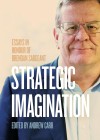
Australian National University Press, 2025, ISBN 9781760466954, 249 pp
Editor: Andrew Carr
Reviewed by: Nick Bosio
Strategic culture and strategic imagination are intrinsically linked. To truly exercise strategic art, a practitioner should understand both. Such understanding is more than theoretical – it should be a habit-of-mind. For strategic culture, one should be able to trace the concept and its practical manifestation in the thinking, strategy, and action of nations and groups. Such ability helps practitioners of strategy understand their own nation better and gain insight into how other nations may perceive the world. While much has been written to help practitioners understand strategic culture, the opposite is true for its interdependent partner, strategic imagination.
Strategic Imagination, edited by Andrew Carr, is a critical contribution to understanding strategic imagination. Building on the late Brendan Sargeant’s thinking and writing, the book helps explain strategic imagination and its practical uses. For the Australian Army officer, it is doubly important as the book places strategic imagination within an Australian context. This book is structured in three parts: the concept of strategic imagination, the practice of strategic imagination, and remembrances of Brendan Sargeant. While the first two parts explore strategic imagination, the book’s real power is how it makes four points clear to practitioners of strategy and war. First is defining strategic imagination as distinct from other theories and concepts. Second is the need to leverage other disciplines, history, and fiction to build strategic imagination. Next, the book explains why strategic imagination is important: its power to shape both strategy and strategic culture. Finally, the book makes explicit Australia’s strategic culture. Combined, these points reinforce a key theme of strategic art: understanding and leveraging alternative perspectives is critical to good strategic art and strategy.[1]
To best understand strategic imagination, it is necessary to grasp what it seeks to overcome and uplift: strategic culture. While strategic culture is a contested idea, Colin Gray provides the best description. Gray defines strategic culture as: ‘The underlying national [group] culture that is the root of, and influences, strategic behaviour …[where strategic behaviour is] the preferred approach a nation takes to strategic problems’.[2]
Understanding strategic culture helps readers better engage with the concept of strategic imatingation.
Three chapters are key to explaining strategic imagination as a distinct and vital concept. The first is Sargeant’s own words, presented in the second chapter, ‘The Australian Strategic Imagination: Origins and Form’. This chapter provides the foundation for the discussion of strategic imagination. Next is Ian Hall’s ‘Thinking about Strategic Imagination’ (Chapter Seven). Hall provides cross-disciplinary insight to strategic imagination. Finally, Stephan Frühling’s ‘Approaching Australian Defence and Strategic Policy through Strategic Imagination’ (Chapter 13) helps readers place the concept within the Australian discourse. While it is ironic that the book on strategic imagination does not clearly define the concept, these chapters enable a reader to understand that it is about using imagination to see approaches that differ from the norm. Sargeant describes imagination as an exercise of imaginative power over material reality. Such power seeks a way to change reality.[3] Hall explains imagination as envisioning ‘something beyond the bounds of our immediate perception’.[4] Anthea Roberts, in her chapter ‘Imagination and Scholarship’, describes imagination as ‘night science’ where creativity is used to develop new ideas.[5] Frühling reinforces that imagination is about challenging one’s self-conceptions and accepted norms.[6] Combined, these reflections lead a reader to understand that strategic imagination is ‘the ability to envision national power beyond the bounds of a nation’s immediate policy, thinking, or strategic culture to find new approaches or set new cultural norms’.[7]
This definition indicates that strategic imagination involves considering problems from different perspectives. Doctrine and military education include many tools to help practitioners consider problems from different perspectives. However, Sargeant and Hall both make clear that real strategic imagination, and imagination more broadly, is best achieved through broad knowledge and experience. What Sargeant, Hall and others authors in this volume discuss is the need for strategic and military artists to have a broad range of mental models. Mental models are ‘deeply ingrained assumptions, generalisations, or even pictures or images that influence how’ an individual (or group) understand theories, concepts, and the real world.[8] Such models directly influence creativity and decision-making. Having a broad range of mental models enables individuals and groups to engage with and consider problems in alternative and different ways.[9] Strategic imagination is grounded in having a diverse and broad range of mental models.
Many of the authors within Strategic Imagination discuss how to increase imagination. Sargeant is most clear: engage with and understand alternative concepts that are not normally related to strategy or national security. Sargeant advocates for practitioners to engage with a wide variety of disciplines and information genres. Often, non-security-related disciplines and genres can help provide alternative ways of thinking about the strategic environment, people, and problems. As Sargeant observes, disciplines often provide structured methodologies for exploring and understanding context, environments, and problems. For him, literary theory was an important alternative way to think about the strategic environment and strategy. Sargeant and other scholars also advocate engaging with fiction to consider the world through different perspectives.[10] In both cases, leveraging alternative methodologies and viewpoints can yield new insights, enabling practitioners to envision national power actions beyond the bounds of immediate policy and thinking. Sargeant’s arguments of how to build strategic imagination also highlight the power such imagination provides.
Imagination’s power is to seek new ways to change reality. This statement is a key theme throughout the first two parts of Strategic Imagination. This theme is also why strategic imagination is so important. Key strategic concepts were generated through imagination that Australia now considers are normal. Rory Medcalf in ‘The Indo-Pacific as Strategic Imagination’ highlights how Sargeant, while in the Department of Defence, envisioned the concept of the Indo-Pacific in the 2013 White Paper. This concept has changed Australia’s – and many other Indo-Pacific nations’ – perspective of the region. Frühling traces how Australian leaders and policymakers have reimagined Australia’s place in the region and the world, generating significant change in strategic policy and posture – for good and for bad. Sargeant himself writes that ‘[a] strong imagination represents a discontinuity and may manifest in the emergence of new modes of expression and new forms [of action or power]. In this respect, strong imagination asserts primacy over continuities represented by tradition.’[11]
As seen from the above, a strong strategic imagination enables practitioners to question current norms and thinking, consider alternative perspectives and approaches, and find new ways to overcome challenges and threats. Strong imagination can even overcome and change strategic culture. Such imagination requires a broad range of mental models, generated through experience, professional education, and curiosity about other ideas and ways of thinking.[12] Nevertheless, strong imagination is not enough. If it is not grounded in reality, it can lead to unfounded or confused outcomes, as Frühling observes in his discussion of the Defence of Australia-era of thinking.[13] Grounding strategic imagination leads to the book’s final key point: understanding Australia’s strategic culture.
While many authors discuss what comprises Australia’s strategic culture, the interview with Dennis Richardson in Chapter Six, ‘Imagination and Policy’, is the most insightful. Richardson succinctly explains Australia’s strategic culture as four elements. First is a strong ally, more powerful and with global weight. The second element is engagement in the region. Next is a commitment to international institutions, as such institutions can – when working – enhance a middle power’s weight. Finally, Australia has always pushed for more liberalised trade.[14] Other authors, including Hall, Carr, Medcalf, Sargeant and Frühling, all reinforce and expand on Richardson’s points. Combined, these authors outline how Australia’s geography, population density, and economy shape the emphasis on and priority given to its four elements of strategic culture.
By making clear Australia’s strategic culture, Strategic Imagination provides both the current norm and the envisioned change, the traditional and the discontinuity, the material reality and the power of change. In effect, strategic culture is the retractive and passive yin, while strategic imagination is the expansive and active yang of strategic art. Both are complementary and in tension. Both are required for good strategic art, as only with an understanding of the norm can strategic imagination help a practitioner determine when and where to adapt.
Brendan Sargeant was a powerhouse within Defence, and a critical practitioner-academic (pracademic) at the Australian National University. His unexpected loss was felt across the national security establishment, and diminishes Defence discourse and the furthering of Australian strategic understanding. Nevertheless, his insights, advice, and thinking have had a lasting effect on many, including this reviewer. His capacity to seemingly effortlessly consider, synthesise, and use multiple perspectives and worldviews to develop novel approaches exemplifies strategic art. Strategic Imagination is a fitting tribute to Brendan Sargeant.
Endnotes
[1] See On Strategic Art for further discussion: Nicholas J. Bosio, On Strategic Art: A Guide to Strategic Thinking and The Australian Strategy Formulation Framework, ed. Australian War College (Canberra, ACT, Australia: Australian War College, 2024), 29-32. https://theforge.defence.gov.au/sites/default/files/2024-11/On%20Strate….
[2] Bosio, On Strategic Art, 31. While outlined in On Strategic Art, this definition is derived from Gray. See: Colin S. Gray, "Strategic Culture as Context: The First Generation of Theory Strikes Back," Review of International Studies 25, no. 1 (1999): 50.
[3] Brendan Sargeant, "The Australian Strategic Imagination: Origins and Form," in Strategic Imagination: Essays in Honour of Brendan Sargeant, ed. Andrew Carr (Canberra, ACT, Australia: ANU Press, 2025), 18.
[4] Ian Hall, "Thinking about Strategic Imagination," in Strategic Imagination: Essays in Honour of Brendan Sargeant, ed. Andrew Carr (Canberra, ACT, Australia: ANU Press, 2025), 91.
[5] Anthea Roberts, "Imagination and Scholarship: The Role of Creativity and Complexity," in Strategic Imagination: Essays in Honour of Brendan Sargeant, ed. Andrew Carr (Canberra, ACT, Australia: ANU Press, 2025), 66.
[6] Stephan Frühling, "Approaching Australian Defence and Strategic Policy through Strategic Imagination," in Strategic Imagination: Essays in Honour of Brendan Sargeant, ed. Andrew Carr (Canberra, ACT, Australia: ANU Press, 2025), 170-72.
[7] This definition is derived from the three listed chapters, with particular reference to Hall, "Thinking about Strategic Imagination," 91.
[8] Quote is from Senge: Peter M. Senge, The Fifth Discipline, Kobo ePud ed. (London, England, UK: Random House Business Books, 1990), 8.
[9] See Klein and Storr for analysis. Bosio summarises the wider research. See: Gary Klein, Sources of Power: How People Make Decisions, Second Printing ed. (Cambridge, Massachusetts, USA: MIT Press, 1998), 32-35; Jim Storr, The Human Face of War, ed. Gary Sheffield and Dan Todman, Birmingham War Studies, (London, England, UK: Continuum, 2009), 143-53. 55; Nicholas J. Bosio, "Gaming to Win: Enhancing Military Decision-Making," Australian Army Journal XVIII, no. 1 (2022): 42-45; Bosio, On Strategic Art, 12-14.
[10] See Bosio for a summary of fiction’s use to strategic thinking and imagination, as well as other scholars that advocate for the use of fiction to increase strategic imagination. See: Bosio, On Strategic Art, 105-06.
[11] Sargeant, "Australian Strategic Imagination," 14.
[12] This is known as a pluralist habit-of-mind. See: Nicholas J. Bosio, "An Analysis of the Relationship between Contemporary Western Military Theory, Systems Thinking, and their Key Schools-of-Thought" (Doctor of Philosophy Doctorate (research), Australian National University, 2022), http://hdl.handle.net/1885/260048.
[13] Frühling, "Approaching Australian Strategic Policy," 173-75.
[14] Dennis Richardson, "Imagination and Policy," in Strategic Imagination: Essays in Honour of Brendan Sargeant, ed. Andrew Carr (Canberra, ACT, Australia: ANU Press, 2025), 86-86.
