
The Opening of Korea and the Birth of Modern East Asia
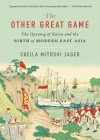
The Belknap Press of Harvard University Press, 2023, pp 624, ISBN 9780674983397
Author: Sheila Miyoshi Jager
Reviewed by: Andrew Maher
Australian defence policy clearly recognises that we are in a period of strategic competition, with reduced warning times for potential conflict. Large-scale conflict thus gains a dominant focus in Australian strategic commentary, ironically to the detriment of the broader picture of competitive statecraft.
The Other Great Game: The Opening of Korea and the Birth of Modern East Asia addresses this oversight. In an award-winning work of some 600 pages, Professor of East Asian Studies Sheila Miyoshi Jager covers two major wars—the Sino-Japanese War and the Russo-Japanese War—in the context of several decades of strategic competition for Korea, chronicling the period from the 1850s into World War I. With a title that illuminates the dominance within 19th century history of the ‘Great Game’ that played out between Russia and Britain over Central Asia, this book evokes the importance of a global view of competition, in which other ‘games’ are played.
While Army audiences will find comfort in the description of how these two large-scale wars were fought, the focus of the book is on the competitive statecraft which surrounds these events. Examination of the competition for Korea offers three key lessons for members of the Australian Defence Force and Australian Government policymakers when considering the risks of conflict.
First, the nature of competition is enduring and mirrors today’s strategic challenges. There are thus lessons to be drawn from the history of north-east Asia. Second, the analysis serves to illustrate that ‘hybrid warfare’ is nothing new: competition for Korea involved subversion of the Korean monarchy, use of proxies, economic coercion, and orchestration of coups d’état. Competition gives rise to subversion, efforts to weaken the adversary through imposition of costs short of war. Last, Miyoshi Jager’s examination of the ‘Other Great Game’ highlights the risks to social stability that can be caused by large-scale combat operations. The losers of the competition for Korea—Korea itself, China and Russia—all experienced revolution or the complete failure of the state because of conflict. Japan, the supposed victor, also experienced social turmoil and a certain radicalisation in its foreign policy due to the experience of competition. The history of the Korean competition illuminates and emphasises the risks of conflict to all participants. In doing so, it offers lessons that may help Australian efforts to formulate deterrence strategies and associated messaging within our nearer region.
Today, defence commentators are quick to point out Beijing’s support to a Russian government that is under considerable political pressure. In the context of China’s so-called ‘century of humiliation’, the competition for Korea suggests that Beijing might feel a certain schadenfreude regarding Russia’s present humiliations. Western history doesn’t emphasise Tsarist Russian exploitation of the weakened Qing dynasty through the treaties of Aigun (1858) and Peking (1860), which together won the Amur River basin area to Vladivostok—an area the size of Germany and France combined.[1] But Russian territorial ambitions were not satisfied by this achievement—appeasement does not placate autocratic regimes in competition. Instead, Russia sought to use commercial ‘fronts’—the China Eastern Railway (CER) and logging concessions along the Yalu River—to subvert Peking’s dominance over Manchuria and Korea respectively. Russia also fought a minor conflict for the Ili valley region of today’s Xinjiang region in 1879–80, further deepening Qing distrust of Russian intentions.[2]
The Great Game shows a rhyming throughout history in the methods that states use to subvert their opponents. Seldom is this dynamic limited to a two-player competition. The Japanese, too, competed for Korea. An elite praetorian guard for King Kojong was trained by the Japanese, the so-called Pyǒlgigun (Special Skill Force). Palace politics in Seoul were ruthlessly exploited by the Japanese, with numerous coups d’état involving Japanese support or orchestration, leveraging the influence they created with King Kojong. The Koreans, however, recognised they were trapped between two fires—those of Japan and Russia. In a policy paper written by a Korean strategist in 1879, the outlook was bluntly stated as: ‘Korea’s position in Asia guarantees to trigger conflict’.[3] The Koreans recognised the need to block Russian expansion if there was any hope to survive. Cultivating support from China, Japan and the United States, the Korean government sought to prevent the country being ‘sliced up like a cucumber’.[4] Nonetheless, elite corruption rotted away Korean resilience to external shocks. Political violence further subverted Korean strength; the Imo Uprising (1882) was an early manifestation of social discontent, followed by the Tonghak rebellion in 1894 (although a constant drumbeat of Korean popular insurrections characterised the 1880s–1890s).
As noted, The Other Great Game illustrates that hybrid facets of warfare are enduring. The 1894 Tonghak rebellion—a religious, anti-foreign movement strong in Korea’s south—precipitated a form of hybrid warfare.[5] Specifically, links between the Tonghaks and Japanese right-wing ‘patriotic organisations’—the Gen’yosha (Black Ocean Society) and the Ten’yukyo (Society for the Celestial Salvation of the Oppressed)—illuminate a proxy dynamic. Over this period, the Japanese government siphoned weapons and funding through Japanese right-wing groups to the Tonghaks.[6] Seoul requested Chinese troops to help put down the uprising; the Japanese government, feeling its influence threatened, also sent troops.[7] The Japanese government then orchestrated a coup in Korea to retain influence, in turn triggering the outbreak of the first Sino-Japanese War. This large-scale conflict between China and Japan was accompanied by a civil conflict between Koreans—the government and the Tonghaks—resulting in some 30,000 to 50,000 Korean deaths, approximately the same as the number of Chinese and Japanese casualties from the larger war.[8] Japanese victory in the Sino-Japanese War led to the so-called ‘Triple Intervention’ of Russia, Germany and France. Through this external involvement, Japan was forced to cede the Liaodong Peninsula as part of the Shimonoseki Peace Treaty—a deep humiliation that planted the seeds for future Japanese imperial ambitions.[9]
The Other Great Game illuminates the history of acrimonious Chinese–Russian and Japanese–Russian relations that continued into the 20th century and echoes in contemporary Asian international relations. Japan’s humiliation at Shimonoseki was made more acute by Russia’s exploitation of a weakened Peking. Loans were used in an early form of ‘debt-trap diplomacy’ to bolster Russian efforts to secure influence over Manchuria.[10] Russia’s exploitative actions in Manchuria intersected with the rising discontent of the Chinese peasantry with their own government’s ineptitude. The Boxer Rebellion (another anti-foreigner movement), which began in 1898, took on an anti-Russian dynamic in Manchuria.[11] Thus, the brief Sino-Russian War of July–October 1900 had a hybrid dynamic as Chinese troops, Boxer movement guerrilla attacks, and armed banditry (honghuzi) threatened the CER and, thus, Russian interests. Nonetheless, the Russian military prevailed, securing the CER to its Port Arthur terminus on the Yellow Sea, and directly threatening Japanese interests in Korea.
The social impact of large-scale combat operations is also explored in depth through the lens of the 1904–05 Russo-Japanese War. Following its victory in the Sino-Russian War, Russia lapsed on its pledges to Tokyo and Peking to withdraw its troops from Manchuria. Japanese patience seemingly culminated when Russian soldiers, disguised as labourers and accompanied by honghuzi allies, occupied Russian timber concessions along the Yalu River valley in May 1903.[12] Russia and Japan engaged in diplomatic sparring—including the idea of segregating the peninsula at the 39th parallel—before Japan launched a surprise attack against Port Arthur on 8–9 February 1904, thus triggering the Russo-Japanese War.[13] The Russo-Japanese War was thus preceded by subversive competition that leveraged social discontent within the competitor’s polity.
The Japanese fought a series of successful battles on land and at sea, some of which were the largest battles yet seen in modern history. For example, the Battle of Mukden involved 275,000 Russians and 200,000 Japanese.[14] Events such as this foreshadowed a shift in the character of warfare from the offensive to the defensive—a change that manifested clearly in the opening years of World War I. The impact of telegraphic communications networks brought news of successive Russian military failures which was communicated to the civilian population within hours of the event, with deleterious consequences for an already fragile Russian social fabric. In parallel, the Japanese military attaché in St Petersburg, Colonel Motojiro Akashi, cultivated independence movements in Poland and Finland, exacerbating tensions.[15] Ultimately, on 16 January 1905, strikes by some 160,000 workers in St Petersburg paralysed the city and led to the creation of a duma (parliament). This event planted the seeds of the Bolshevik revolution of 1917.
Koreans were mobilised to both sides of the conflict. For its part, Japan used some 260,000 Ilchinhoe (Advance in Unity Society) irregular Korean troops to support its logistics and espionage efforts. Equally, Russia mobilised Korean partisans under Cossack direction to conduct raids across the border into northern Korea.[16] Over the period 1906–1910, this anti-Japanese Russian-backed guerrilla movement was known as the Ŭbiyǒng (Righteous Army). Because of these developments, Japan became increasingly embroiled in counter-guerrilla actions along the Korean-Russian border.[17] The Japanese military (which believed it had won the war) became increasingly critical of civilian policymakers who appeared to be unable to secure the peace. These tensions would plague Japanese policymaking from the Mukden incident into World War II.[18]
The 1905 Russian revolution inspired Sun Yat-sen’s establishment of the Tongmenghui (Revolutionary Alliance) which ultimately overthrew the Qing dynasty during the 1911 revolution. This revolution brought to a close a long period of Qing decline and precipitated Chinese fragmentation into a feuding warlord era of civil war that lasted until the Chinese Communist Party’s victory of 1949. Thus, the reverberations of conflict over Korea had profound consequences for all major stakeholders in the ‘Other Great Game’.
Reading Jager’s book, it is not hard to see why it was the recipient of the Duke of Wellington Medal for Military History and the Robert L. Jervis and Paul W. Schroeder Best Book Award. Complementing its rich historiography is an easy-to-follow prose. Defence scholars can benefit from consuming this work in the context of several other rich historical works referenced in this piece.
The Other Great Game is a prescient reminder that strategic competition leverages subversive divides within society and that conflict causes its own second-order effects on social cohesion. Competition and conflict thus exert a systemic dynamic that might be described as a vicious cycle: our doctrinal phased approach to competition-crisis-conflict does not well highlight this systemic dynamic. In examining competition for Korea, this book helps place contemporary strategic tensions between China, Russia, Japan, Taiwan, North Korea and South Korea within the context of longstanding political tensions that have simmered for centuries. For scholars of defence and security issues, it presents several lessons from history regarding the realities of competition, the nature of competitive statecraft, and the risks of large-scale conflict.
Endnotes
[1] Sheila Miyoshi Jager, The Other Great Game: The Opening of Korea and the Birth of Modern East Asia (Cambridge MA: The Belknap Press of Harvard University Press, 2023), p. 6.
[2] Ibid., p. 58.
[3] Ibid., pp. 59–60.
[4] Ibid., p. 61.
[5] SCM Paine, The Sino-Japanese War of 1894–1895: Perceptions, Power, and Primacy (Cambridge: Cambridge University Press, 2003), p. 112.
[6] Bertil Lintner, Blood Brothers: Crime, Business and Politics in Asia (Crows Nest NSW: Allen & Unwin, 2002), p. 151; Jager, The Other Great Game, p. 174.
[7] Jager, The Other Great Game, p. 119.
[8] Ibid., p. 185.
[9] Francis Pike, Hirohito’s War: The Pacific War 1941–1945 (London: Bloomsbury Academic, 2015), p. 10.
[10] Jager, The Other Great Game, pp. 212–213.
[11] Ibid., p. 258.
[12] Ibid., pp. 274–275, 295.
[13] Ibid., pp. 274–275.
[14] Ibid., p. 309.
[15] Ken Kotani, Japanese Intelligence in World War II, Chiharu Kotani (trans.) (Oxford: Osprey Publishing, 2009), pp. 7–8.
[16] Jager, The Other Great Game, pp. 310, 331–332.
[17] Ibid., pp. 334, 397.
[18] Pike, Hirohito’s War.