
The Structure of War and the Rise of the West
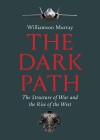
Yale University Press, 2024, 473 pp, RRP US$40 (hardcover)
Hardcover ISBN 9780300279686
Author: Williamson Murray
Reviewed by: Matthew Jones
Williamson Murray’s The Dark Path: The Structure of War and the Rise of the Weaast offers more than a sweeping survey of Western military history. It presents a profound intellectual excavation of how war has not only followed but often propelled the ascent of Western civilisation. From the rise of bureaucratic states in the 16th century to the technological and ideological revolutions of the 20th and 21st, Murray’s central thesis is straightforward yet formidable: warfare and social transformation are locked in mutual causality. The book invites deep reflection from any military reader, but for the Australian Defence Force (ADF) it also poses urgent questions about preparedness, strategic culture, and the nature of unpredictable future wars.
Murray identifies five military-social revolutions, each transforming the conduct of war and the shape of societies. These are (1) the rise of the modern state, (2) the Industrial Revolution, (3) the ideological mobilisation of the French Revolution, (4) the American Civil War as a convergence of ideology and industry, and finally (5) the scientific and computing revolution from 1944 to the present. These chapters are not merely historical; they are conceptual. Each demonstrates how states that adapted their institutions, ideas and capacities to the prevailing character of war gained not only military victories but structural dominance.
This is no linear triumphalist account. Murray critiques the widespread failure of strategic foresight across eras, emphasising that elites and military professionals consistently misunderstand the character of future conflict. He warns that the very technological capacities that once underwrote the West’s dominance may now become its vulnerabilities, citing cyber threats, institutional rigidity, and the rise of authoritarian models of warfighting.
Murray’s warning resonates strongly with Australia’s current defence discourse, with the ADF facing ‘the most challenging strategic circumstances since the Second World War’.[1] Yet, as Murray might ask, are our conceptual tools and institutional cultures evolving in tandem with the character of emerging conflict?
One of Murray’s most striking claims is that war is not simply a tool of policy but a structuring force in history; it shapes systems, disrupts equilibria, and births new orders. Clausewitz’s famous dictum ‘war is a continuation of policy by other means’ is thus only part of the story.[2] Murray suggests that war is also a creator of policy, ideology and civilisation itself. For the ADF, this insight demands a broader intellectual framing: that force design and strategic planning must engage not only with the technological aspects of modernisation but also with war’s more profound social, ideological and systemic ramifications.
In this context, Murray’s historical examples offer specific provocations. Consider the French Revolutionary levée en masse, a national mobilisation born from ideological upheaval. Or consider how railroads and industrial mass production during the American Civil War introduced logistical and operational tempos previously unimaginable. These were not merely shifts in doctrine; they were structural transformations. Similar revolutions are visible today in the accelerating nexus of artificial intelligence, multi-domain operations, cyber capabilities and grey zone conflict. Yet our institutions (educational, strategic and political) still largely remain within an intellectual framework forged in the Cold War.
For the Australian Army, the lesson is clear: innovation cannot be siloed within procurement pipelines or doctrine development groups. Murray suggests the past is a prologue, but cautions: ‘If the fundamental nature of war never changes, the opposite is true of war’s character.’[3] These character changes are fuelled by periods of systemic disruption, institutional friction and unexpected overmatch. To prepare for future wars (especially those that arise rapidly or in ambiguous escalatory environments), the Army must become not just more lethal but more intellectually agile. This includes cultivating a strategic culture that values historical understanding, encourages dissenting analysis, and embraces conceptual experimentation.
Murray warns that the very technologies that enhanced Western dominance—computing, precision, surveillance—are now being leveraged by rival powers who do not share the same liberal democratic norms. He does not argue that the West is doomed but instead warns of strategic complacency. The ‘dark path’ is not inevitable; nor is continued ascendancy. The ADF must, therefore, grapple with the possibility that the next war will not resemble any recent examples in the Middle East or the Pacific.
Moreover, Murray’s emphasis on the unpredictability of conflict has strong contemporary echoes. He observes that no elite has ever correctly predicted the character of the next major war, whether that be in 1914, 1939, 2001 or 2022. For Australia, this is a sobering reminder that wargaming, scenarios, and force structure decisions must be informed not only by intelligence forecasts and capability trends but also by humility. The ‘unanticipated’, be it technological disruption, mass mobilisation, or ideological warfare, must be placed at the centre of defence planning, not its periphery.
To that end, The Dark Path should not be read as a conventional military history but instead as a strategic provocation. It demands that officers, strategists and policymakers ask difficult questions: are our institutions intellectually prepared for systemic shocks? Are we building a force that reflects likely missions or only desirable ones? Are we educating leaders not just in tactics and operations but also in history, sociology, and the philosophy of war?
The Australian Army, in particular, can benefit from Murray’s integrated view of warfare. His analysis suggests that strategy and society are not separate realms. A resilient and adaptable military must reflect the society it defends but also challenge that society to confront the reality of conflict. As Australia considers the future of conscription, cyber defence, territorial resilience, and joint regional operations, Murray’s work offers a conceptual map, albeit a dark one.
In conclusion, The Dark Path is essential reading for leaders in the ADF and Australian strategic community. It does not make for comfortable reading; it challenges many assumptions underpinning liberal democratic defence policy. But that discomfort is productive. Murray reminds us that military advantage is neither permanent nor inevitable; it is the product of continuous, often painful, adaptation. If Australia is to remain secure in an era of strategic competition and systemic unpredictability, it must absorb not only the historical lessons of the West’s rise but also the deeper conceptual patterns that underpin the structure of war itself.
Endnotes
[1] Australian Government, National Defence: Defence Strategic Review (Canberra: Commonwealth of Australia, 2023).
[2] Carl von Clausewitz (trans. JJ Graham), On War (London: N Trübner & Co, 1873).
[3] Williamson Murray, The Dark Path: The Structure of War and the Rise of the West (Yale University Press, 2024), pp. 8, 18.