
Essays in Honour of David Horner AM FASSA
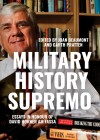
ANU Press, 2025, 400 pp
DOI: http://doi.org/10.22459/MHS.2025
Edited by: Joan Beaumont and Garth Pratten
Reviewed by: Michael Scott
In opening the 2025 Chief of Army History Conference, (then) Lieutenant General Simon Stuart reminded us of Professor Sir Michael Howard’s advice that military professionals should ‘study history “in width, in depth, and in context”’.[1] The Army profession is built upon three pillars: jurisdiction, expertise and self-regulation. ‘Expertise’ is the distinctive professional body of knowledge that underpins the Australian Army’s ‘capacity to educate, to train and to experience Army professionals, throughout their careers’.[2] While the Chief of Army Professional Study Guide ‘has a deliberately strong focus on military history’,[3] the formal study of military history is not as strong in Australian professional military education as it is for some of our allies and partners.[4] In the absence of a tradition of rich formal military history education, Military History Supremo: Essays in Honour of David Horner AM FASSA offers an excellent starting point for the self-guided study of Australian military history by military professionals.
Military History Supremo is a festschrift, ‘a book intended to honour a respected academic, with research essays in his or her field of expertise written by colleagues or former students’.[5] Professor Emeritus David Horner’s own acclaimed scholarly contributions to Australian military history over nearly five decades have made him a ‘supremo’ in his field. This honorary marque is a play on the title of the book Defence Supremo, Horner’s 2000 biography of Sir Frederick Shedden, the Secretary of the Department of Defence from 1937 to 1956.
David Horner’s Contribution to Military History
Numbering some 32 books and over 100 articles and minor works (all of which are listed in appendices to Military History Supremo), Horner has written official, corps and unit histories and military biographies on strategic policy and planning; strategy and command; command and leadership; and intelligence.
Horner’s research seeks to strengthen our understanding of the world and inform discussion beyond academia, but not to impose his opinions, as Horner stays out of contemporary strategic debates.[6] In an interview, Horner described his role as a military historian as to ‘bring order to chaos and make the complex seem simple’.[7] He seeks to accurately capture events using strong evidence, gathered through meticulous research, to bring order from chaos with clarity, comprehension and insight for readers.[8] Horner’s military experience provides authority to how he writes and understands the ‘whole mechanism of war’—from the strategic to the operational and down to the tactical.[9] In addition to his military experiences, Horner possesses key skills that enable him to effectively achieve these purposes.
The research and writing skills that make Horner a military history supremo are those which every upcoming historian should develop and master. A positivist, Horner takes a critical systematic approach to his research.[10] A judicious and balanced empirical researcher who supplements Australian and foreign archival records with interviews, reviews of contemporary records and, finally, secondary sources, Horner sets the benchmark to which historians should aspire.[11] Underlying Horner’s scholarship is the essential humanity in war. He has a ‘balancing regard for the “fog of war”’, puts command in the context of the political–military relationship and takes into account the personality and individual qualities of commanders, as well as the system in which they operate.[12] Unlike some previous official historians, who focused at the tactical level, Horner, in the context of the political circumstances, analyses the whole mechanism of war in detail to ensure the complexities of war and the war–politics nexus are understood.[13]
One of the key strengths of Horner’s work is his capacity to write clearly yet authoritatively, and instruct the academic and the general public alike.[14] His writing uses a narrative style, in a top-down fashion, and brings out issues as it goes.[15] Horner writes without fear or favour, showing respect for all combatants, and provides measured and logical judgements from his empirical research.[16] Horner’s work combines traditional military history with broader sociopolitical contexts, providing a comprehensive understanding of Australia’s military and strategic history.
What the Book Covers
Military History Supremo is a collection of 15 essays by renowned Australian and international academics covering the range of military history topics on which Professor Horner has authored or edited works. The essayists celebrate Horner’s value as a military historian, and most of the essays have been written in styles inspired by him. The topics are diverse, spanning strategic decision-making for Ambon in the Second World War; high command in Bengal in 1849 to 1950; command of the 1st Australian Division in the First World War; coalition warfare in Afghanistan from 2006 to 2010; intelligence; space in the Australian Defence Force; peacekeeping; and mortuary affairs. The volume showcases the fundamental skills of an effective military historian as well as providing lessons for the contemporary military professional.
Garth Pratten’s biographical essay explores Horner’s journey as a soldier-scholar: an individual with long experience across both the military and academia.[17] Horner entered the Royal Military College at Duntroon in January 1966 and was commissioned in December 1969 having won multiple prizes, including the CEW Bean Prize for History.[18] He saw active service as an infantry platoon commander in Vietnam before oscillating between academic and regimental postings, including on staff at the Joint Services Staff College. Horner resigned from the Australian Regular Army in 1990 with the rank of Lieutenant Colonel (but continued service as a reservist until 2002) to become a research officer at the Australian National University’s Strategic and Defence Studies Centre. His military experience underpinned his esteemed scholarship by ‘deep and authentic knowledge of the requirements and challenges of employing military force’.[19]
There are two essays in this collection that do not closely follow David Horner’s approach; instead they attempt to link military history to emphasise perspectives on contemporary issues. Hugh White’s ‘History Frames Policy: David Horner and the Future of Australia’s Defence’ and Bob Breen’s ‘Disappointing the Dragon: An Australian Strategy and Fourth Armed Service for the Grey Zone’ are interesting reads but do not provide the same level of tribute as the other essayists. These essays selectively use historical military events to strengthen arguments without exploring them. White cites historical events, such as Britain’s abandonment of any substantial strategic role in Asia after 1904 and the final withdrawal east of the Suez,[20] to reinforce his position that the US might do the same, without investigating these events in any detail. Similarly, Breen calls out the 1930s British ‘Singapore Strategy’ when considering contemporary strategic circumstances, without detailed comparison to the historical reference.[21]
A seldom-considered aspect of war concludes the volume: the policy and practice of large-scale mortuary affairs. The Vietnam War was the first time repatriation of the deceased became a standard practice; however, despite the demonstrably lower number of battlefield casualties in Vietnam compared to the world wars, Australia was reliant on overstretched US mortuary and embalming services provided by military and civilian staff.[22] While not ‘new under the sun’, this major logistic issue (fortunately) has no recent Australian practice, meaning that learning the lessons from military history is the best starting point for military planners.
Why Read This Book?
General James Mattis USMC wrote, ‘Ultimately, a real understanding of history means that we face NOTHING new under the sun’.[23] In this vein, lessons can be garnered from Military History Supremo at the strategic, operational and tactical levels of war. There are many insights applicable to the current strategic environment, as well as to the possibility of war in our region.
For instance, parallels to today can be drawn from the 1930s and the decades that followed World War II, specifically with the UK’s failed Singapore Strategy and subsequent withdrawal from east of the Suez in the 1950s.[24] Such lessons include strategic failures due to incorrect assumptions, beliefs and impressions of Western might held by political and military leadership.[25] An example is the failed defence of Ambon and Timor in the Second World War, where ‘impressions about the presumed superiority and permanence [original emphasis] of imperial power’ at the strategic level overshadowed the realities of intelligence and available fighting forces.[26] Overconfidence in one’s abilities and an underestimate of those of one’s adversary are repeated throughout history. Effective command and control of complex battlespaces has been difficult to achieve, including in coalition operations such as those in Afghanistan, where unity of command and unity of effort was challenging when rationalising national goals and operational objectives.[27] These issues will continue in future multinational operations. Successful command and leadership in war requires commanders to possess strong moral courage, undertake detailed planning to minimise casualties, and emphasise continual training in theatre to learn and adapt.[28] Lieutenant General Sir Harold Walker, explored in essay seven, exemplified such leadership when in command of the 1st Australian Division in the First World War.[29]
Overall, Military History Supremo provides ample evidence of Horner’s influence as a scholar, of his mentorship of up-and-coming academic historians and of the inspiration his work has provided to countless students, military officers and casual readers.[30] The book is an easy read. Each essay is independent of the others and examines seldom-studied aspects of Australian military history.
Junior military historians should start—and those more senior should deepen—their study by reading Military History Supremo to understand how to effectively study and capture military history, based on reflections of Australia’s pre-eminent living military historian. As a part-time military historian, I have learned what is required to be an effective scholar of military history. As a senior military leader and planner, I have gained insights from history that I can apply to future complex military problems. Reading Military History Supremo has strengthened my expertise as a military professional, in particular regarding leadership at all echelons and being conscious of hubris and cognitive biases in decision-making. I commend this book to others who seek to enhance their expertise in the profession of arms.
About the Reviewer
Brigadier Michael Scott CSC is currently Deputy Commander Forces Command and Deputy Army G7. He is a graduate of the USMC Command and Staff College and School of Advanced Warfighting, and of the Defence Strategic Studies Course. Brigadier Scott has seen operational service in Solomon Islands, Afghanistan, Indonesia and Iraq, and on Operation Resolute. His most recent postings include Director General Defence Preparedness, Director Indo-Pacific Infrastructure and Director Current Military Commitments. A qualified civil engineer, he has commanded combat engineers at troop, squadron and regiment levels. He is the Head of Corps for the Corps of Royal Australian Engineers. Brigadier Scott has recently commenced research for a PhD in history through UNSW Canberra.
Endnotes
[1] Simon Stuart, ‘Opening Address’, Chief of Army History Conference 2025, 19 November 2025, transcript at: www.army.gov.au/news-and-events/speeches-and-transcripts/2025-11-19/ope….
[2] Simon Stuart, ‘The Challenges to the Australian Army Profession’, address to the Australian National University National Security College, 25 November 2024, transcript at: www.army.gov.au/news-and-events/speeches-and-transcripts/2024-11-25/cha….
[3] Australian Army, Chief of Army Professional Study Guide (Canberra: Australian Army, 2025), p. 3.
[4] The Royal Military College of Australia at Duntroon established a Faculty of Military Studies in April 1968.
[5] Joan Beaumont and Garth Pratten, ‘Introduction’, in Joan Beaumont and Garth Pratten (eds), Military History Supremo: Essays in Honour of David Horner AM FASSA (Canberra: ANU Press, 2025), p. 8.
[6] Ibid., pp. xvii, 3, 43, 340.
[7] Ibid., p. 218.
[8] Ibid., p. 35.
[9] Ibid., p. 34.
[10]Ibid., pp. 57, 20.
[11] Ibid., p. 272.
[12] Ibid., pp. 44, 251, 88, 131, 149.
[13] Ibid., pp. 34, 366.
[14] Ibid., pp. 3, 37.
[15] Ibid., pp. 36–37.
[16] Ibid., pp. 57, 251, 272.
[17] Ibid., pp. 15–16.
[18] Ibid., pp. 25–28.
[19] Ibid., p. 1.
[20] Ibid., p. 120.
[21] Ibid., pp. 345–349.
[22] Ibid., pp. 379–382.
[23] Jill R Russell, ‘With Rifle and Bibliography: General Mattis on Professional Reading’, Strife, 7 May 2013, at: https://strifeblogdotorg2.wordpress.com/2013/05/07/with-rifle-and-bibliography-general-mattis-on-professional-reading/comment-page-1.
[24] Beaumont and Pratten, Military History Supremo, pp. 72, 111, 345, 120.
[25] Ibid., p. 72.
[26] Ibid., p. 72.
[27] Ibid., pp. 227–228, 237–238, 270.
[28] Ibid., pp. 154, 155–156, 164, 173, 175, 176.
[29] Ibid., pp. 155–156, 158, 166–167, 173–175.
[30] Ibid., p. 1.