
Sustaining Strategy and Operations
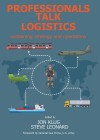
Howgate Publishing Limited, 2025, 220 pp
ISBN: 9781912440672
Written By: Jon Klug (Editor) and Steve Leonard (Editor)
Reviewed By: Jacob W Thomas
Just as tacticians study the great strategists of history, logisticians must learn from the sustainment successes and failures of the past. As the character of war evolves and contested logistics becomes the norm, there has never been a greater need for dialogue about the sustainment implications of modern military operations. Professionals Talk Logistics initiates this conversation, offering a timely and thought-provoking contribution to the discourse on military sustainment. Now more than ever, it is essential for professionals to ‘talk logistics’.
Jon Klug and Steve Leonard assemble a compelling and well-structured work arguing that military strategy—defined by ends, ways and means—is profoundly shaped by logistics. They contend that logistics supports the means by which military strategy is given operational effect. It either enables or constrains the ways in which such strategy is achieved. Further, logistics requirements heavily influence the timeline within which strategic ends are realised. Throughout the book, the authors present logistics as a persistent challenge, demonstrating that strategic planning is not the sole determinant of whether a campaign is successful. Instead, planners also need to consider the practical realities of sustaining operations. Drawing on their extensive military experience and current roles in academia, Leonard and Klug curate this anthology of scholarly and practical essays into three chronological parts, illustrating how the task of sustaining armies has evolved across millennia and how it can impact future operations.
Part One of the book explores how history’s great strategists sustained their forces through gruelling, multi-year campaigns across vast distances. Rather than allowing logistical constraints to dictate operations, successful strategists consistently adapted logistics to the unique nature of their armies. This principal theme runs throughout the book, suggesting that today’s sustainment practices must adapt in the same way. By integrating emerging technologies such as artificial intelligence (AI), logisticians can ensure that sustainment asserts itself as an innate element of the Army’s system of warfighting.
Part Two examines the interplay between logistics and strategy during the Global War on Terror. The chapter titled ‘Operational-Level Warfare and Logistics’ analyses how domestic and foreign policy profoundly shaped the logistical and operational plans during the 2003 invasion of Iraq and further influenced later phases of the Afghanistan conflict. Part Two also underscores the importance of setting the theatre during interwar periods through continuous shaping activities such as securing access to ports, airfields or other infrastructure. These measures create critical options for logisticians and manoeuvre forces in the event of future expeditionary operations or in times of crisis. In the chapter ‘At the End of a 6,000 Mile Screwdriver’, the book builds on lessons learned from Alexander the Great to demonstrate how effective logisticians rapidly adapted to shifting political and battlefield conditions to maintain operational momentum during the US troop surge in Afghanistan in 2009. They contend that adaptability will be critical for sustaining future combat operations, particularly because campaigns will face constraints beyond extended and politically pressured lines of communication. Successful campaigns will require logisticians to craft redundant, hardened supply routes from the homeland to the front lines. Importantly, such routes will need to be capable of withstanding the effects of multi-domain assaults.
Part Three lays the theoretical foundation of logistics operations in the US Army and joint services, as well as examining how AI integration, coupled with contested logistics, demands that leaders manage sustainment within the manoeuvre space and not as a separate afterthought. One of the most compelling themes is the transformative role of AI. Far from merely enhancing existing processes, AI fundamentally reshapes how militaries plan, execute and manage sustainment operations. Even with the inclusion of AI to improve sustainment processes, several essays emphasise the growing exposure of fragile supply lines in the event of a Pacific campaign. Extensive distance, limited infrastructure, susceptibility of multi-domain actions, and adversarial long-distance strike capabilities make sustainment in the Pacific a significant operational challenge. Given these constraints, the authors persuasively argue that modern logisticians must embrace adaptability and technological innovation, mirroring the flexibility of their historical predecessors to succeed in the next generation of conflict.
One particular strength of the essays in Professionals Talk Logistics is that numerous authors ground their discussions at the doctrinal level, providing an excellent starting point for junior logisticians or supply chain practitioners in the security studies field. From this foundation, the authors deliver thought-provoking insights into how future conflict and the integration of advanced technologies will challenge even the most experienced logistics professionals. The book’s segmented design enables readers to select chapters that address current operational concerns, examine historical examples, or engage with the entire work to encourage broader dialogue and critical thinking. By following the evolution of sustainment operations through history and projecting its future course, Klug and Leonard make a compelling case for why logisticians must remain proactive, adaptable and intellectually curious.
While the book is well organised, its broad scope limits the depth of analysis on specific historical examples or logistical processes, a feature which some readers may find unsatisfying. Moreover, the essays are primarily framed through a land-combat perspective. While the implications of logistics to land operations have enduring relevance, future conflicts will require seamless integration across joint services, as well as cyber and space domains, combined with significant reliance on the military-industrial base to ensure success. Additionally, apart from a few deliberate examples, the text largely focuses on US military doctrine and historical Western campaigns. A revised edition would benefit from incorporating views and additional case studies from the perspectives of non-Western militaries and involving non-conventional warfare. This would provide a more global and comprehensive view of sustainment.
In sum, Professionals Talk Logistics is an excellent book for anyone engaged in the spectrum of military operations and should be considered essential reading for junior members of the armed forces. Its chronological structure, doctrinal footing and relevant case studies provide a strong foundation for understanding how the integration of logistics by history’s great strategists must be mirrored—and adapted—by today’s logisticians and planners. In an era of contested logistics, where adversaries will seek to disrupt and degrade our sustainment capabilities throughout the entirety of the supply chain, the insights in this book are not merely theoretical. They may prove vital to the success of future military operations. As the authors of the individual essays make clear, the ability to sustain the force is not just a matter of efficiency; it is a matter of survival and victory. As warfare enters a new era shaped by AI and multi-domain warfare, this book stresses the necessity for modern leaders to incorporate emerging technologies into sustainment strategies if they are to adequately prepare for the next generation of conflict.