
France at War, 1942–1945
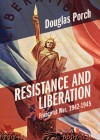
Cambridge University Press, 2024, 804 pp
ISBN: 9781009161145
Author: Douglas Porch
Reviewed by: John Nash
France’s experience of World War II following its defeat in 1940 is often overlooked or reduced to the concept of the Resistance, which itself often passes through a mythologised lens. Douglas Porch’s second volume on ‘France at War’ tackles the immensely complex topic of the French experience of war from 1942 to 1945. It covers a frantic period of time as nascent French governments in exile vied for eminence while cobbling together a military and diplomatic force that could fight for France’s interests, namely the preservation of its empire—and at least appearing to contribute to the Allied cause against Nazi Germany.
The book opens with a preface that summarises the first volume, Defeat and Division.[1] The 10 chapters that follow trace France’s role in the war in the wake of Operation Torch, the Allied invasion of North Africa. The main narrative picks up from the end of the previous volume, tracking events in Tunisia in late 1942. It begins with an examination of the key issues which had plagued French military endeavours in the preceding three years: indecisive, confused, and ineffective command and control at the highest levels. Porch’s subheadings make this very clear from the start, opening with ‘A Cascade of Contradictory Orders’ and followed by others such as ‘A Confused Chain of Command’ and ‘Two Commanders, Two Choices’.[2] The Commander of French Ground Forces in North Africa, General Alphonse Juin, represented this command indecision: he was described by one observer as ‘commander-in-chief while avoiding behaving like one’; instead he ‘issued suggestions’.[3] This dithering would have severe repercussions for the Allied campaign in North Africa. The non-decision to oppose Axis forces moving westward into French territory meant the Allies would need to slog their way through this territory. In the words of Porch, ‘three lost days at Algiers and Tunis had to be redeemed at the cost of almost seven months of battle.’[4] This senior officer malaise accorded with that experienced in the resounding defeat of France in 1940, and the theme of combat effectiveness taking a back seat to French political-imperial concerns emerges throughout Porch’s exploration of France’s war.
This is seen in the conclusion of the Allies’ North Africa campaign, where the emerging French leadership under Charles de Gaulle moved to exact retribution and forgiveness. The main determinant of what treatment was allocated boiled down to whether or not actions, including collaboration with the Axis, were done in the name of preserving the French Empire.[5] Moreover, the re-establishment of French control allowed them to crack down on dissent and squash Tunisian nationalism. On the military side of the campaign, Porch assigns blame to both US political inexperience (the Darlan deal) and plodding British progress on the battlefield under Lieutenant General Kenneth Anderson, but in the main gives the largest part of the blame to the aforementioned poor French leadership for putting the Allies in such a bad spot to begin with.[6] This segues into a necessary discussion about the state of the wider war, including the inaccurate or even duplicitous claim by Stalin that the Western Allies were merely ‘fighting on the margins’.[7] Porch then does an excellent job of debunking a series of myths surrounding Roosevelt’s declaration of the requirement for the ‘unconditional surrender’ of Germany.[8] In these ways, a reader is reminded of the wider context of the war.
With matters in North Africa (relatively) settled, the narrative turns to the organisation and rearmament of French forces. In short, this proved to be a logistical nightmare as shipping was scarce and the French had virtually no trained logistics personnel or any kind of proper organisation.[9] It also became clear that the French had learned essentially nothing from their 1940 defeat, failing to prioritise logistics, service troops and armour, while sinking limited personnel and material into rebuilding their navy, which would have no impact on the war and was done for prestige.[10] Disdaining American efforts to aid them in training, the French believed that it had been their equipment that had been deficient in 1940, not their training—though the latter was also problematic, with some 1,858 training deaths in the seven months following the Tunisia campaign.[11] Moreover, French attempts to make up their personnel shortfall with the engagement of women in the armed forces were not as successful as the US or British experiences. Porch lays bare the poor treatment of women in French service, and notes that their participation in resistance activities was more welcome and far higher.[12] In a sense, this is unsurprising. Porch is quite clear in his analysis of French war aims, which had very little to do with French forces contributing to Allied victory and everything to do with preserving the French Empire.[13]
What follows is a chapter dealing with France’s largest contribution to the Allied cause, their role in the Italian campaign—though a legacy tarnished by the horrendous war crimes committed by the French forces against the civilian population. Chapter 3, ‘Triumph and Dishonor in Italy’, makes for difficult reading as Porch lays bare the scale of the crimes committed by French troops, and the wanton indifference and even defensiveness with which they regarded it.[14] Unfortunately, it would not be an isolated incident and would lead to French troops in Germany in 1945 being labelled ‘the Russians of the West’.[15]
What follows this is an excellent chapter on the topic of French resistance in the lead-up to Operation Overlord. Porch sets the tone from the opening paragraphs, where he criticises the historiography of the ‘Resistance’:
But subordinating history to faux and contrived patriotic analogies perpetuated a collective delusion, one that devalued the contribution of the professional soldiers and colonial subjects of the FFL [Free French Forces] and l’armée d’Afrique—not to mention the Allies—to France’s resurrection, in favour of a spontaneous assembly of military amateurs.[16]
Porch then breaks down all of the key issues, from low resistance participation rates—lower than in Poland or Yugoslavia—through to internecine conflicts within the French movement, and unclear strategy based on a poor understanding of how ineffective resistance movements were in other countries. Driven by the romantic notions of Winston Churchill and a nascent Special Operations Executive organisation trying to make a name for itself, the reality was, as Porch illustrates, that even the worst German troops used in rear area defences ‘could literally make mincemeat of the largely children’s crusade, and their adult enablers, which defined the maquis’.[17] It is a harsh but accurate assessment of just how ineffective the resistance movement was in affecting the military situation in France prior to D-Day, with Porch also assessing that ‘Resistance also created vulnerabilities—a distortion of strategic priorities and diversion of operational assets’.[18] Indeed, the Germans did not see resistance as a significant military threat, certainly not in comparison with the Eastern Front, where it was much more organised, though also had its effectiveness exaggerated.[19] The most consequential action of the resistance was the establishment of a postwar narrative of the French contributing far more to their own liberation than was actually the case.
The final three chapters of Resistance and Liberation deal with military efforts to retake France and participation in the invasion of Germany. It was a difficult campaign, given the need to reorganise different formations, but also due to a twisted set of priorities where revenge and score-settling against ‘collaborators’ was the prime concern. Much time and effort was devoted to this revenge, for all manner of perceived crimes, especially when it came to women who had been too friendly to the Germans. These ‘shearings’—where the women in question had their hair shorn off as a visible indicator of their ‘crimes’—were viewed with disdain by the US troops. They were seen as a sign of French insecurity at their emasculating defeat in 1940, with French men trying to regain their masculinity by targeting helpless women.[20] In addition to this, the French army had to contend with a distinct air of indifference in the liberated territories, with most French considering their war over once they had been liberated. Nevertheless, de Gaulle saw participation in the invasion of Germany—or at least a presence there—as necessary to ensure France’s future role in Europe, especially in light of the view of Stalin that France’s role had not been of enough to merit an occupation zone in postwar Germany.[21] As mentioned earlier, French behaviour in Germany would be appalling, with mass crimes against civilians and German prisoners of war, which were again minimised by the French command, who even went so far as to accuse the Americans of trying to tarnish French ‘victories’.[22] Taken with the fact that de Gaulle hosted five victory parades in a three-month period in 1945, it is hard to see France’s participation in the latter stages of the war as a positive contribution to victory.
The final chapter is a conclusion, covering the subject matter of both volumes. Herein Porch is comprehensive in bringing together all the different strands of history that he has examined throughout both books. It starts with a theme explored in the review of book one,[23] the failure of French high command and its sluggishness compared with German Auftragstaktik. Porch highlights how the postwar narrative was hijacked by a collusion of Heinz Guderian and Basil Liddell-Hart to promote how their prewar ideas about mass tank warfare were correct, ignoring that the French did as much to lose the war as the ‘Blitzkrieg’ did to win it.[24] He also demolishes the myth that the Maginot Line was some kind of useful construct; indeed, as Porch points out, it consumed 40 French divisions at a time when there were only 19 German ones opposing them, and the main German effort was clearly underway further north, where spare French divisions could have made a difference.[25] Finally, he takes the somewhat heretical view that the Fall of France in 1940 was not some sort of ‘historical hiccup’.[26] As he has carefully articulated over his two volumes, France’s failures in the war, especially in 1940, can be traced to a series of political, diplomatic and military decisions. His conclusions may make for uncomfortable reading for some, but are well reasoned and backed by a mountain of evidence.
Like the first volume, Resistance and Liberation is not a small book. The period of history covered is also messier, with a large cast of people and various organisations and political machinations to follow. As with Defeat and Division, Porch is able to critically examine important events, people and ideas, and cut through seven decades worth of scholarship and myth-making around the events of 1942–1945. Anyone looking for a fuller grasp of the Second World War and of France’s role after the 1940 defeat should look no further than this excellent volume.
Endnotes
[1] For a review of this, see John Nash, ‘Book Review—Defeat and Division: France at War, 1939–1942’, Australian Army Journal 21, no. 3 (2025): 314–318.
[2] Douglas Porch, Resistance and Liberation: France at War, 1942–1945 (Cambridge University Press, 2024), pp. 1, 11, 13.
[3] Ibid., p. 22.
[4] Ibid., p. 29.
[5] Ibid., pp. 79–80.
[6] Ibid., pp. 87–88.
[7] Ibid., p. 89.
[8] Ibid., pp. 94–95.
[9] Ibid., p. 122. For more detail on this issue, see also David Dworak, War of Supply: World War II Allied Logistics in the Mediterranean (University Press of Kentucky, 2022), pp. 51–54.
[10] Porch, 2024, pp. 129–132.
[11] Ibid., p. 134.
[12] Ibid., pp. 143–159.
[13] Ibid., pp. 160–161.
[14] Ibid., pp. 161–242.
[15] Ibid., p. 240.
[16] Ibid., p. 244.
[17] Ibid., p. 323.
[18] Ibid., p. 417.
[19] Ibid., pp. 420–421.
[20] Ibid., pp. 452–468.
[21] Ibid., p. 537.
[22] Ibid., p. 548.
[23] See Nash, ‘Book Review—Defeat and Division’, pp. 314–318.
[24] Porch, 2024, p. 594.
[25] Ibid., pp. 611–617.
[26] Ibid., p. 625.