
Lessons Learned While Commanding a NATO Brigade in Afghanistan
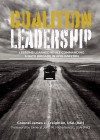
Marine Corps University Press, 2024 pp 282
ISBN: 9798986259505
DOI: 10.56686/9798986259505
Author: Colonel (Rtd) James L Creighton
Reviewed by: Major General Jason Blain
Few books manage to capture the intense reality, complexity and leadership demands of multinational operations at the brigade level during war quite like Colonel (retired) James Creighton’s Coalition Leadership. As someone who had the privilege of serving alongside Colonel Creighton as his deputy during the critical 2010 campaign in Uruzgan Province, Afghanistan, I can say with confidence that this is more than just a compelling account of combat leadership; it is a doctrinal touchstone for current and future military professionals.
In Coalition Leadership, Creighton distils the challenges and insights gained from his tenure as the Commander of Combined Team Uruzgan (CTU), a multinational headquarters stood up during one of the most dynamic and violent phases of the Afghanistan conflict. The book delivers its most powerful lessons through the lens of experience, not theory—an experience shaped by high-intensity combat, political complexity, and the rare test of building a headquarters while in the fight.
When Colonel Creighton assumed command of CTU in mid-2010, the operational landscape in Uruzgan was undergoing rapid transformation. The Dutch were preparing to withdraw after several years of command in the province. Their transition required a new lead International Security Assistance Force nation in Uruzgan at a time when Taliban activity was surging. Into that breach stepped a United States-led but Australian-dominated headquarters—a rare construct that, to my knowledge, had not been attempted at that scale before or since.
Creighton’s account does not shy away from the difficulties of this construct. Establishing a combined, multinational headquarters is a significant undertaking in any context. Doing so amid high-tempo combat operations, during a national handover and with disparate national caveats and doctrinal approaches only compounds the challenge. Yet, under Creighton’s leadership, the team maintained operational momentum, ensured continuity of mission and avoided the paralysis that can so easily occur in transition.
The book is rich in lessons for officers who will one day be called upon to form, lead or serve within coalition headquarters. One of the most prominent themes is the importance of relationships. Creighton rightly emphasises that success in coalition warfare is rarely found in systems or structures alone; it is found in people—in trust built quickly across national lines, in humility to listen and in the moral courage to lead amid ambiguity. This was a central factor in the success of CTU: mutual respect between American and Australian commanders, trust at every level and an unwavering commitment to unity of purpose.
I had the honour of commanding Mentoring Task Force One (MTF-1) in Uruzgan Province at the time and then assumed the role of inaugural Deputy Commander of CTU, after handing over command of MTF-1 to Colonel Mark Jennings. To be able to remain serving alongside our fellow Australians in Uruzgan was a rare privilege, and I can attest firsthand to the pressures and uncertainty of the period. We were tasked with simultaneously mentoring the Afghan National Army’s 4th Brigade, fighting a well-armed and adaptive Taliban insurgency, protecting the local population, and conducting reconstruction and development efforts—all of this while trying to knit together a newly formed headquarters drawn from multiple nations with different rules and caveats, cultural perspectives and political constraints.
Coalition Leadership provides a granular understanding of how to navigate these constraints. Creighton is candid in his treatment of national caveats, and the book’s learnings on coalition cultural dynamics, both national and organisational, are superb. He offers practical advice on navigating the unspoken rules that govern international cooperation: how to manage expectations, how to avoid friction through early and respectful engagement, and how to build systems that account for difference rather than trying to erase it.
Coalition leadership is also about personal leadership. Creighton is honest and frank about his ‘Just get it done’ approach. His investment in conducting battlefield circulations with his Australian RSMs to conduct face-to-face interactions with the troops of all nations under his command ensured that the urgency of executing his commander’s intent was understood. He is also frank about his dealings with key Afghan actors and stakeholders. His is a clear-eyed reflection on the reality of having to deal at times with unsavoury and corrupt individuals at the tactical level.
The handover from the Dutch to the US-led CTU is especially instructive. As Creighton reflects, the transition was not merely a change in flag; it was a shift in doctrine, tempo and expectations. Maintaining mission continuity required cultural awareness and both tactical and strategic acumen, understanding the Dutch approach to the conflict, recognising their hard-won local relationships, and integrating the knowledge of their commanders and soldiers before their departure. The delicate management of this transition ensured that our Afghan partners were not left disoriented or feeling abandoned—a failure that would have risked the gains made by fellow Australians and our Dutch comrades over several years.
From a leadership perspective, the book is a masterclass in coalition command. Creighton balances strategic intent with tactical reality and repeatedly returns to the principle that leadership in a coalition is not about control; it is about influence. He draws attention to the importance of personal rapport, lateral collaboration, and servant leadership in multinational teams.
For Australian Defence Force officers, Coalition Leadership offers particularly relevant insights. Many of our current and future operations will be conducted in coalition settings, whether in combat, peacekeeping or humanitarian assistance. Increasingly our commanders will be asked to operate in headquarters where they are not the lead nation but where their leadership, professionalism and experience will be critical to mission success. Understanding how to lead ‘through others’ in this context is an essential skill, and this book provides a real-world guide.
Importantly, Coalition Leadership is not a self-congratulatory memoir. It is reflective, honest and instructive. It captures both the promise and the peril of coalition warfare. It offers a roadmap for navigating the complex web of alliances, national interests and human dynamics that define modern conflict. And it serves as a valuable case study for how mission command, trust and unity of effort can be achieved even in the most difficult of operational environments.
In summary, this book is a must-read for any serious military professional. Its lessons are not confined to Afghanistan; they are universal to coalition operations. For those who will serve in, or lead, multinational headquarters, Coalition Leadership is essential reading. I commend Colonel James Creighton for his service, for his leadership during a defining period in our shared military history, and for this outstanding contribution to the profession of arms.